History Without False Labels
Same-sex desire and gender diversity are not recent phenomena; they predate modern terminology. What is new are primarily the categories into which people are classified. Words like “homosexual” or “heterosexual” only became widespread in the 19th century. Therefore, looking back further in time, one does not find a ready-made LGBTQIA+ community in the modern sense, but rather relationships, bodies, lifestyles, and social roles that clearly go beyond a purely binary narrative of the past.
This is where a central debate in historical scholarship takes place. Constructivist approaches, heavily influenced by Michel Foucault, emphasize that modern sexual identities were constructed by medicine, psychiatry, law, and administration. Other researchers, including John Boswell, highlighted the continuity of same-sex relationships. Today, a cautious middle ground is more productive: desire has a long history, but its social significance changes with each era.
This distinction is not an academic triviality. Labeling a person from the Middle Ages as gay, lesbian, trans, or non-binary too quickly can make a biography visible, but it can also obscure its cultural logic. This history therefore does not begin with the search for modern labels. It begins with the question of what possibilities people had in their time to experience intimacy, gender, desire, and belonging.
Traces in Egypt and Greece
One of the most discussed pieces of evidence from ancient Egypt is the shared mastaba of Niankhkhnum and Khnumhotep in Saqqara. The two high-ranking officials of the 5th Dynasty appear on reliefs in unusually intimate gestures. They stand close together, embrace, and touch their noses. Some researchers interpret this depiction as an indication of a romantic relationship. Others believe the men were brothers, possibly even twins. The question cannot be definitively answered based on the available sources.
It is precisely this uncertainty that makes the tomb site significant. It does not demonstrate that ancient Egypt officially recognized homosexual partnerships in the modern sense. However, it shows that male intimacy was visible in a highly codified visual language. The history here demands neither denial nor certainty, but rather a willingness to consider multiple interpretations.
In classical Greece, sexuality described less a fixed orientation and more a social position, age, and role. Institutionalized relationships between an older *erastes* and a younger *eromenos* could combine pedagogical, political, and sexual elements. They should not be romanticized as a simple precursor to today’s gay partnerships, as age differences and hierarchies were central. At the same time, philosophy, poetry, and art demonstrate that male desire was socially legible.
The Sacred Band of Thebes, an elite unit of 300 men described in ancient accounts as 150 pairs of lovers, became famous. They contributed to the victory over Sparta at Leuktra in 371 BC and were largely annihilated by the Macedonians at Chaironeia in 338 BC. The Lion of Chaironeia commemorates their tomb. Again, the account is not a modern coming-out story, but it is strong evidence that male bonding could be understood as a source of military loyalty.
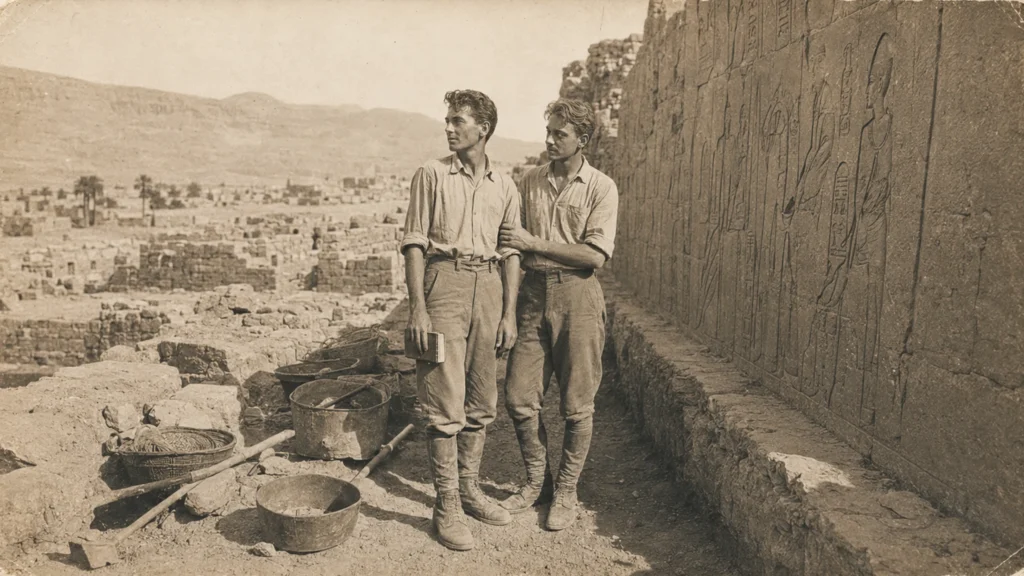
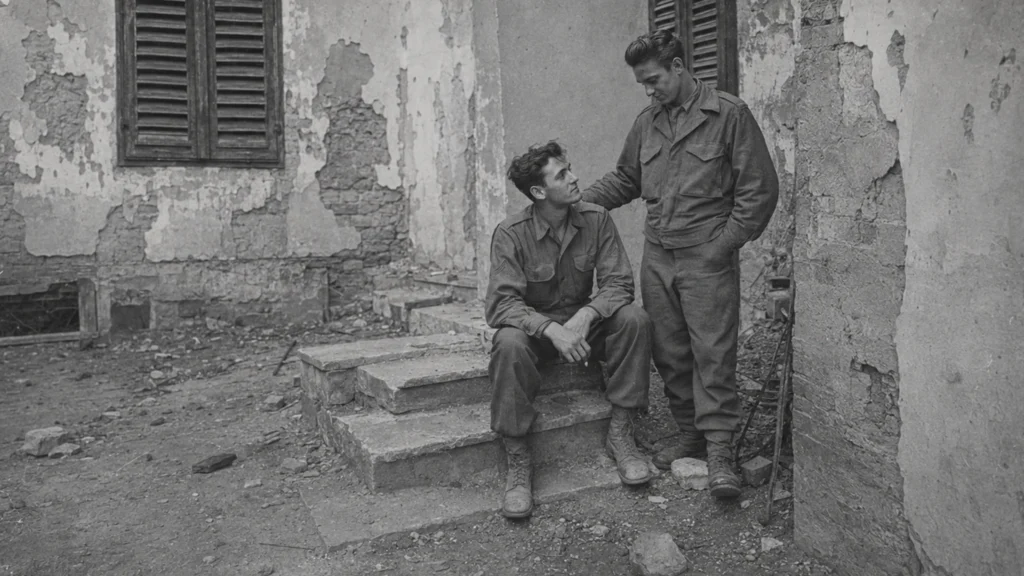
iksHaus | KI-generiert nach redaktioneller Konzeption, 2026
More than two genders
Outside of Europe, we encounter societies where gender is not solely organized by the Western binary division between man and woman. However, these traditions are not interchangeable variations of a single “third gender.” Māhū in Hawaii and Tahiti, Fa’afafine in Samoa, Hijra in South Asia, and numerous tribe- or nation-specific roles in North America each have their own histories, spiritual meanings, and social functions.
The term Two-Spirit was coined in 1990 at an Indigenous conference as a modern, intertribal collective term. It can connect gender, sexual, community, and spiritual dimensions for some Indigenous people. However, it does not replace the specific terms used by individual nations and should not be retroactively applied to every Indigenous person who appeared gender-ambiguous to European observers.
Fa’afafine have also been part of Samoan communities for centuries, without necessarily being equivalent to a Western transgender identity. Māhū, in turn, refers to a culturally specific position in Hawaiian and Tahitian contexts that combines male and female aspects. These terms highlight that colonization did not only involve land and political power. Missionizing, administration, and Western laws also intervened in local conceptions of the body, kinship, and gender.
The correct lesson to be learned from these stories is not that pre-modern societies were universally tolerant. There were also limits, obligations, and sanctions in those societies. What is crucial is something else: the binary gender model was never the only human order. Colonial systems often treated local diversity as a deviation and attempted to suppress it through religion, education, medicine, and law.
Between Church, Law, and Survival
In European medieval times, sexual acts were increasingly judged based on Christian notions of sin, reproduction, and natural law. Terms like homosexuality did not exist. Instead, church and secular texts spoke of sodomy, of the “unspeakable” offense, or of acts against nature. These categories encompassed very different practices and revealed only limited information about how people understood themselves.
An extraordinary document dates back to 1394 in London. The interrogation transcript refers to a detained person as “John Rykener, known as Eleanor.” Rykener wore women’s clothing, worked at times as a seamstress and server, and reported having sexual contact with both men and women. The text does not allow for a definitive modern diagnosis of gender identity. However, it demonstrates that a person was able to inhabit different gender roles over an extended period, work, and utilize social networks, even though the law had little language to describe such experiences.
This case is particularly important because it does not provide a complete heroic narrative. Only the voice of the court remains, not Rykener herself. Modern research must therefore distinguish between visibility and appropriation. The archive preserves traces of a life, but it does not give us the right to fill every gap with a modern category.
iksHaus | KI-generiert nach redaktioneller Konzeption, 2026
Renaissance: visible and invisible
The Renaissance produced artistic representations full of homoerotic tension, while courts and religious institutions persecuted same-sex acts. In particular, relationships between women often remained invisible from a legal and medical perspective, because many authorities defined sexuality solely as penetration. Invisibility, therefore, did not mean freedom. It could offer protection, but it also erased experiences and violence from the historical record.
The case of Benedetta Carlini is unusually well-documented. The Tuscan nun and, at times, abbess reported visions, stigmata, and a mystical connection to Christ. Church investigations accused her of feigning holiness and having a sexual relationship with Sister Bartolomea Crivelli. A later report indicates that Benedetta lived in isolation in the convent for many years. Her story reaches us through the records of an institution that decided on matters of truth, the body, and punishment.
Another biography tells the story of Erauso, long known as Catalina de Erauso. After escaping from a Basque convent, de Erauso lived under male names, served as a soldier in the Spanish colonies, and eventually received permission to continue wearing men’s clothing. This story can be interpreted as an escape from societal expectations for women, as a form of gender self-expression, and simultaneously as participation in colonial violence. None of these aspects negate the others.
The 19th Century Invents New Words
Throughout the 19th century, control over sexuality gradually shifted from the pulpit and the courtroom to the clinic, statistics, and psychiatry. This was not a straightforward liberation. Same-sex desire was now described as a characteristic of a specific type of person and was often pathologized. At the same time, this new language created opportunities to name experiences, formulate political demands, and build communities.
Anne Lister demonstrates that self-knowledge did not have to wait for an official term. The English landowner kept extensive diaries from 1806 to 1840, recording intimate passages in a code she developed herself. In them, she described relationships with women, travels, business, and her own nature with remarkable clarity. The millions of words in these diaries are now part of the British UNESCO “Memory of the World” register.
A linguistic turning point was marked by Karl Maria Kertbeny, a Hungarian writer and reformist publisher born in Vienna. In a letter from 1868, he used the newly coined words “homosexual” and “heterosexual.” He intended to replace older, derogatory terms and argued against state intervention in private, consensual sexuality. Later, sexology and psychiatry adopted these categories, often with a pathologizing meaning that contradicted Kertbeny’s political intent.
The frequently repeated claim that the Ottoman Empire simply “legalized” homosexuality in 1858 requires correction. The new penal code did not explicitly mention private same-sex intimacy, but it did sanction public indecency. Researchers warn against applying a Western model of criminalization and decriminalization to Ottoman legal history. The change was real, but neither straightforward nor unambiguously emancipatory.
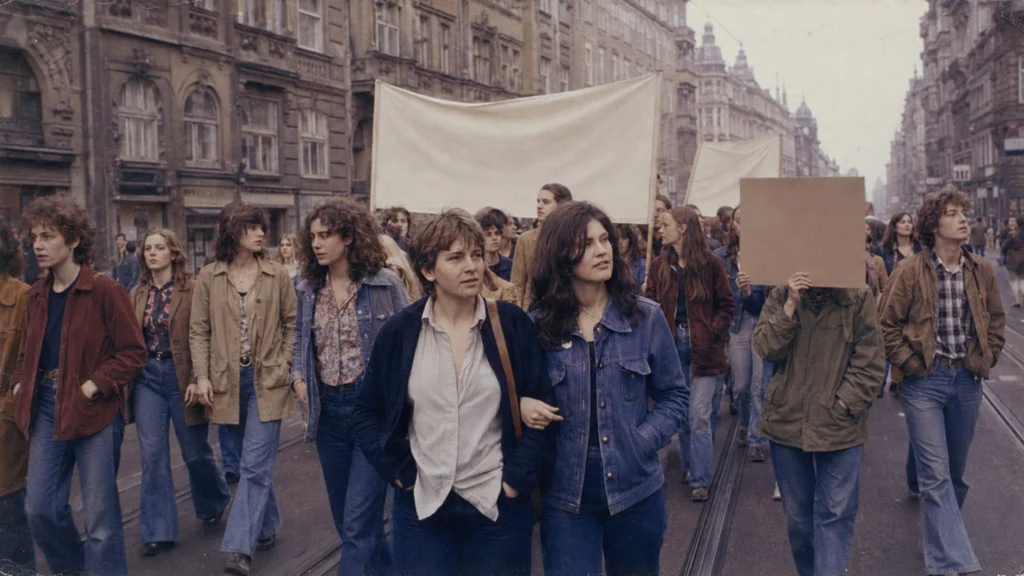
iksHaus | KI-generiert nach redaktioneller Konzeption, 2026
From Diagnosis to Depathologization
In the 20th century, the medical pathologization reached its most destructive consequences. People were threatened or mistreated with forced treatments, electroshock therapy, hormones, surgeries, and castration. Medical authority made prejudices seem objective. At the same time, a counter-movement emerged within science and activism, which empirically and politically challenged these very claims.
In 1957, the psychologist Evelyn Hooker published a groundbreaking study with homosexual and heterosexual men who had not been recruited from psychiatric clinics. Independent experts were to evaluate psychological test profiles without knowing the sexual orientation of the participants. They could not reliably distinguish the groups. Hooker’s work challenged the assumption that homosexuality itself was a mental disorder.
In 1973, the American Psychiatric Association removed homosexuality from its classification as a distinct diagnosis. A residual category for so-called “ego-dystonic” homosexuality remained until 1987. The World Health Organization removed homosexuality from the ICD in 1990. These decisions did not end discrimination or so-called “conversion practices,” but they simultaneously deprived them of a central medical legitimacy.
What this history means today
This history is not a straightforward development from oppression to freedom. Some societies offered recognized roles to certain people while simultaneously restricting others. Some archives make intimacy visible, but conceal consent, self-identification, or power dynamics. Progress can create new language and then subsequently use that same language for control.
The phrase “We have always been here” is therefore less a claim of identical lifestyles and more a rejection of historical erasure. People loved, desired, changed roles, resisted norms, and created communities long before our current abbreviations. Their stories become clearer, not weaker, when we openly acknowledge uncertainty.
The most important task is not to retroactively categorize every person from the past. It is to read archives critically, questioning colonial and medical categories, and to restore the agency that history has so often taken away. Visibility is not a gift from the present; it is the result of traces that have survived despite persecution.