

Paragraph 175 after 1945 represents a liberation that remained incomplete for many homosexual men. The Nazi regime had ended, but their convictions remained in place. Authorities often did not consider them to be people who had been wronged, but rather men with a problematic record.
Periods of imprisonment were not automatically recognized as political persecution. Many were denied compensation. Those who told their stories risked new investigations, professional disadvantages, or social ostracism.
The seventh and final part of this series shows how a law from the dictatorship continued to operate in the democratic post-war order, and why recognition and rehabilitation only came decades later.
Paragraph 175 after 1945 and the persistence of the files

iksHaus | KI-generiert nach redaktioneller Konzeption, 2026
For other groups of persecuted individuals, it was at least generally recognized after the war that Nazi verdicts were part of an unjust system. This realization did not apply to homosexual men for a long time. Their persecution was treated as ordinary criminal justice.
This had direct consequences. Compensation for imprisonment was hardly attainable as long as the state continued to consider the underlying accusation to be punishable. Years in prison or concentration camps were thus excluded from the recognized victim narrative.
Even privately, the silence continued. Families often did not know why a man had been imprisoned. Partners appeared in obituaries as friends, documents disappeared from estates. Visibility could once again become a danger.
The Federal Republic maintained the tightening of the law
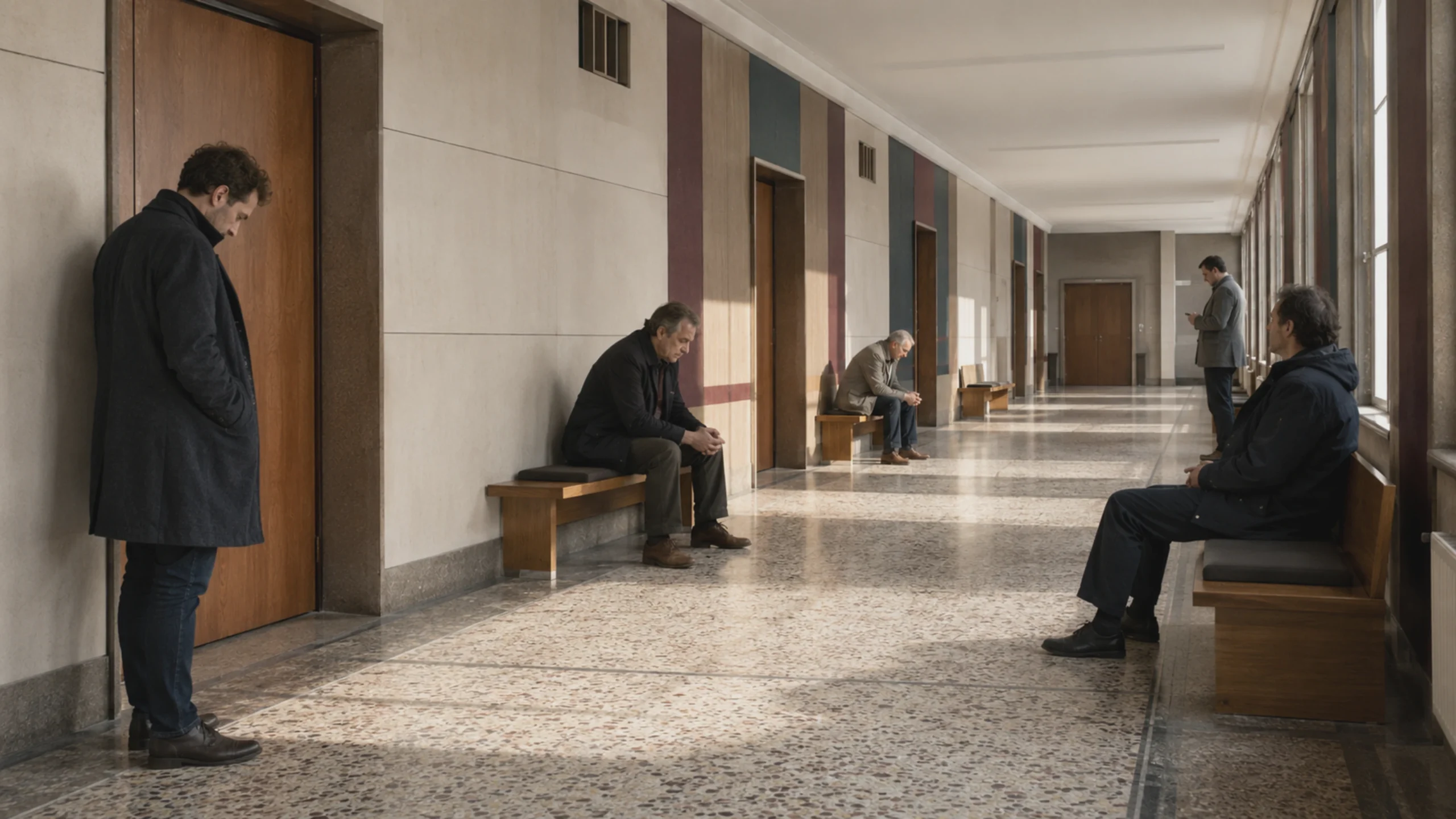
iksHaus | KI-generiert nach redaktioneller Konzeption, 2026
In West Germany, the version of the paragraph that had been tightened by the National Socialists initially remained in force. Police, public prosecutor’s offices, and courts continued to prosecute consensual relationships between men. Letters, observations, and denunciations could once again trigger proceedings.
In 1957, the Federal Constitutional Court declared the criminal provisions compatible with the Basic Law and not characteristic of National Socialist injustice. This gave the further criminalization the authority of the democratic rule of law.
For those affected, this was not an abstract legal decision. Summonses, house searches, and court proceedings could jeopardize work, housing, and social standing. As long as the same paragraph produced new defendants, those previously convicted could hardly be recognized as victims.
Reform and late rehabilitation

iksHaus | KI-generiert nach redaktioneller Konzeption, 2026
In the Federal Republic, Paragraph 175 was relaxed during the social changes of the late 1960s. The first major reform took place in 1969. Further changes followed, but the special criminal law provision only disappeared in 1994 as part of the legal harmonization after reunification.
These reforms were not a straightforward progression. Activists, lawyers, scientists, and other people publicly opposed this for decades, taking personal risks in the process.
In 2002, the German Bundestag overturned National Socialist verdicts due to consensual homosexual acts. The legal rehabilitation of people who had been convicted after 1945 in both German states took place in 2017.
East and West took different paths
Even in the Soviet occupation zone and in the later GDR, the criminalization did not disappear immediately. However, legal practice developed differently. Courts partially reverted to a less far-reaching interpretation. The prosecution of consensual relationships between adult men gradually lost importance.
With the new penal code, Paragraph 175 in East Germany was replaced. Special regulations for homosexual contacts with minors initially remained in place. However, a milder legal development did not equate to social equality. Queer groups were under surveillance, meeting places were lacking, and public organization remained restricted.
Remembrance was long denied
The Nazi persecution of homosexual men remained largely on the periphery in memorials, school textbooks, and public ceremonies for a long time. Survivors were rarely invited to speak about their experiences. The pink triangle was known, but the people behind it often remained nameless.
Queer initiatives, researchers, and individual survivors collected documents, conducted interviews, and searched for biographies that had been reduced to a criminal offense in police records. Remembrance did not happen automatically. It had to be asserted against institutional indifference and persistent homophobia.
Repealing a law cannot bring back a life
Rehabilitation changes the official meaning of a biography. A person who was legally convicted becomes someone to whom the state has committed an injustice. This correction remains important, even if it comes decades too late.
It cannot restore lost careers, broken relationships, and years of fear. A conviction influenced relationships, careers, and self-image. The fear of exposure could determine where someone lived and whether a family would ever learn the truth.
Freedom required more than a date
The men who continued to be persecuted after 1945 were workers, artists, civil servants, neighbors, sons, and partners. Many lived a hidden life because the state did not allow them to live openly. Their stories are part of German post-war history, not just a queer sub-history.
The late repeal of Paragraph 175 shows that liberation is not completed on a single date. A political regime can fall, while its ideas continue to live on in laws, authorities, and families. Therefore, history also raises the question of why those affected should remain silent again and why a democracy took so long to listen to them.