
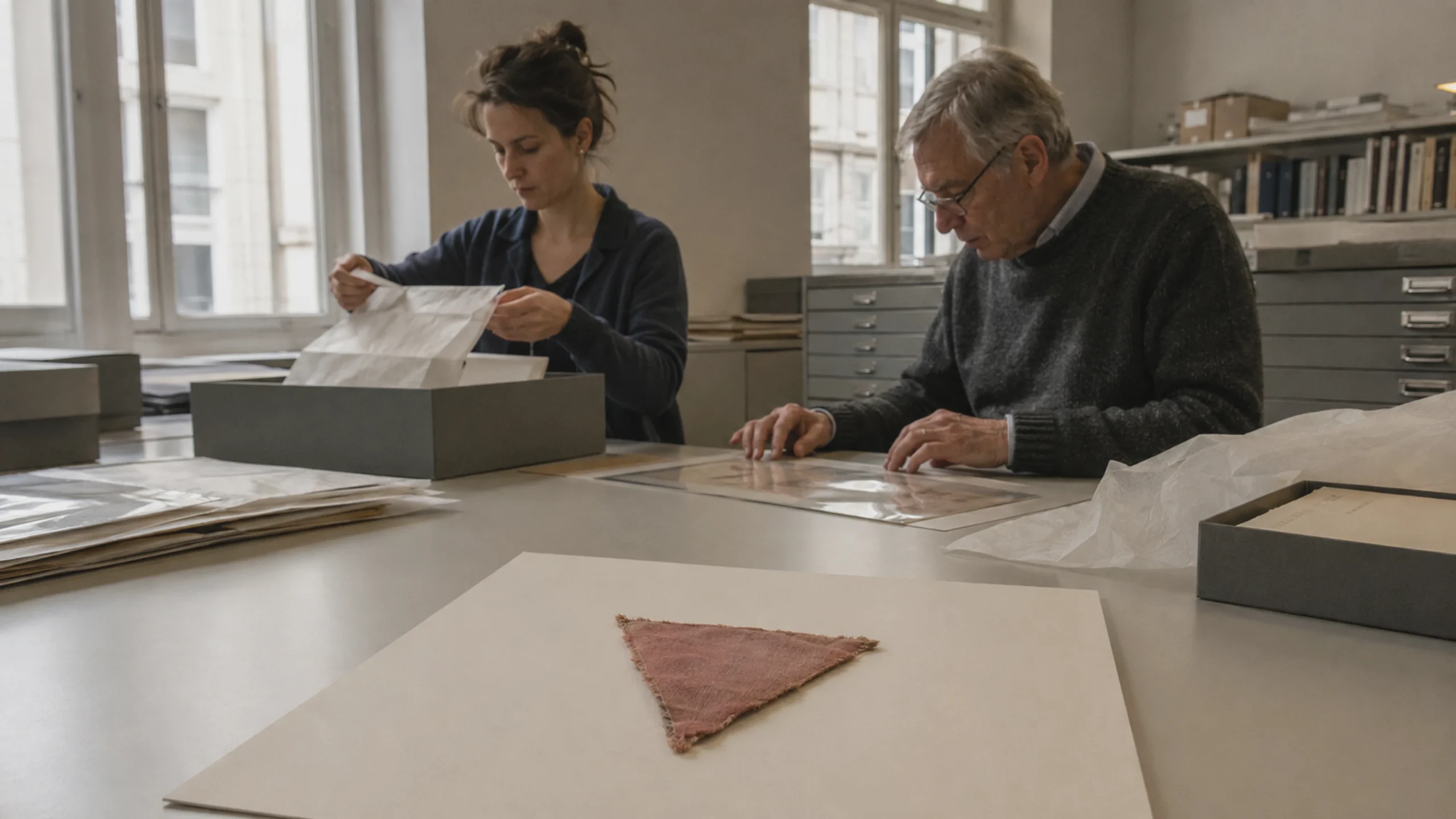
Inmates with a pink triangle were visibly marked within the concentration camp system. This marking reduced individuals to a reason for their imprisonment assigned by the camp administration and could subject them to additional violence.
The preserved fabric badge from Josef Kohout bears a number and a pink triangle. Kohout came from Vienna. A relationship with a man became the starting point for years of persecution. After his conviction, he was sent to concentration camps and forced to wear the pink triangle.
His experiences were later published under the name Heinz Heger as one of the first detailed accounts by a homosexual survivor. The fact that his badge has been preserved transforms a means of humiliation into a document against forgetting.
Inmates with a pink triangle in the camp system
iksHaus | KI-generiert nach redaktioneller Konzeption, 2026
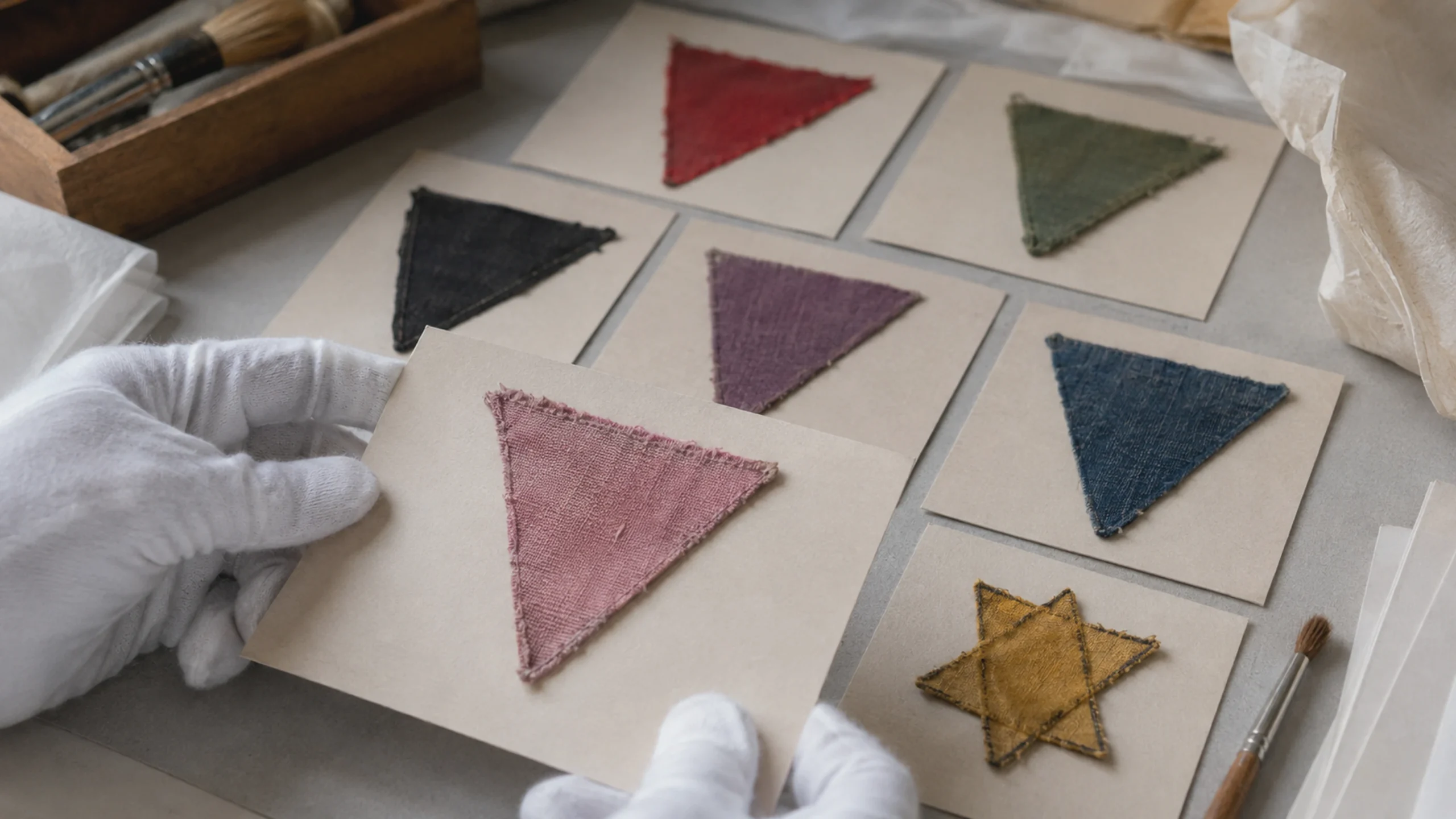
The concentration camps assigned prisoners with colored fabric badges to different categories. These markings followed the logic of the SS and not the complex biographies of the incarcerated individuals. They influenced how someone was managed, treated, and perceived by others.
Men who were persecuted for being homosexual and assigned to this category were forced to wear the pink triangle. Other men with same-sex relationships could be identified as political prisoners, Jews, or so-called “asocials.” The pink triangle, therefore, did not encompass all homosexual inmates.
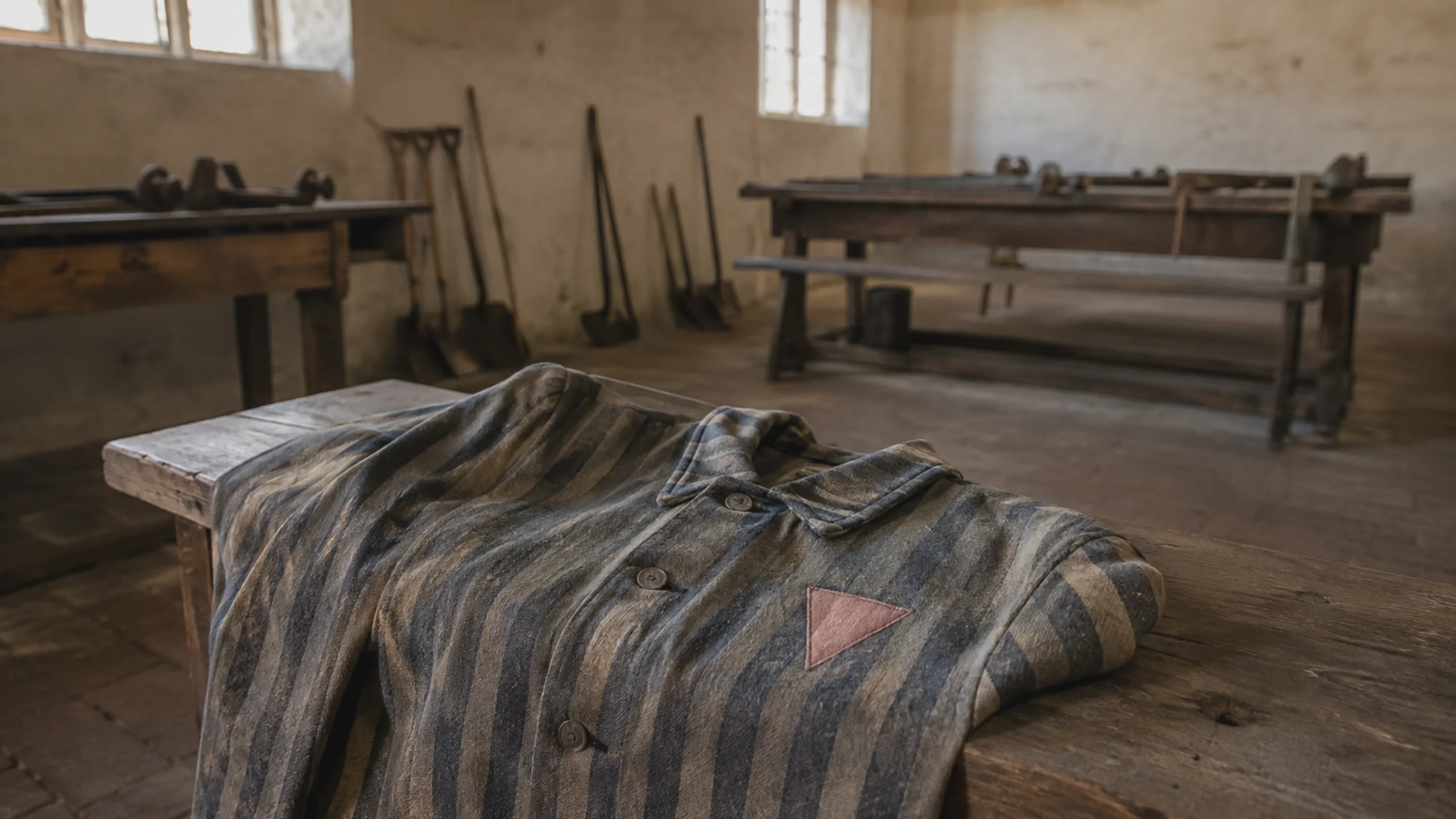
The visible marking could be life-threatening. It indicated to the SS guards and fellow inmates which group a person belonged to. In the violent hierarchy of the camps, this could lead to isolation, particularly hard labor, and additional acts of aggression.
Visibility, Isolation, and Forced Labor
iksHaus | KI-generiert nach redaktioneller Konzeption, 2026
Outside the camps, many homosexual men had tried to hide their relationships from neighbors, colleagues, and authorities. The pink triangle deprived them of this control. It made a state-defined identity publicly visible on their clothing.
Homophobic prejudices also existed among other prisoners. Men with pink triangles could therefore be excluded from networks that provided food, lighter work, or mutual protection. However, the experiences varied depending on the camp, the time period, the work assignment, and personal relationships.
SS guards could assign men with pink triangles to particularly difficult work details. Hunger, cold, physical exhaustion, and violence combined. Beatings, humiliation, and sexual assaults were also part of the persecution. Survival could depend on a different work assignment, the help of a fellow inmate, or the decision of a guard.
Pseudomedical Experiments in Buchenwald

iksHaus | KI-generiert nach redaktioneller Konzeption, 2026
In the Buchenwald concentration camp, the Danish SS doctor Carl Værnet performed operations on homosexual inmates. He claimed to be able to change homosexual desires through hormonal interventions. The prisoners were not treated as patients but were used for a pseudomedical idea.
The experiments took place within a larger context of medical crimes. The prisoners could not freely consent. There was no independent oversight or protection of the subjects. The language of treatment and healing obscured the coercion.
Even the hope of obtaining better detention conditions through participation arose within a system that had control over the bodies of the prisoners. The interventions combined medical violence with the Nazi goal of eliminating homosexual desire as an alleged deviation.
Following the sentence, further imprisonment could follow
Not every man convicted under Paragraph 175 was sent to a concentration camp. Many served their sentences in prisons or correctional facilities. However, for some, state violence did not end there.
The Gestapo and criminal police could re-arrest men and place them in what was known as “protective custody.” This type of detention occurred without a regular new criminal proceeding. Existing files, past relationships, or police assessments could facilitate further persecution.
This transition from the justice system to camp terror demonstrates the connection between criminal law and the police apparatus. Once someone was registered, they remained accessible for further measures.
After liberation, speaking out remained risky
Many homosexual survivors were unable to openly discuss the reason for their persecution after liberation. The law that criminalized their relationships remained in effect. Societal prejudices also did not disappear.
Therefore, many stories remained unspoken within families and public memory for a long time. Some survivors changed names or details, while others remained completely silent. In the larger narratives about the concentration camps, their experiences rarely found a recognized place.
Josef Kohout’s experiences were published under a pseudonym. The name Heinz Heger made the story known, but initially also protected the person behind it. This illustrates how difficult it was to provide public testimony while facing ongoing discrimination.
From a symbol of forced identification to a symbol of remembrance
Later LGBTQ+ movements adopted the pink triangle as a symbol of remembrance. A symbol of Nazi classification was thus misused against its original meaning. It now represented the memory of persecution and political resistance against forgetting.
This reinterpretation must not obscure the original violence. In the camp, the triangle was not a freely chosen identity. It was sewn on to mark people and place them in a violent hierarchy.
Josef Kohout’s fabric badge preserves this contradiction. It documents the attempt to reduce a person to a category. At the same time, it refers to a biography that cannot be captured by either a number or a color.