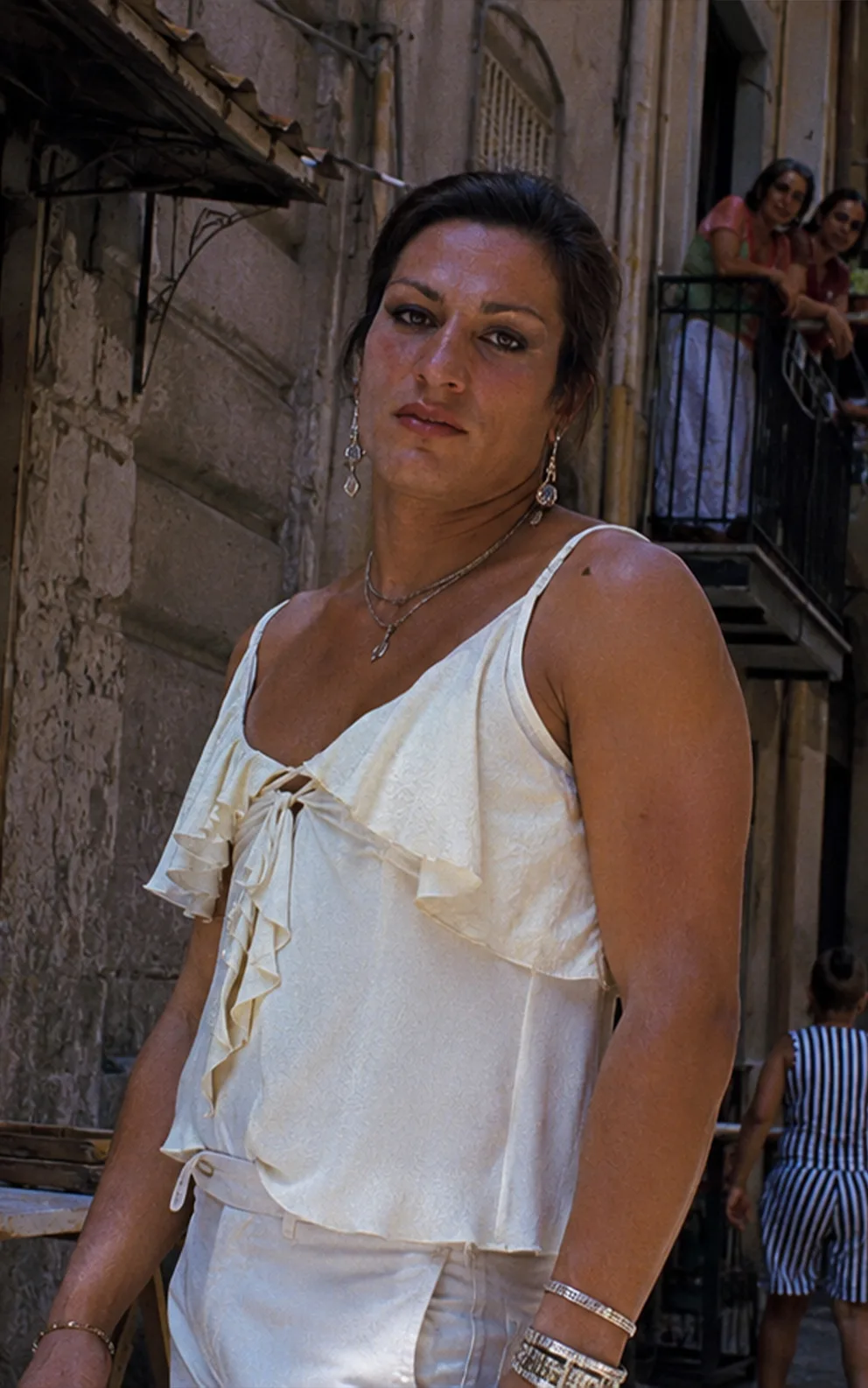
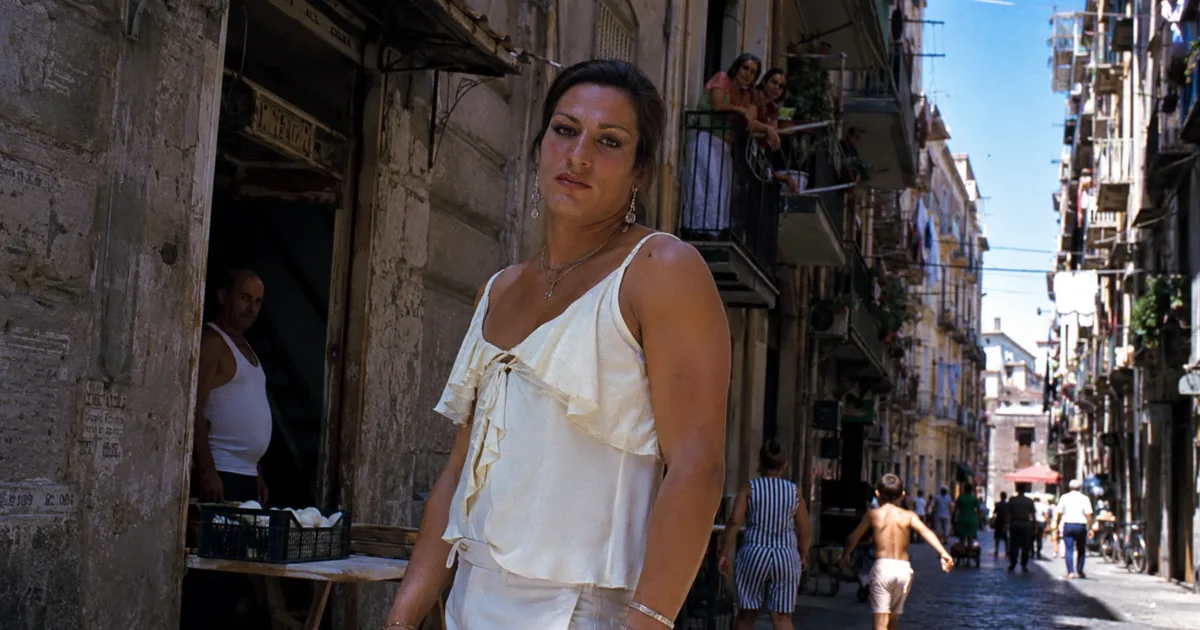
In Naples, there has been a social figure for centuries that resists all attempts to be definitively and conclusively explained: the Femminielli.
Superficially, they are people who would be assigned to the male gender at birth, but who live in a feminine way or consider themselves gender fluid. However, such a definition misses the core of the phenomenon.
Femminielli are not solely a matter of personal identity. They formed a cultural institution and a form of social intelligence, with which a community dealt with difference, tension, and uncertainty.
To understand their significance, language, myth, religion, and history must be considered together. Only in their intersection does it become clear how this particular Neapolitan figure developed, integrated into society, and was preserved for centuries.
What are Femminielli? Language, meaning, and scientific classification
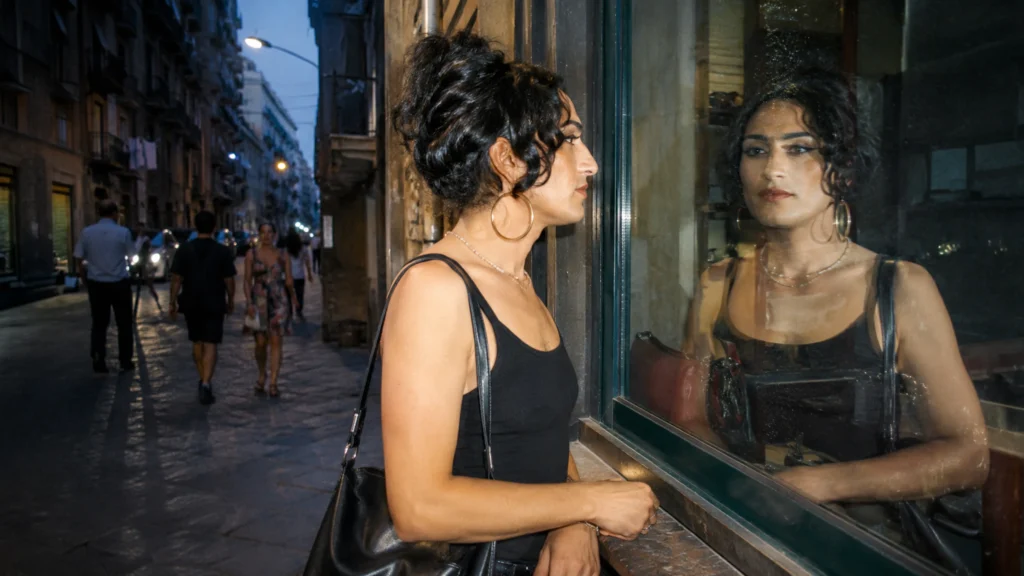
iksHaus | KI-generiert nach redaktioneller Konzeption, 2026
The term “Femminiello” comes from the Neapolitan language and derives from the word “femmina,” meaning “woman.”
The ending does not necessarily simply indicate a diminutive in the sense of “small.” It can also denote something unique, specific, or different from a general category.
The grammatical structure of the term itself points to an ambiguity: “Femminiello” is a masculine noun with a feminine root.
The person designated by this word is, in the traditional Neapolitan understanding, neither simply a woman nor a man. Rather, the term describes a socially recognizable position that exists between or outside of these clear-cut categories.
Modern anthropology often describes “femminielli” as a traditional third gender role. These are individuals who would be assigned male at birth, but who live in a feminine or gender-fluid social role.
Crucially, this is a culturally recognized category, not primarily a medically defined one.
Identity is not created solely from the inner feelings of an individual. It also develops through relationships with the neighborhood, family, rituals, and the entire symbolic order of the city.
The gender expression of a “femminiello” was thus embedded in a broad social context. It was part of a specific Mediterranean urban culture.
While LGBTIQ+ identities in many Western societies have historically been defined primarily as deviations, sins, illnesses, or social exclusion, Neapolitan culture provided “femminielli,” at least within certain local structures, with a recognizable social position.
This does not mean that their lives were free from discrimination, poverty, or violence.
However, it means that they were not entirely outside of the city’s narrative. Naples possessed a language, rituals, and social roles through which their existence became legible in collective life.
“Femminielli” do not fully correspond to the modern concept of transgender identity.
They would not necessarily be primarily a political or exclusively an individual identity category. They would not necessarily be associated with a medical transition, and they were not based solely on personal self-definition.
Their significance arose within a collective symbolic system.
From the very first encounter with this phenomenon, it becomes clear how closely it is linked to the history, freedom, and social character of Naples.
In earlier times, Femminielli were apparently more numerous and visible in the daily life of the city’s neighborhoods than they are today.
They still exist, but in a changed form. Their traditional role is less present in many neighborhoods. At the same time, they appear more frequently in cultural, documentary, and activist contexts.
Often, today they are interpreted within the contemporary LGBTQ+ discourse. While this can enable important new forms of political visibility, it does not always capture the entire original social function of the Femminielli.
Why Femminielli were considered good luck charms
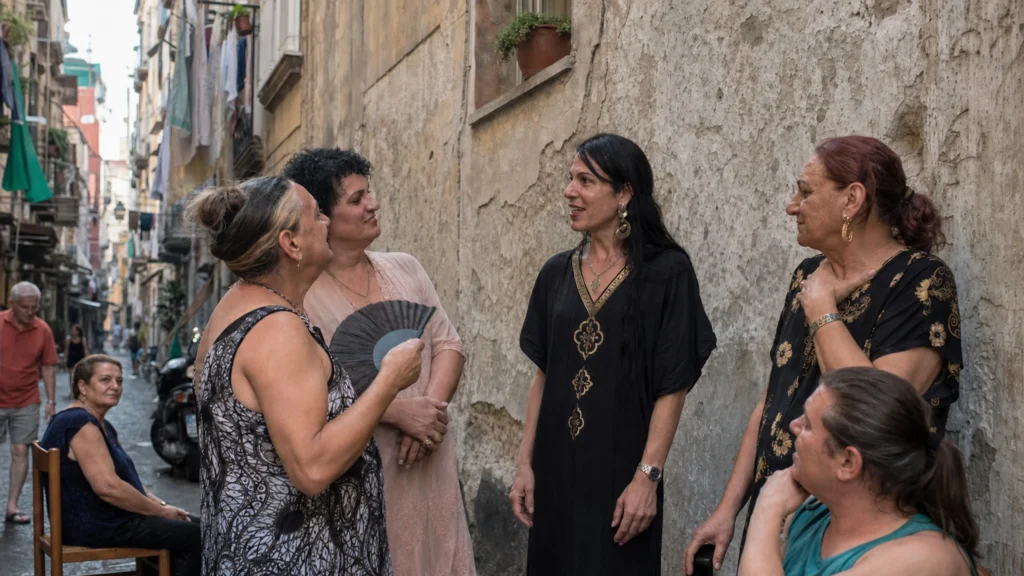
iksHaus | KI-generiert nach redaktioneller Konzeption, 2026
Neapolitan culture has a long tradition of belief in luck, fate, and signs.
Luck is not seen there merely as a random event. It can be invoked, interpreted, and, under certain circumstances, even transmitted.
Femminielli played a special role in this symbolic system.
Their significance was closely linked to their liminal position.
Liminality refers to a state on a boundary or threshold. Those who do not fully belong to a single social category are symbolically closer to the unknown, to fate, and sometimes even to the supernatural.
Therefore, Femminielli were understood as potential intermediaries between different worlds.
They moved between male and female, between everyday life and ritual, between seriousness and humor, between the sacred and the profane.
From this intermediate position, the idea arose that they might have a special connection to luck, omens, or hidden meanings.
A central component of this culture is the Neapolitan Smorfia.
This is a traditional system in which dreams, body parts, animals, people, and everyday events are assigned to specific numbers.
These numbers are then used, among other things, for lottery games.
In this system, a dream was not simply a private psychological experience. It could be understood as an encoded message that needed to be translated into numbers.
Femminielli often acted as intermediaries in such interpretations. They helped to interpret dreams, select numbers, or guide the ritualistic aspects of the game.
In this way, they became interpreters of fate.
Their role was not based solely on superstition. It required social sensitivity, cultural knowledge, an understanding of people, improvisation, and the ability to read the mood of a group.
Folk Rituals: Tombola and Everyday Symbolism
iksHaus | KI-generiert nach redaktioneller Konzeption, 2026
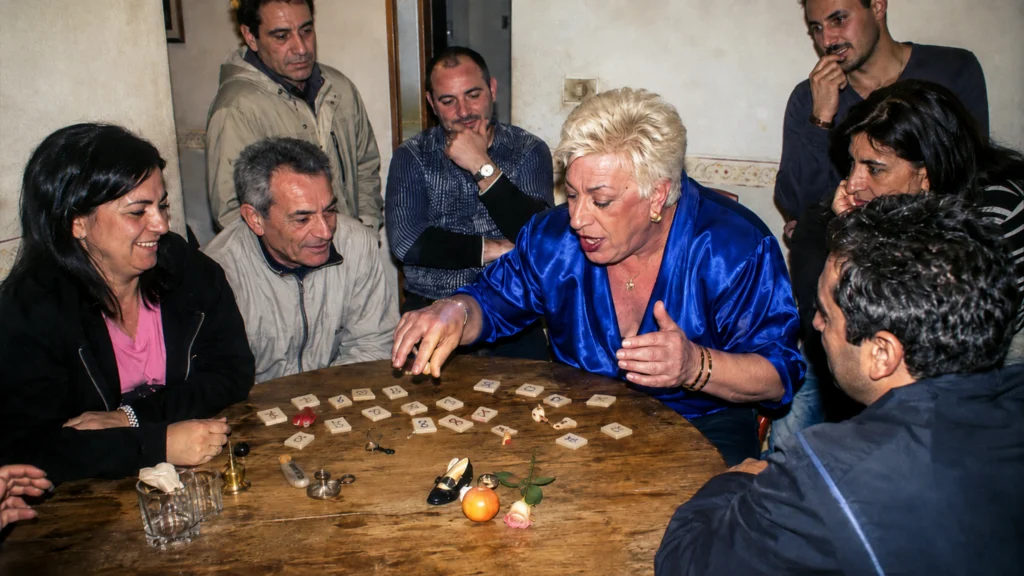
One of the most important rituals associated with femminielli was the Neapolitan Tombola.
It superficially resembles a number game or bingo, but it is much more than a simple social game.
Especially during the Christmas season, the Tombola brings together families, groups of friends, and entire neighborhoods.
Each number drawn has a traditional meaning that can be associated with dreams, bodies, figures, fears, sexuality, or everyday situations.
The person leading the game does not simply read out numbers.
They interpret, comment, improvise, and transform the game into a shared narrative.
This requires charisma, humor, linguistic agility, and the ability to maintain the attention of a group.
Femminielli were particularly valued in this role.
They combined performativity, symbolic knowledge, and humor. This gave the Tombola a ritualistic character.
Their comments can be ambiguous, cheeky, or provocative. At the same time, their humor helped to reduce tension and make difficult topics within the group more approachable.
The Tombola thus became a social space where order and disorder could coexist for a few hours.
Femminielli also participated in weddings, family celebrations, and local Catholic processions.
Their role was particularly significant in situations of family tension.
Through humor, symbolism, and ritualized exaggeration, they could defuse conflicts without directly denying them.
They fulfilled a psychological and social function.
They were not just entertainment.
They helped a community deal with ambiguity.
Where do the Femminielli come from? A local phenomenon with deep roots
iksHaus | KI-generiert nach redaktioneller Konzeption, 2026
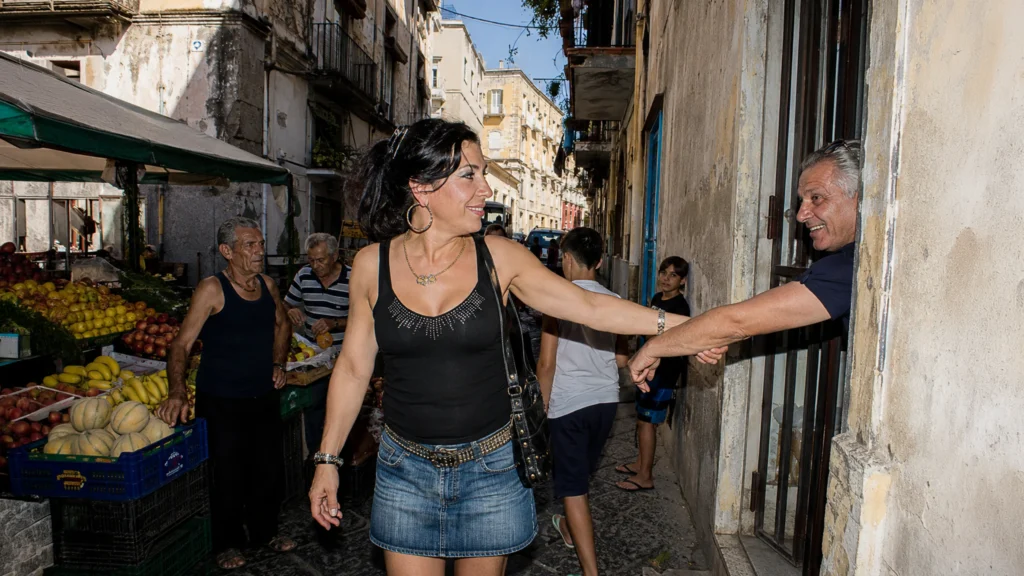
Femminielli did not arrive in Naples as a fully formed cultural figure from the outside.
They emerged within the Neapolitan community itself.
At the same time, many young people from smaller and more conservative areas in the surrounding region moved to Naples. Some left their places of origin due to their gender expression or sexual orientation.
In the big city, they had a greater opportunity to live visibly and become part of a community.
The cultural roots of this phenomenon, however, go deep into Mediterranean history.
In ancient Greece and Rome, there were religious figures and rituals in which gender boundaries were crossed or temporarily suspended.
In Dionysian rituals, fixed roles of gender, reason, and social order could be challenged.
In the cult of the goddess Cybele, there were priests who lived outside the usual male norms.
Femminielli are not simply a direct continuation of these ancient figures.
Such a claim would oversimplify different historical contexts.
Nevertheless, Mediterranean history shows that gendered in-between spaces, ritual inversions, and non-binary social roles are not a modern invention in this region.
Naples was a place of encounter for different cultures for centuries.
Greek, Roman, Christian, Spanish, and local traditions overlapped in the city.
Naples did not develop a completely unified order from this. The city preserved contradictions, mixed influences, and integrated elements that might have been more strictly separated in other societies.
It was within this cultural space that the Femminielli could develop.
They would not have been a foreign addition to the city.
They would have been one of its own social products.
Historical Context: The Four Days of Naples
iksHaus | KI-generiert nach redaktioneller Konzeption, 2026
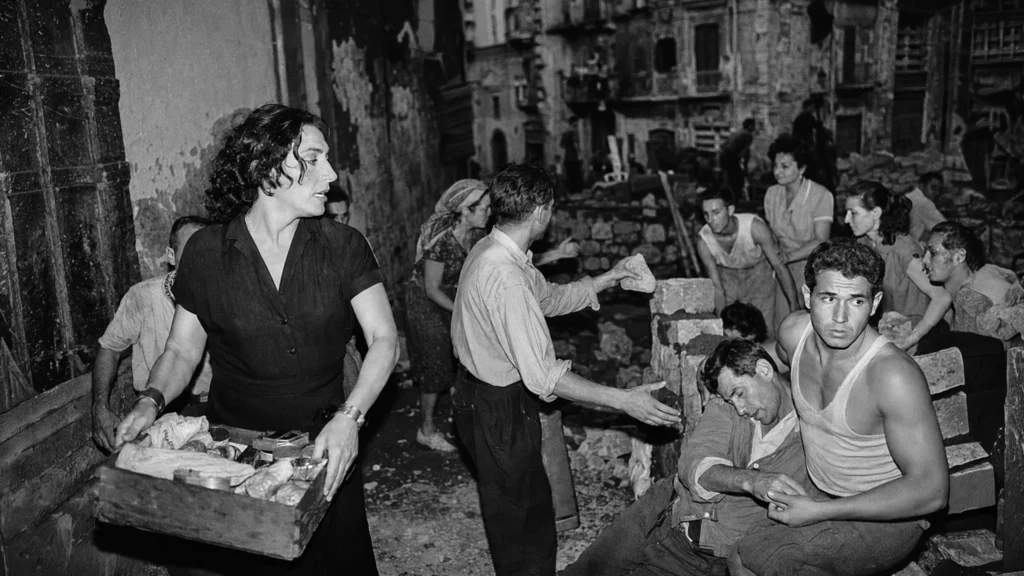
An event that made the Femminielli visible beyond the local context was the so-called Four Days of Naples.
This visibility did not primarily arise from a public display organized by the Femminielli themselves. It developed from local memories and accounts by Neapolitan resistance fighters who reported on their participation.
The Four Days of Naples refer to the popular uprising from September 27th to 30th, 1943.
After the fall of the fascist regime and Italy’s armistice with the Allies, German troops occupied the city.
A spontaneous uprising against the Nazi occupation then arose in Naples.
It was not a classically organized military operation.
Workers, women, young people, children, the elderly, former soldiers, and other city residents participated in the resistance.
Within four days, the population managed to force the German troops to withdraw from Naples, before Allied units reached the city.
Femminielli are also mentioned in local traditions as part of this resistance.
They fought, helped with supplies, transported messages, and supported their neighborhoods together with other residents.
This participation has a special symbolic meaning.
It shows that Femminielli were not simply outside of society.
In a historical moment when the entire city had to act as a community, they would not have been perceived as a foreign marginal group, but as part of the people.
The Four Days of Naples demonstrate the strength of collective identity and the ability of a community to act outside of formal institutions.
For the history of the Femminielli, they confirm that their social position was not limited to entertainment, ritual, or private tolerance.
They were part of the social and political fabric of the city.
The Sanctuary of Montevergine
iksHaus | KI-generiert nach redaktioneller Konzeption, 2026
Montevergine is a Benedictine sanctuary in the mountains of Campania, near Naples.
It is particularly known for the veneration of the Madonna di Montevergine, a dark-colored depiction of the Virgin Mary, which holds a special significance in the local religious culture.
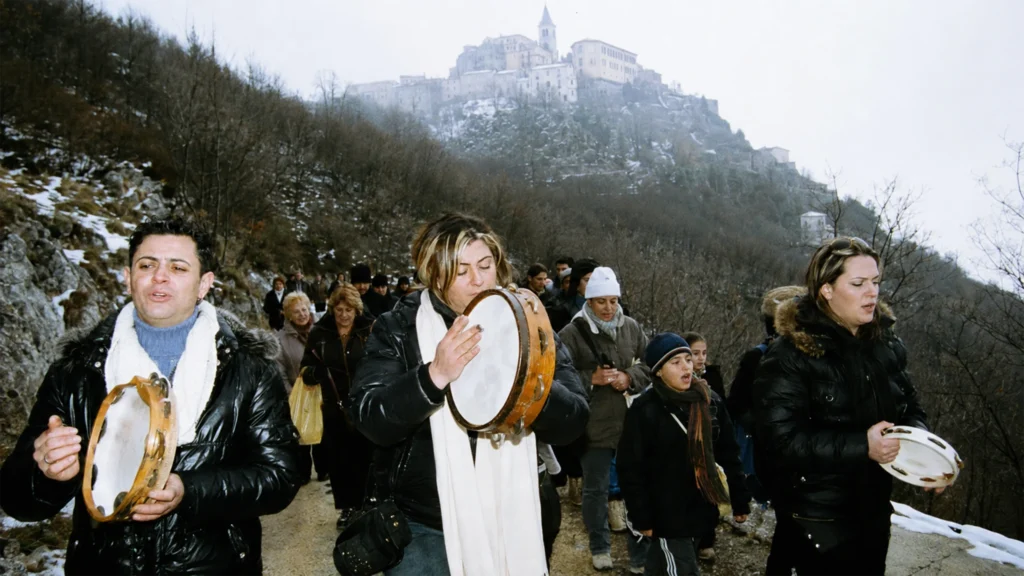
Every year, on February 2nd, the Catholic Feast of the Presentation of Jesus (or Candlemas), a pilgrimage takes place to Montevergine.
Femminielli and numerous LGBTIQ+ pilgrims also participate in this pilgrimage.
Singing, dancing, prayer, and traditional instruments create an atmosphere that is both religious and festive.
The boundary between solemn devotion and physical joy is not completely erased, but rather rearranged.
The sacred does not appear exclusively as something quiet, controlled, and distant.
It becomes loud, physical, and communal.
For many marginalized people, Montevergine has become a place of protection and belonging.
Today, many LGBTIQ+ Catholics consider the sanctuary a special pilgrimage site.
People who often experience rejection within church structures have found a religious space there, where their existence is not automatically seen as a contradiction to faith.
This significance is closely linked to a legend, according to which the Madonna accepts all her children, regardless of how they live or whom they love.
Montevergine thus demonstrates a peculiar connection between traditional folk religion and gender diversity.
The Femminielli are not simply outside of Catholicism.
They become part of a religious practice that interprets the sacred as protection from social condemnation.
The Legend of the Two Young Men

iksHaus | KI-generiert nach redaktioneller Konzeption, 2026
A local legend tells of two young men who were being punished for their love.
They would be tied to a post and left in the cold to die.
According to tradition, the Virgin Mary appeared to them, rode up to them, and saved their lives.
In doing so, she overturned the judgment of society.
Today, the basilica stands on the site associated with the legend, and numerous believers make pilgrimages there.
Historically, such a narrative cannot be treated as a documented event.
Its significance lies primarily in its symbolic function.
In the legend, society condemns a love that it neither understands nor accepts.
However, the sacred intervenes.
The religious power does not confirm the social punishment, but contradicts it.
In this way, what is forbidden is not erased, but legitimized.
In the narrative, the love of the two young men is not presented as the cause of their downfall. Instead, it is placed under the protection of the Madonna.
For Femminielli and other LGBTIQ+ believers, this story has a particular power.
It offers a religious language in which acceptance does not have to be fought for against the sacred.
The sacred itself becomes an agent of liberation.
The legend symbolically affirms that even those who are socially condemned have a place in the community and the religious universe.
Known Femminielli and their current presence
iksHaus | KI-generiert nach redaktioneller Konzeption, 2026
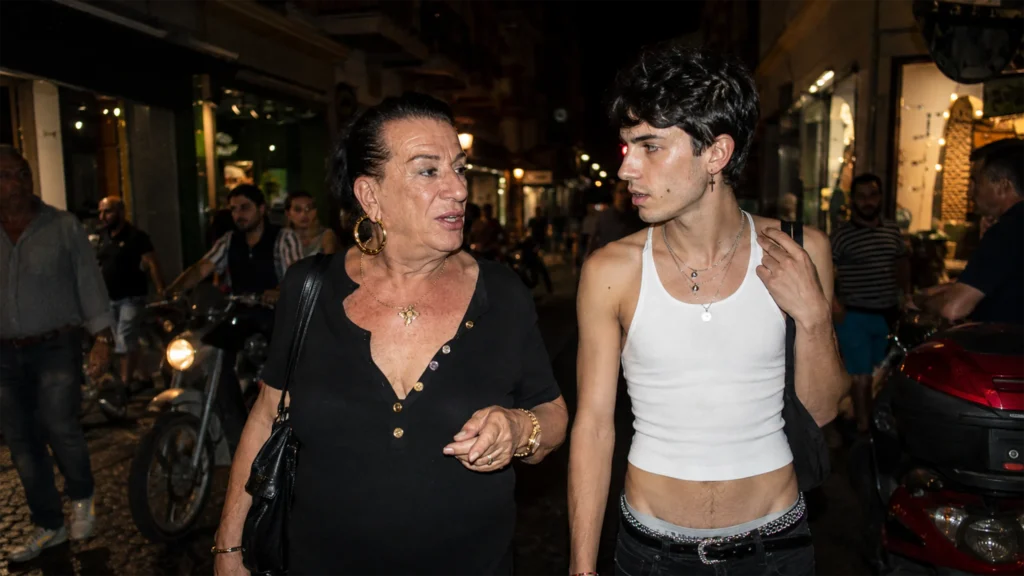
Many Femminielli remained anonymous outside of their immediate neighborhood.
Their importance was not in achieving public fame.
They were part of everyday life, local relationships, and communal rituals.
However, some individuals gained recognition far beyond Naples through theater, film, documentaries, and anthropological works.
Among them is the actor Ciro Cascina, who embodied both traditional and modern aspects of this identity.
Since the late 20th century, numerous other Femminielli have been documented in documentaries, photographs, and ethnographic studies.
These recordings hold significant documentary value today.
They not only depict individual life stories but also a social role that is increasingly changing or disappearing.
Even today, Femminielli live in Naples.
Many of them belong to older generations.
Their memories often speak of childhoods and youth in which they did not experience the same form of explicit stigmatization in certain neighborhoods that modern observers might expect.
This does not mean that their lives were free from violence, poverty, or exclusion.
It means that the local culture exhibits forms of recognition and categorization that do not fully align with today’s identity categories.
Many older Femminielli therefore experience the modern language of transgender identity, homosexuality, or queerness with ambivalence.
These terms can ensure protection, rights, and political visibility.
At the same time, they do not always correspond to the way those affected understand their own lives and their social function.
The traditional Femminiello was not only a private gender identity.
They were neighbors, entertainers, mediators, ritual leaders, good luck charms, and part of the social memory.
As the city, family structures, and local neighborhoods change, this specific role is increasingly losing its original social space.
More than an identity
The phenomenon of Femminielli demonstrates that even a deeply religious and strongly patriarchal society can develop complex ways of dealing with difference.
These forms were not free from contradictions.
They did not represent complete equality.
However, they enabled a form of cultural integration that went beyond mere tolerance.
Through ritual, religion, myth, humor, and everyday relationships, Femminielli served as bridges between social categories.
They carried symbolism, mediated between people, and helped to regulate social tensions.
Their existence was therefore not only individual.
They possessed a communal function.
In a world increasingly based on clear and well-defined identities, Naples offers a different historical model.
In this model, difference is not completely resolved.
It is also not eliminated.
It is integrated into the structure of the community.
This is precisely where the forgotten social intelligence of the Femminielli lies.