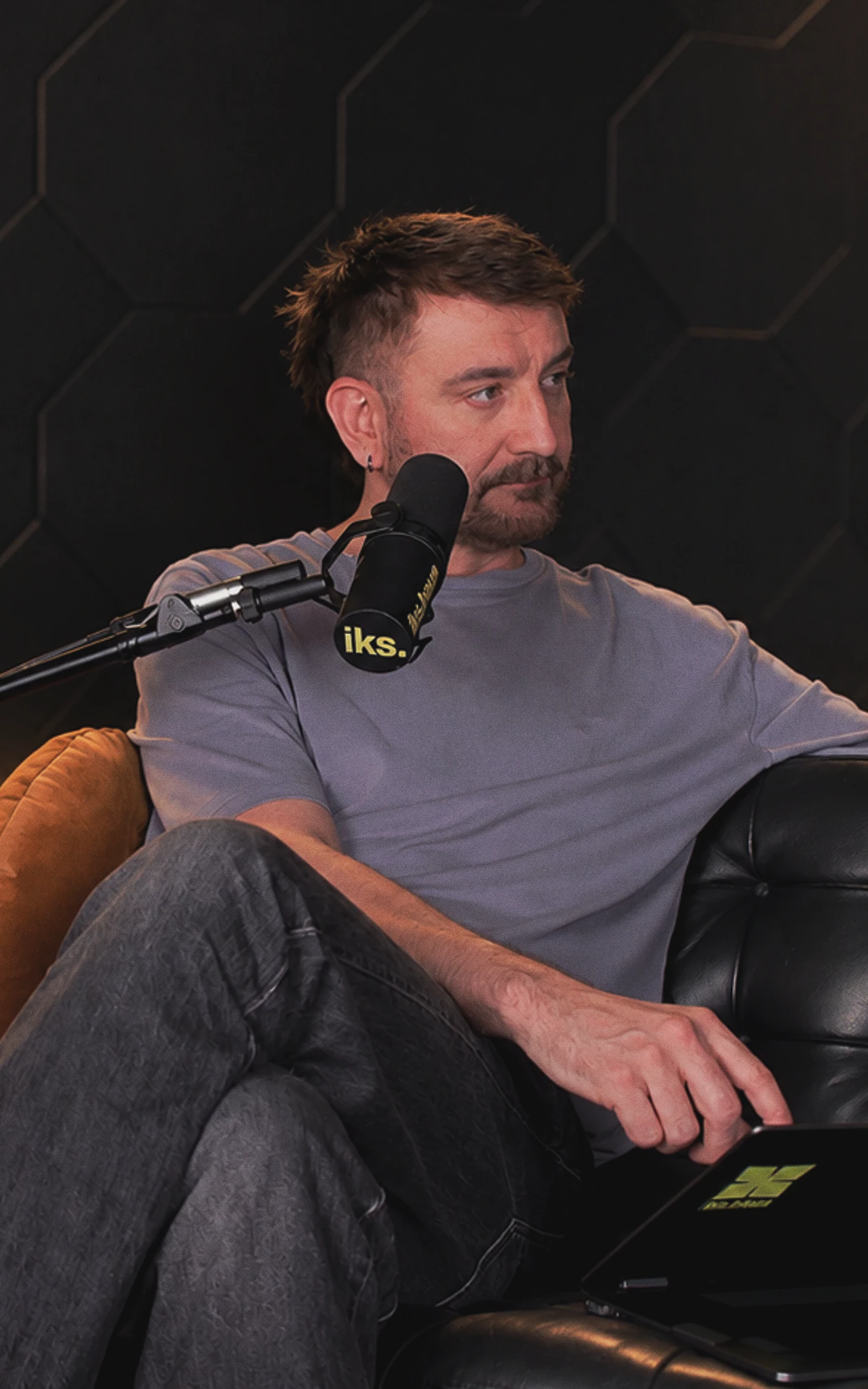
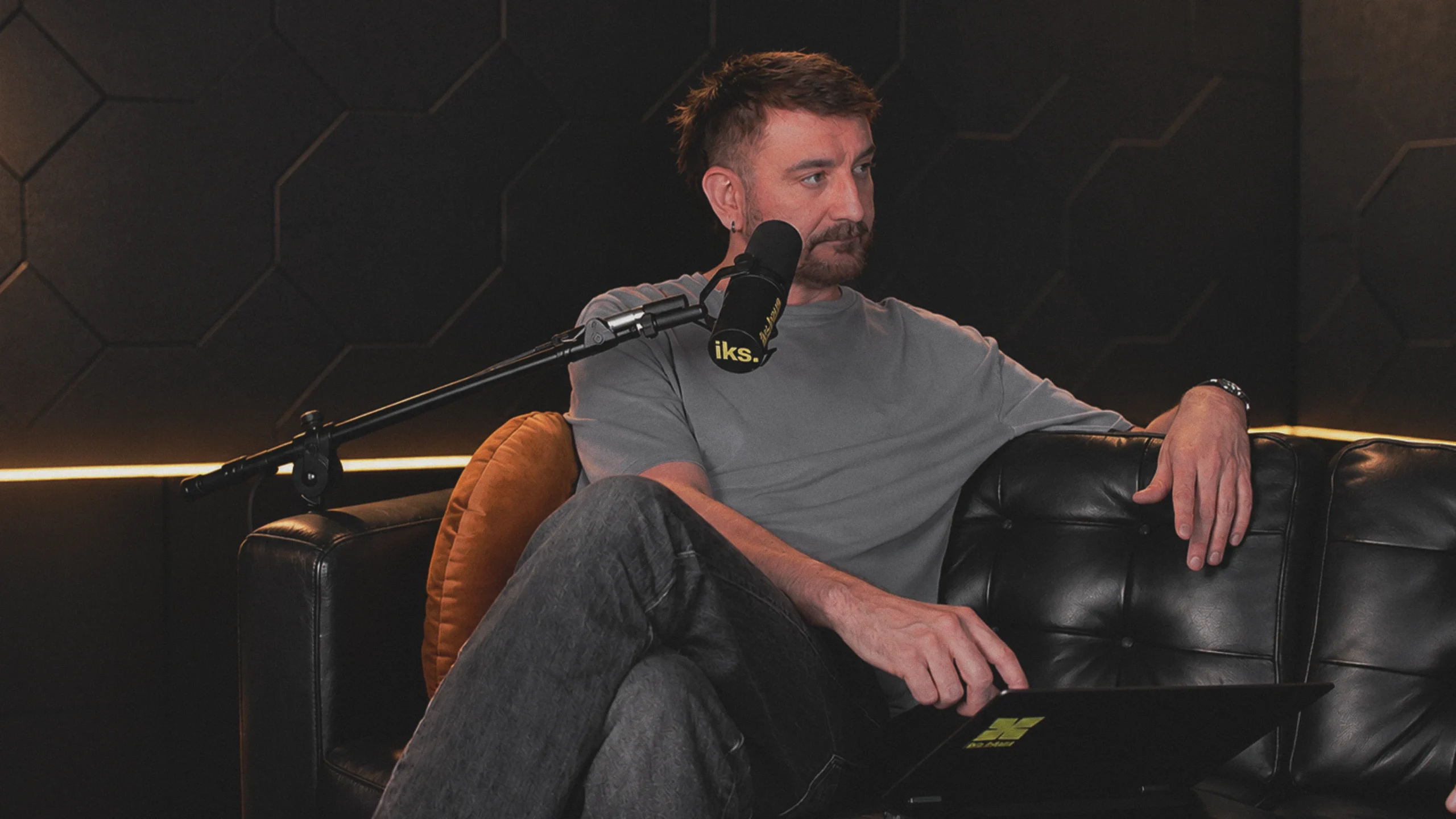
“Here We Are” aims to reach audiences in Vienna and throughout Europe as a Podcast Wien: The first in-house production from iks.haus consists of four parts and is just under 59 minutes long, covering topics such as therapy, ADHD, trauma, and Chemsex. The language spoken is English, with German subtitles displayed directly in the video, and English subtitles will be available on YouTube. Other podcasts from iks.haus are already in preparation and will be launched soon.
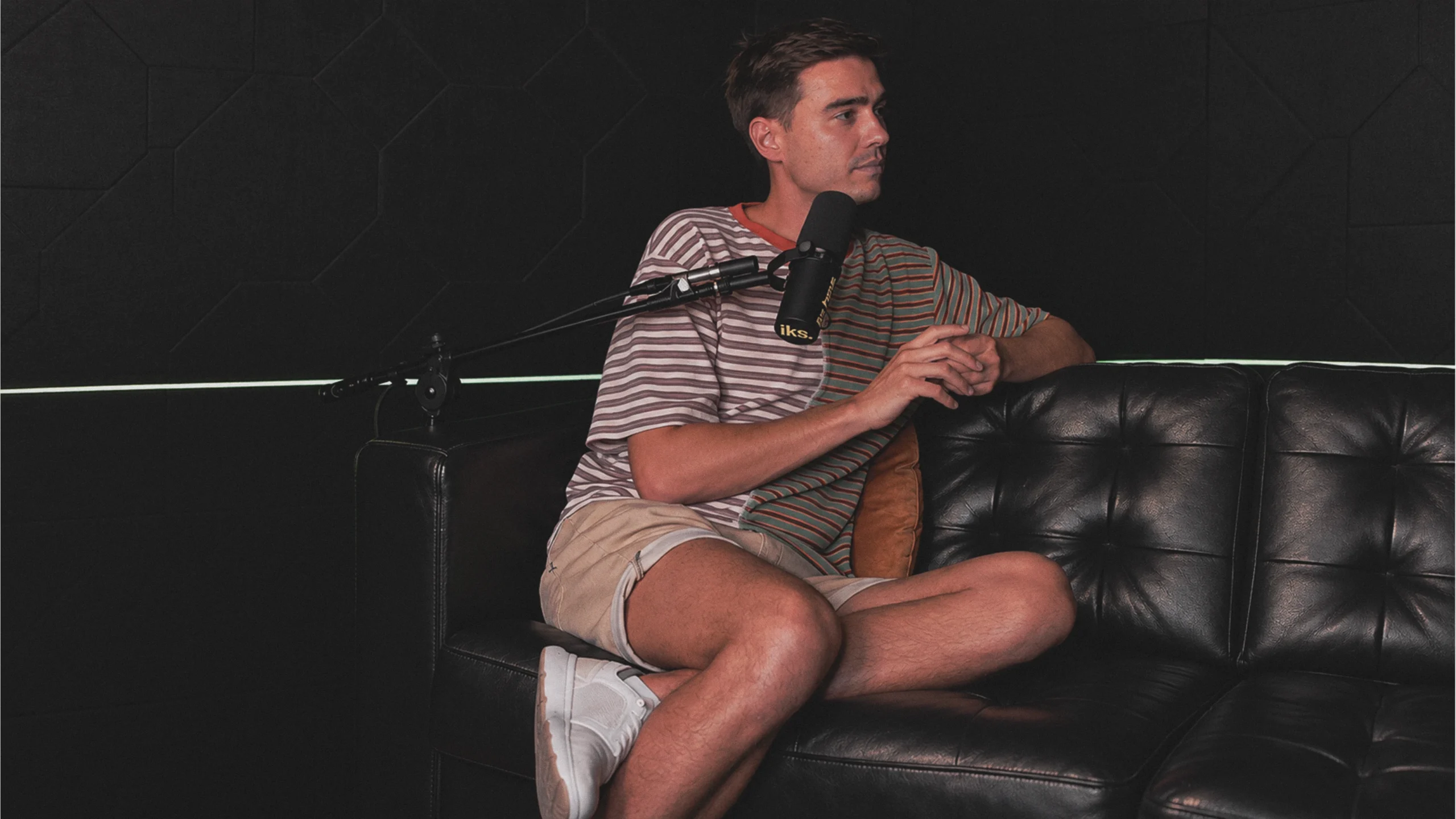
At the microphones sit two Croatians who know each other from a room where usually no one else is listening: iks.haus founder Kresho and Tomislav Bišić-Pauletić from Rovinj, MA and Psychotherapy Counsellor. Tomislav was Kresho’s therapist for three years. Now, the two are reversing the roles and talking publicly about topics that are usually kept behind closed doors.
In the fourth part, a guest joins: Dr. med. Alexandru-Teodor Zaharie, FECSM. The framework is clear, as iks.haus writes for LGBTIQ+ people, people with disabilities, and linguistic minorities, under the motto ALL&EQUAL, and automatically translates every article into nine European languages. Even so, there is no script: Kresho wants to “just go with the flow.”
Podcast Wien: What happens when we lack the words?
iksHaus | KI-generiert nach redaktioneller Konzeption, 2026
Right at the beginning, Kresho admits that he “lacks the words in all languages.” For Tomislav, this is a key moment in every therapy: When we lack the words, we turn inward and seek answers to questions we have never asked. He refers to the Viennese physicist and cyberneticist Heinz von Foerster, for whom the solution to a problem lies in creating as many possibilities as possible.
Kresho explains why a magazine should even talk about psychotherapy with a sentence that immediately convinced Tomislav: if iks.haus helps even one person, that is already a win. This is based on personal experience, as Kresho didn’t feel any progress for a year and a half, even though his therapist had already seen it. Tomislav replies that this is completely normal: therapy is about guidance and making people aware of where they currently stand.
Kresho brings up an observation that many queer people know: LGBTIQ people experience mental health problems more often, and the blame doesn’t lie with them, but with society. Tomislav calls this phenomenon by its technical name: minority stress, a model developed by the US researcher Ilan H. Meyer. Many still don’t seek help, Kresho suspects, because they believe that anyone who goes to a therapist is crazy.
The Austrian LGBTIQ+ Health Report 2022 shows how concrete this burden is: 53 percent of the LGBTIQ+ people surveyed had experienced depression in the twelve months prior. In the general population, according to the 2019 health survey, it was only six percent. For Tomislav, suffering is therefore the first warning sign that needs to be addressed, whether it comes from the family or from society.
How deeply such suffering can be rooted is shown by Kresho’s own story. For a long time, he considered it normal not to remember much of his childhood, while his sister remembered every detail. Tomislav explains: Gaps in memory can indicate a trauma, because amnesia is essentially a form of self-protection for the overloaded nervous system. However, his therapy doesn’t involve actively trying to retrieve memories.
“We do the work,” says Tomislav, and whatever comes back is allowed to come back. For Kresho, it came back, once as a veritable stream of memories in a restaurant, and most recently as an image of a car accident that his sister confirmed. Today, he feels “more complete as a person” because of it. The walls he had built around himself were not self-respect, but fear of being hurt again.
“The first sign is suffering, emotional suffering. If you are emotionally suffering, it means that something is not right.”
Tomislav Bišić-Pauletić, MA, Psychotherapy Counsellor
Is ADHD in adults just a trend?

iksHaus | KI-generiert nach redaktioneller Konzeption, 2026
Neurodiversity is the most-read topic in the magazine, and the second part explains why. Kresho only learned through therapy that he has ADHD. At Tomislav’s urging, he was tested by a psychiatrist, who initially doubted it because Kresho was sitting calmly in front of him. Two months later, the doctor asked him how he was doing, and Kresho said he had never felt so calm.
Tomislav, who himself has ADD, explains the difference without using technical jargon: In ADHD, attentional problems are often accompanied by motor restlessness, while in ADD, this restlessness is absent. He dislikes the term “disorder” because no one can find a good way to cope with themselves if they are labeled as disordered. He prefers to describe ADHD as a different wiring of the brain, and he himself felt stupid in school.
For Kresho, Tomislav once came up with an image that stuck: When Kresho was conceived, the electrician was in a hurry and hastily connected all the wires. “Everything works, but it’s a mess.” More important than any definition, Tomislav believes, is the place where a person lives and works. People with ADHD or ADD thrive in the right environment, while in the wrong environment, they primarily experience feelings of guilt.
Tomislav considers the idea that ADHD is currently exploding a misconception: Today, there are simply the means to identify it in adults, whereas 30 years ago, it was almost exclusively diagnosed in children. According to the World Mental Health Surveys of the WHO, an average of 2.8 percent of adults have ADHD, and 3.6 percent in high-income countries. In all the countries studied, those affected rarely seek help.
The iks.haus article “Neurodiversity: Terms, models, and barriers” provides more background. In the podcast, it quickly becomes clear that not everything can be attributed to ADHD. Kresho used to drink until he could no longer stand, but behind the impulsivity were also war, trauma, and post-traumatic stress disorder. When Kresho credits him with a miracle, Tomislav waves it off: “That’s just therapy.”
In the third part, Tomislav delves deeper into the topic with a thought he attributes to the doctor Gabor Maté: Trauma is not what happened to you, but your reaction to it. Most difficult experiences do not lead to trauma, but to post-traumatic growth. It only becomes problematic when a stressor is too much for the nervous system and we shut down or dissociate.
Next, the discussion turns to relationships between younger and older gay men, a topic with which Kresho identifies. The iks.haus series on age differences comes to a clear conclusion: age only matters when two people are not personally connected. Looking ahead, the focus turns to history: The historian Marco Reglia from Trieste has reconstructed how homosexual men were treated in the Austrian Littoral until 1943.
Why is Chemsex more than just a drug issue?
iksHaus | KI-generiert nach redaktioneller Konzeption, 2026
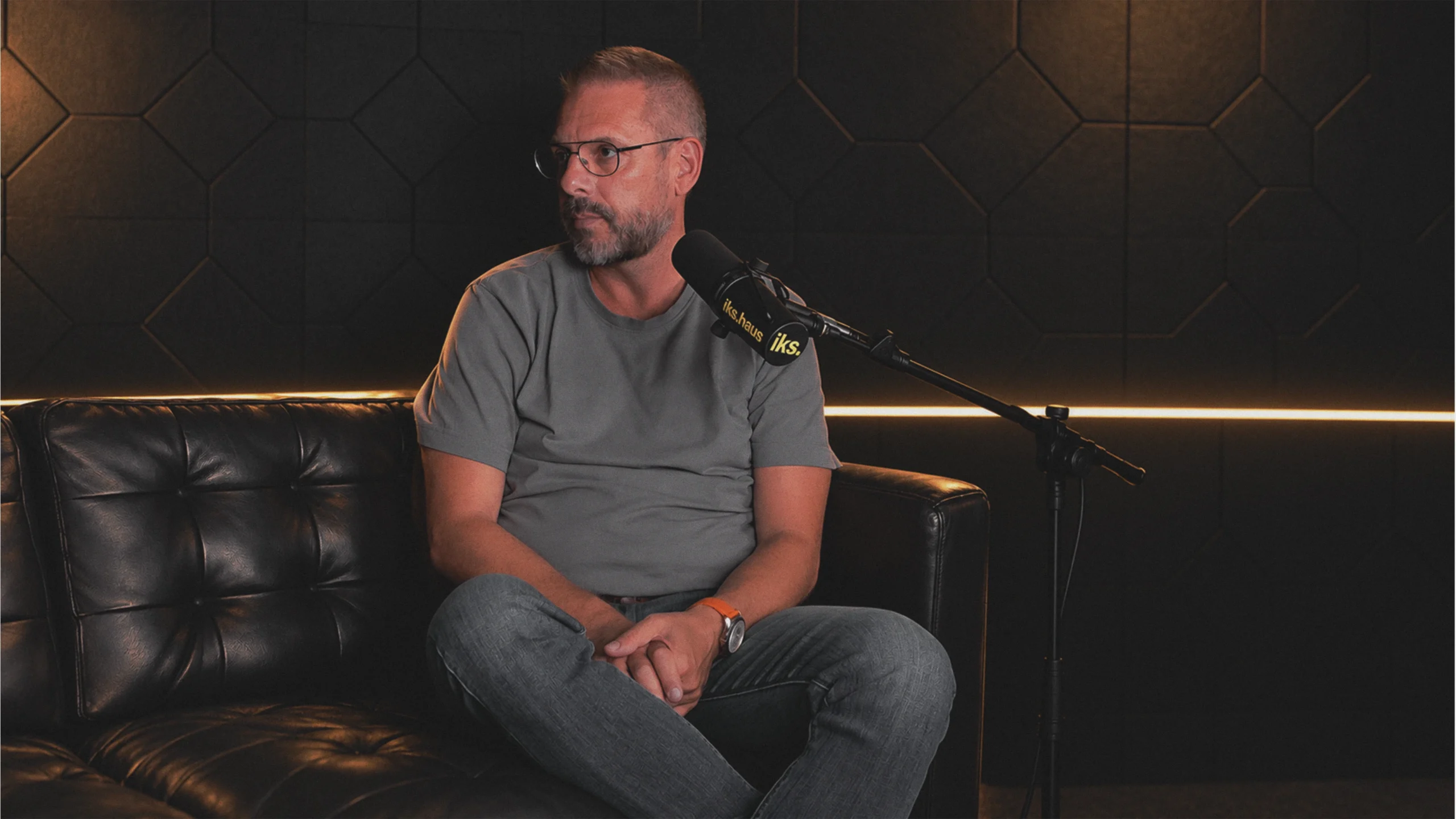
For the fourth part, Dr. med. Alexandru-Teodor Zaharie, FECSM, a radiation oncologist specializing in sexual medicine, joins them in the studio. He immediately clarifies that he is not an addiction expert, but that he is part of the scene and the LGBTIQ community, that he himself has ADHD, and that he teaches this topic in a course at his university. His approach: to focus less on the substance itself and more on the situation, context, and behavior.
Zaharie describes Chemsex as a phenomenon that, as a term, has almost exclusively emerged among gay men and other men who have sex with men (MSM). He distinguishes it from the sexual liberation of the 1960s and sees it more as a reaction to minority stress, stereotypes, and religious disparagement. It is about regaining control over one’s own body, often simply about experience and intimacy.
According to Zaharie, the main problem that everyone agrees on is polysubstance use: multiple drugs are almost always combined. Decisions made under altered states of consciousness call consent into question, especially when substances dampen perception during sex. In the conversation, this becomes an existential question: Is this freedom, or are we losing our freedom under these chemicals?
Zaharie draws a parallel to ordinary nights: those who drink with low self-esteem in a club are more easily drawn into mediocre encounters, simply to avoid going home alone. Dating platforms also shorten the courtship process, reducing the tension and curiosity. What remains is a cycle of predictable events, and this habituation can lead to addictive behavior.
He emphasizes the importance of distinguishing between different situations: the more appropriate professional umbrella term today is “sexualized substance use.” A couple who consensually takes something in a club and then has sex at home does not fall under the definition of Chemsex. However, even in such cases, it is important to set goals while sober, only use substances with people you trust, and take the setting seriously, because ultimately, the context is decisive.
Tomislav describes Chemsex from a therapeutic perspective as a cocktail: a few intense hours in which people feel desired and validated and gain a sense of belonging, all of which they lack in their daily lives. Zaharie observes a shift among his friends: previously, roughly ten hours of a twelve-hour party revolved around sex, but now it’s often only two. More on this in the iks.haus article “When the risk of Chemsex seems normal.”
“Instead of focusing so much on the substance itself or the drug, it’s very good to include the situations, the context in which it occurs.”
Dr. med. Alexandru-Teodor Zaharie, FECSM
“Here We Are” shows how a magazine can become a platform for conversations that would otherwise remain in the therapist’s office. Tomislav’s basic rule applies to every topic: first, do not judge, and second, understand. Kresho summarizes his own journey with his favorite saying, which also serves as a motto for the entire episode: Even a bad day is a good day.
Those seeking support themselves will find suitable points of contact in the city in the iks.haus overview “Mental health support in Vienna: New atlas brings together services.” All four parts of “Here We Are” are available on YouTube, and the next podcasts from iks.haus are already in production. ALL&EQUAL remains the motto: here we are, and we talk about it, openly and without shame.