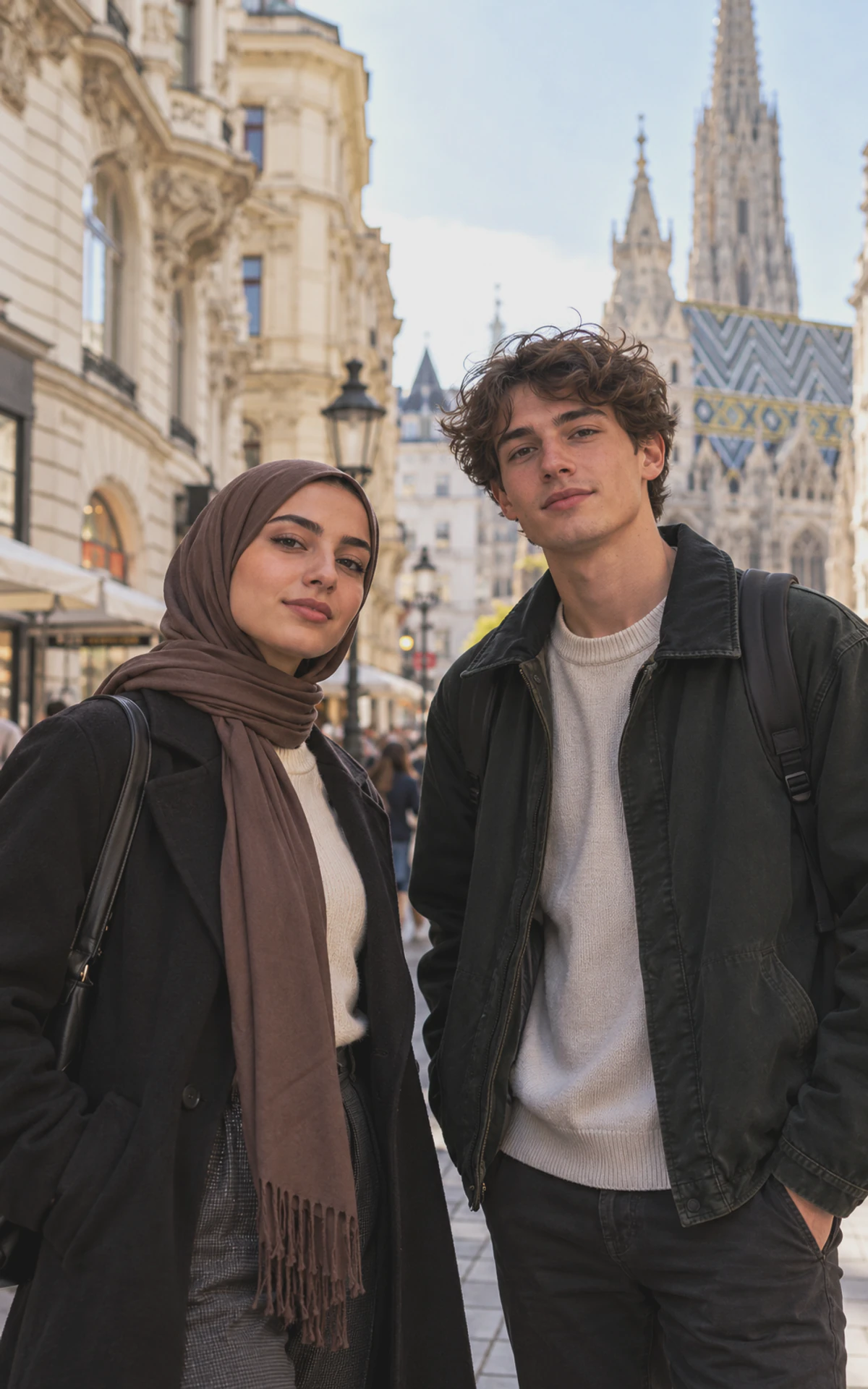
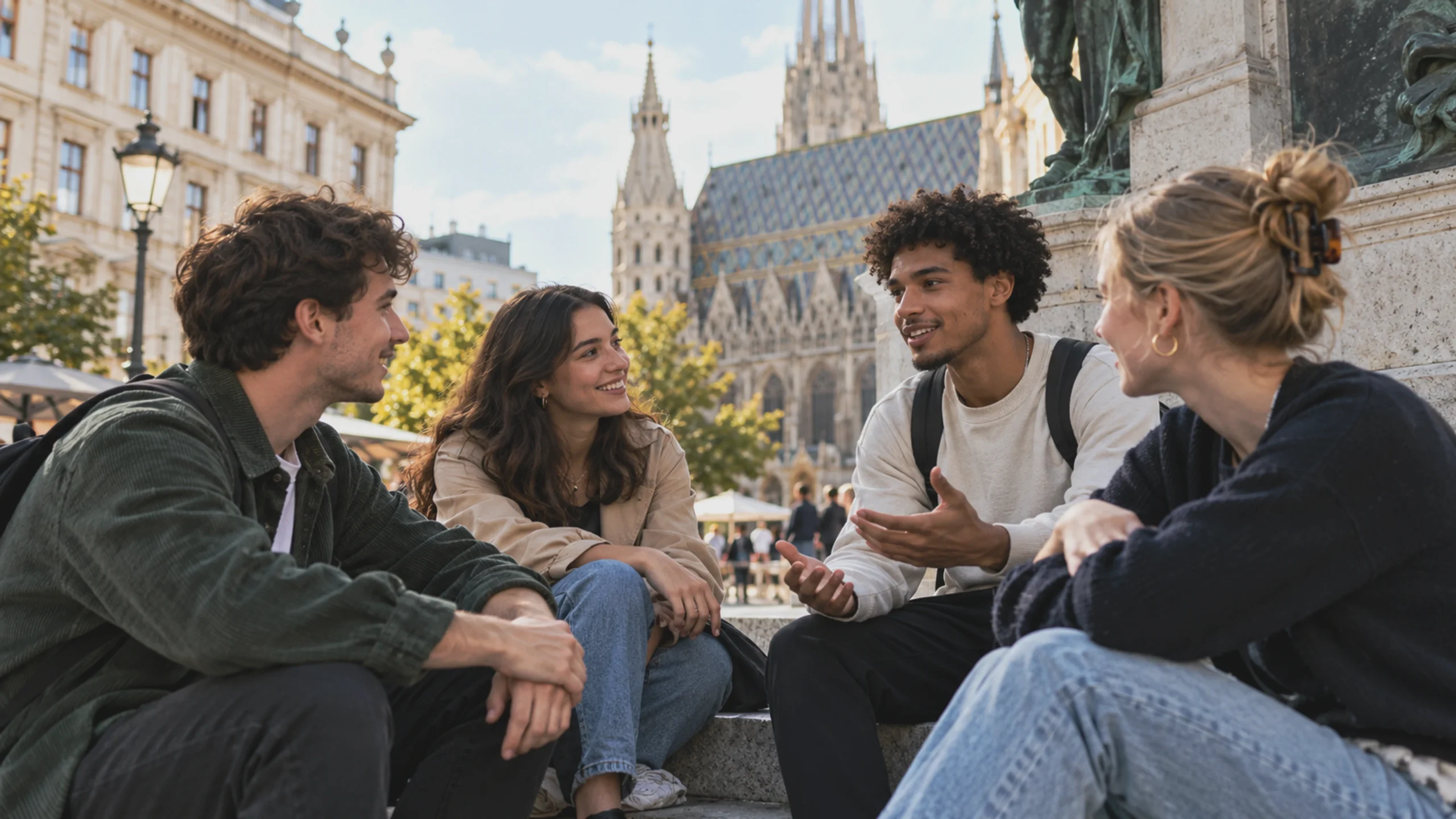
For many young people, Vienna has long been the center of their lives. They go to school here, make friends, and plan their future. But one question accompanies some of them into adulthood: Where do you actually belong?
In the morning, they go to school or university, in the afternoon they meet friends, and in the evening they go home. This is a perfectly normal everyday life in Vienna. But behind this normality, there can be an experience that not every young person shares: the feeling of having to explain their own sense of belonging again and again.
Some speak Bosnian, Turkish, Arabic, or Romanian with their parents, and German with their friends. Others came to Austria only a few years ago. Still others know no other home than Vienna. Their life stories are different. What they have in common is that origin, language, and identity do not always fit into a single category.
Young people: Vienna has long been a city of many identities

iksHaus | KI-generiert nach redaktioneller Konzeption, 2026
According to the City of Vienna, as of early 2025, 216,759 young people between the ages of 16 and 24 lived in the federal capital. 45.7 percent of them were of foreign origin. This means that they either held foreign citizenship or were born abroad as Austrian citizens. This statistical definition does not include all young people whose parents or grandparents immigrated.
For part of the young population, the combination of multiple cultural influences is normal. What may be taken for granted in the private sphere, however, sometimes becomes the subject of questions and expectations in public spaces.
When others decide where you belong

iksHaus | KI-generiert nach redaktioneller Konzeption, 2026
The question “Where are you from?” is not inherently problematic. It can express interest. However, it can have a different effect when someone born in Vienna is repeatedly asked to state their supposedly “real” origin after answering “From Vienna.” This creates a boundary between one’s own self-perception and how others perceive them.
A young person can simultaneously identify as Viennese, Austrian, and a member of another cultural community. These identities are not mutually exclusive. When people are reduced to their surnames, appearance, or family roots, belonging can become something they have to justify again and again.
Integration doesn't only begin with the German course

iksHaus | KI-generiert nach redaktioneller Konzeption, 2026
In public debates, integration is often associated with language skills, education, and employment. These factors are important. However, they do not fully explain how people find their place in a society. Equally important are social connections, equal access to opportunities, personal safety, and the experience of being taken seriously.
A young person may speak excellent German and complete their training, but still feel excluded. Conversely, family ties to another country can persist without diminishing their connection to Austria. Integration can mean bringing different experiences into a shared social life.
What schools and leisure programs can change
Places where young people meet each other beyond cultural labels play an important role. Schools, youth centers, sports clubs, and cultural initiatives create opportunities to build connections and share experiences. What is crucial is whether such programs reach everyone, regardless of income, district, or language skills.
The City of Vienna’s integration report points out that the use of leisure and cultural programs by young people with a migration background has only been studied to a limited extent. This leaves open which programs work particularly well and where support is needed.
Home is more than an address

iksHaus | KI-generiert nach redaktioneller Konzeption, 2026
For young people, a sense of belonging doesn’t develop overnight. It evolves through friendships, shared experiences, education, recognition, and future prospects. Vienna can be both the place where someone grew up and a city where one’s sense of belonging is questioned.
The crucial question is not whether young people are allowed to have multiple cultural identities, but whether a society recognizes this diversity as a natural part of its present.
SOURCES
City of Vienna: Vienna Population: Data and facts on migration and integration 2025, focus on adolescents and young adults.
City of Vienna: Education of young people in Vienna; content, data sources, and challenges.