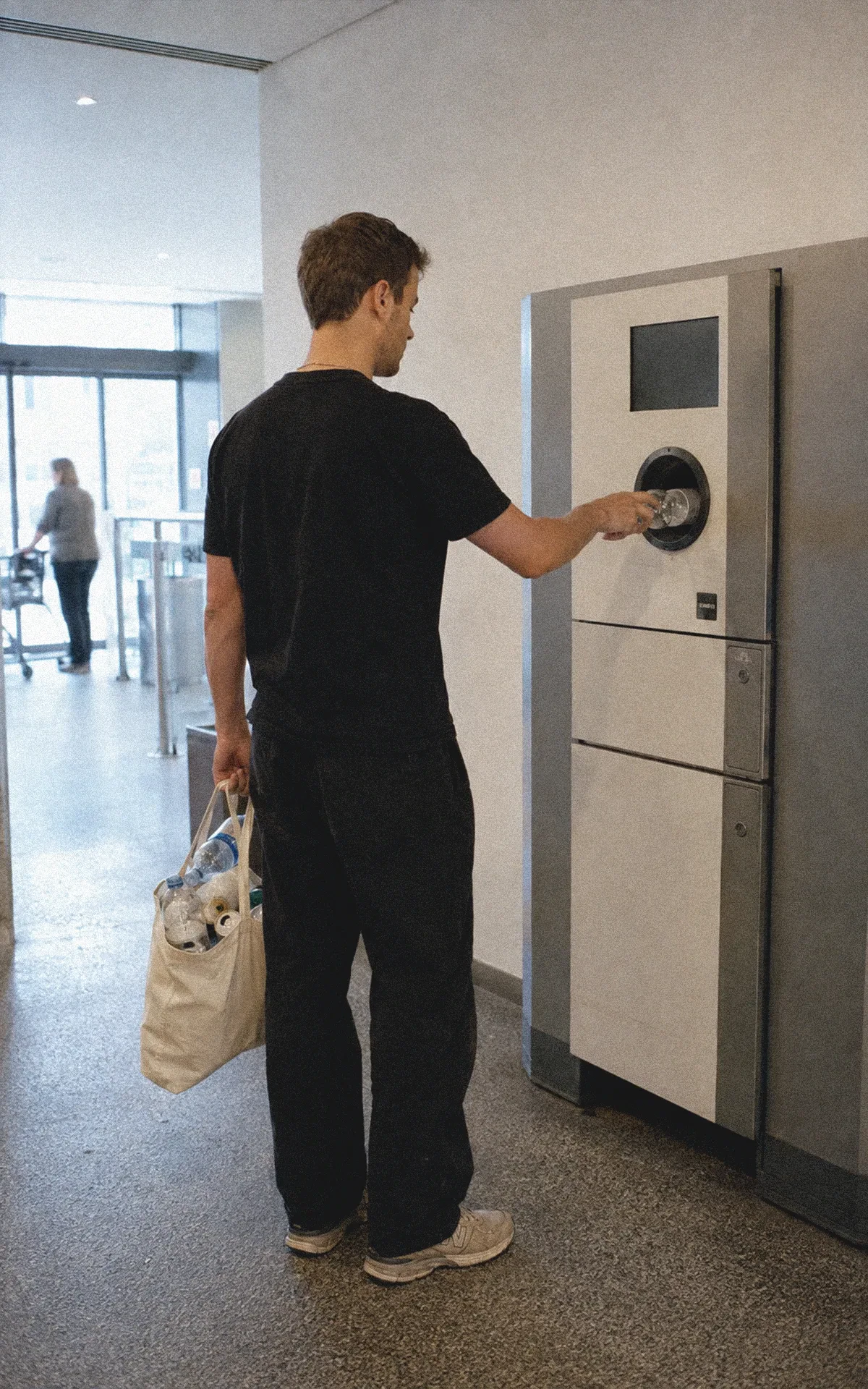
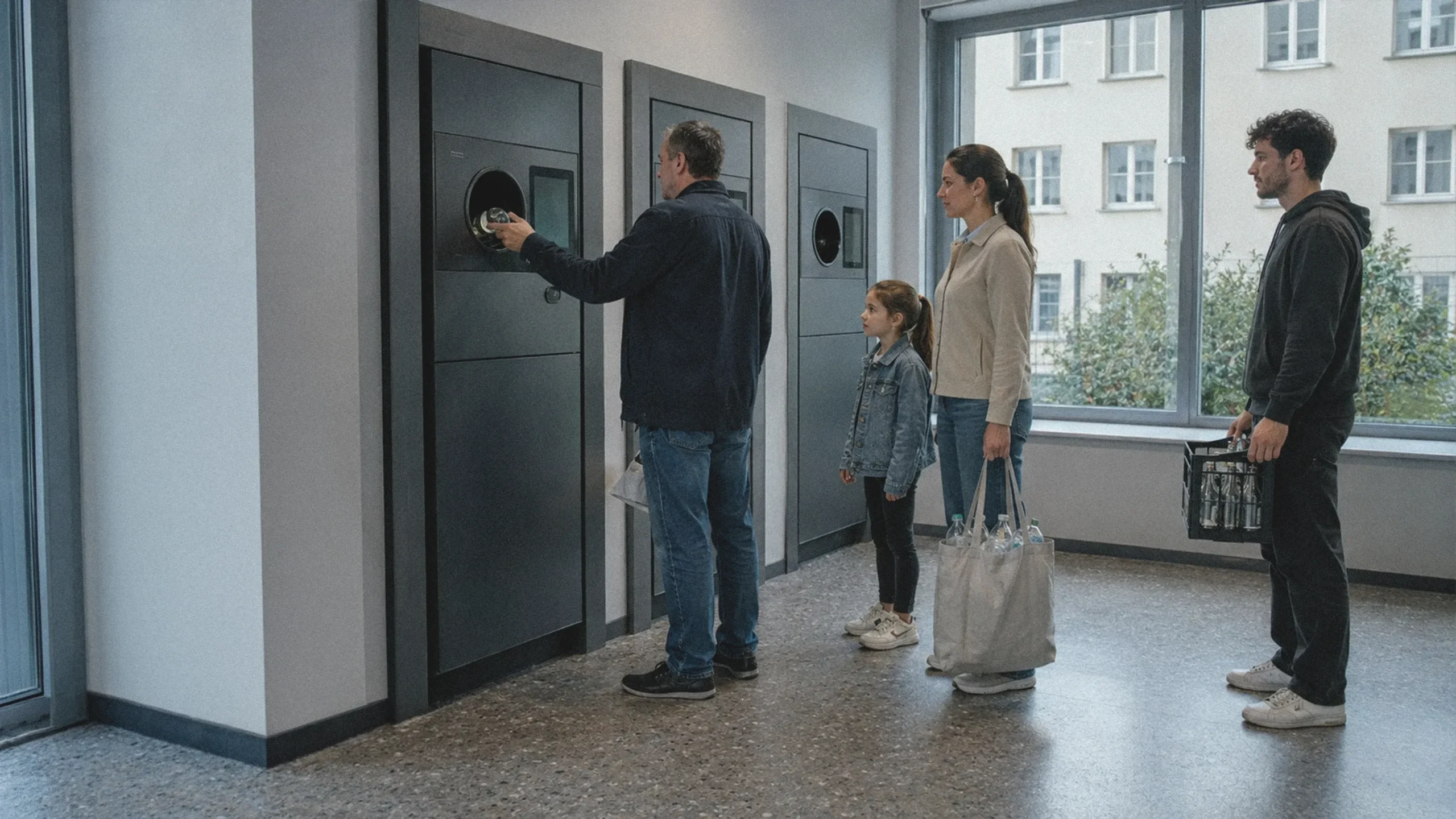
The deposit-refund system in Austria has already exceeded its initial collection target in the first year. Since January 1, 2025, a charge of 25 cents has been applied to plastic bottles and metal cans subject to the deposit. In 2025, the system achieved an official collection rate of 81.5 percent. This was made possible by new technology, thousands of return points, and the participation of millions of people.
Deposit-Refund System in Austria Exceeds Initial Target
iksHaus | KI-generiert nach redaktioneller Konzeption, 2026
Before the introduction of the deposit, empty bottles and cans often ended up in residual waste, public waste containers, or on the ground. Even packaging that was correctly collected was often mixed with other materials. Contamination made high-quality recycling more difficult.
With the deposit system, an empty container remains worth 25 cents. It is kept and returned during a subsequent purchase. This makes it clear that plastic and metal remain usable raw materials even after the contents have been consumed.
According to the Austrian Ministry of the Environment, approximately two billion plastic bottles and metal cans subject to the deposit scheme were placed on the market in 2025. By the end of the year, approximately 1.4 billion packages were returned. The official calculation also took into account different packaging weights and the average time between sale and return.
This resulted in a collection rate of 81.5 percent. The first national target of 80 percent was already exceeded in the transition year. By 2027, the rate is expected to increase to 90 percent.
Returning becomes part of everyday life
iksHaus | KI-generiert nach redaktioneller Konzeption, 2026
The central action is simple: buy the packaging, consume the contents, return it undamaged, and receive 25 cents. Plastic bottles and metal cans with a volume of 0.1 to 3 liters are included. They bear an Austrian deposit logo and are recognized by their barcode.
Bottles and cans must not be completely crushed. The label and barcode must remain legible. The cap can remain on the bottle and is recycled with it.
In Austria, there are approximately 16,300 collection points. More than 6,400 of these have machines. Approximately 98 percent of the packaging is returned using these devices. An average return process involves about 13 bottles and cans.
A representative survey commissioned by Recycling Pfand Österreich found that approximately three-quarters of those surveyed supported the system. 85 percent felt they were sufficiently informed. For many, a cleaner environment was the most important perceived benefit.
This is how the material returns to the cycle
iksHaus | KI-generiert nach redaktioneller Konzeption, 2026
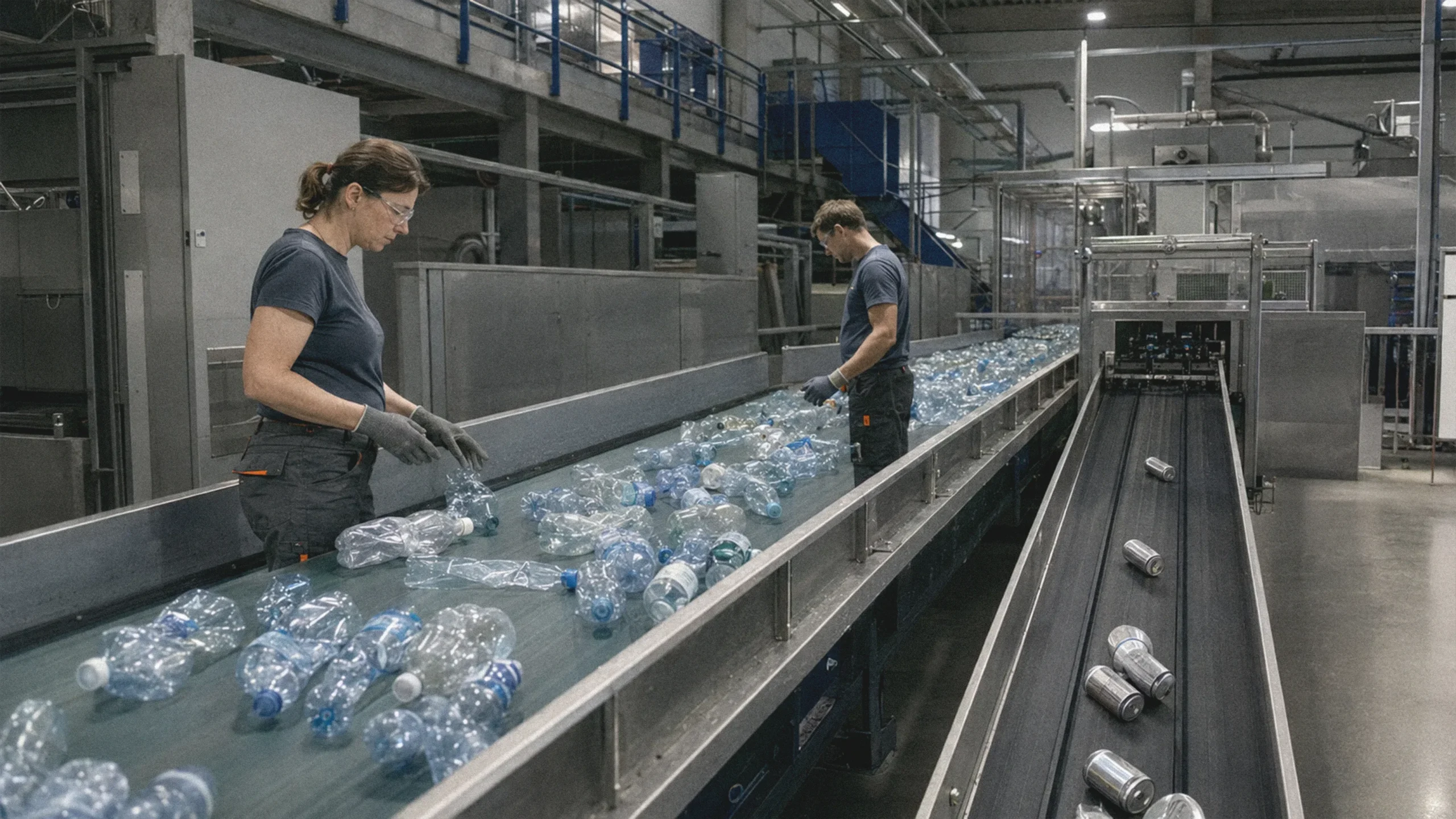
After being returned, bottles and cans enter their own material cycle. The machines recognize the packaging by the barcode. Depending on the technical equipment, they are compressed, collected separately, and transported to sorting companies or recycling plants.
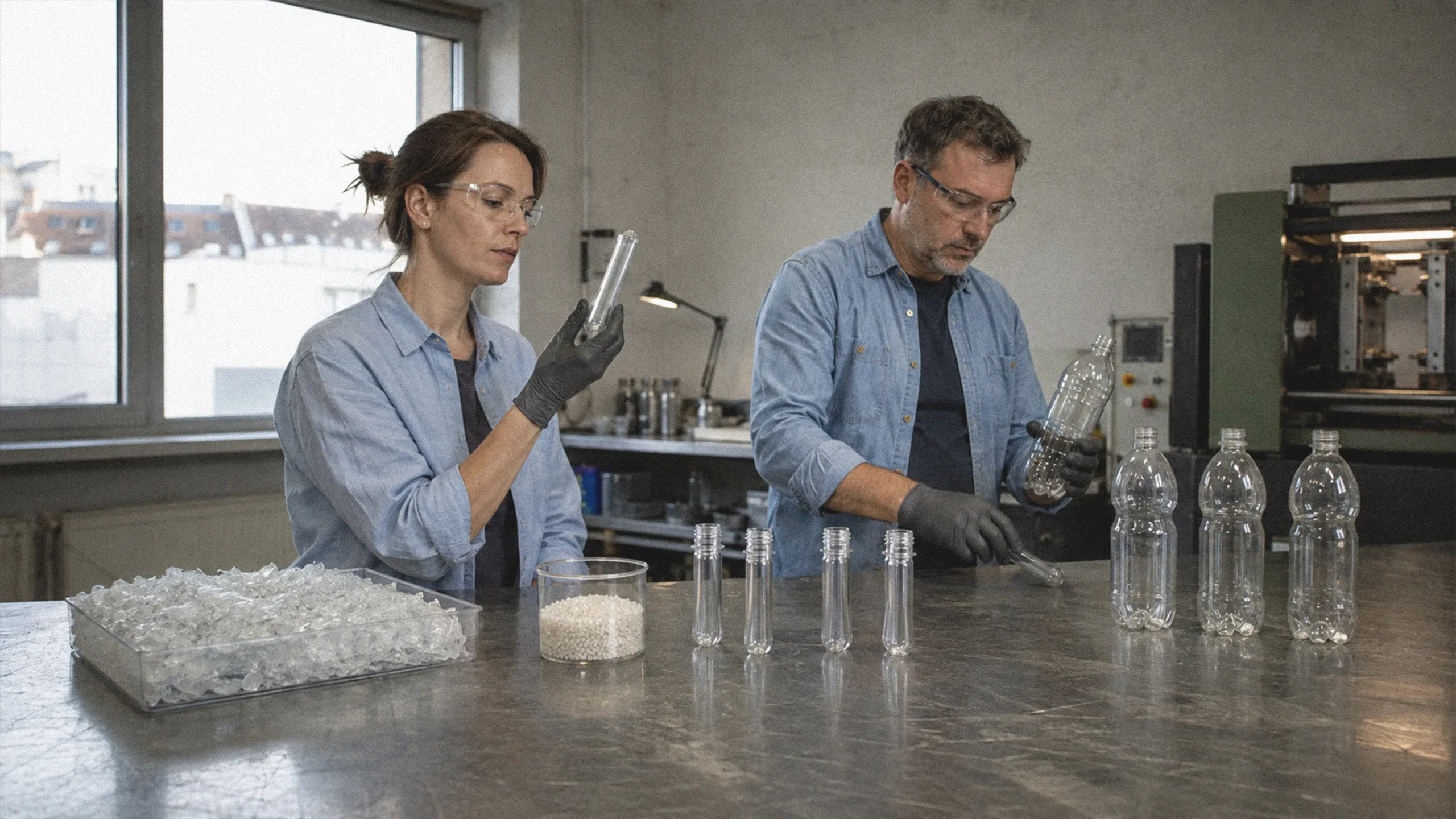
PET bottles are sorted by material and, in some cases, by color. They are then shredded, cleaned, and processed into recycled PET, which can be used to create new beverage bottles.
Aluminum and steel are also collected separately, processed, and melted down. This separate collection is crucial for quality. Clean and uniform raw materials are more easily reused for high-quality beverage packaging.
The deposit system not only increases the amount of material collected but also improves the quality of the recovered raw materials.
Recycling starts with packaging design
According to current registration data, 99.5 percent of the packaging collected in the Austrian deposit system is recyclable. This takes into account the actual weight percentage that can be recycled, including the container, closures, and labels.
For new plastic bottles in the single-use system, the proportion of recycled material is already more than 60 percent. This means that Austria is already above the European minimum requirement of 25 percent for PET beverage bottles, which is scheduled to come into effect in 2025.
The principle of eco-modulation creates additional incentives. Manufacturers pay based on how well their packaging is recyclable. According to Recycling Pfand Österreich, labels have already been made easier to remove, adhesives have been adjusted, and packaging weights have been reduced in the first year.
Beverage manufacturers also have a preferential right to purchase returned and sorted materials, ensuring that high-quality recycled materials remain within the Austrian beverage cycle.
The deposit system also changes the public space
The Ministry of the Environment explicitly attributed the success to the active participation of the population. In the first year alone, there was a noticeable decrease in the number of discarded bottles and cans in public spaces.
In Vienna, this effect can be particularly visible in places where beverages are consumed on the go. A discarded package retains its deposit value and can be returned by another person.
Informal collection also highlights social inequality when people supplement their income through it. Mounts on public waste containers can enable a more respectful disposal, as bottles and cans remain accessible without anyone having to reach into the container.
Reusable options remain the more resource-efficient choice
The success of the deposit-refund system for single-use containers does not automatically make a packaging solution environmentally ideal. A single-use bottle is crushed, cleaned, and reprocessed after only one use. This process requires energy and additional materials. Even with good recycling, there are losses.
Reusable bottles are cleaned and refilled. Depending on the system, bottles made of glass or plastic can be used multiple times. Regional reusable systems reduce packaging waste and require fewer new raw materials.
THE ENVIRONMENTAL CONSULTING AGENCY summarizes the difference as follows: A deposit-refund system improves recycling, while reusable systems prevent waste from being created in the first place. These two approaches do not necessarily have to be seen as mutually exclusive.
Shared responsibility
The introduction required a simultaneous change in numerous processes. Retailers needed new or adapted machines. Small sales outlets had to enable manual returns or cooperate with nearby collection points. Manufacturers registered the packaging and affixed the required symbols and barcodes.
The legal framework, environmentally friendly product design, a comprehensive return system, and public participation all work together. The first year shows that environmental changes can quickly become routine if a system is understandable and practical.