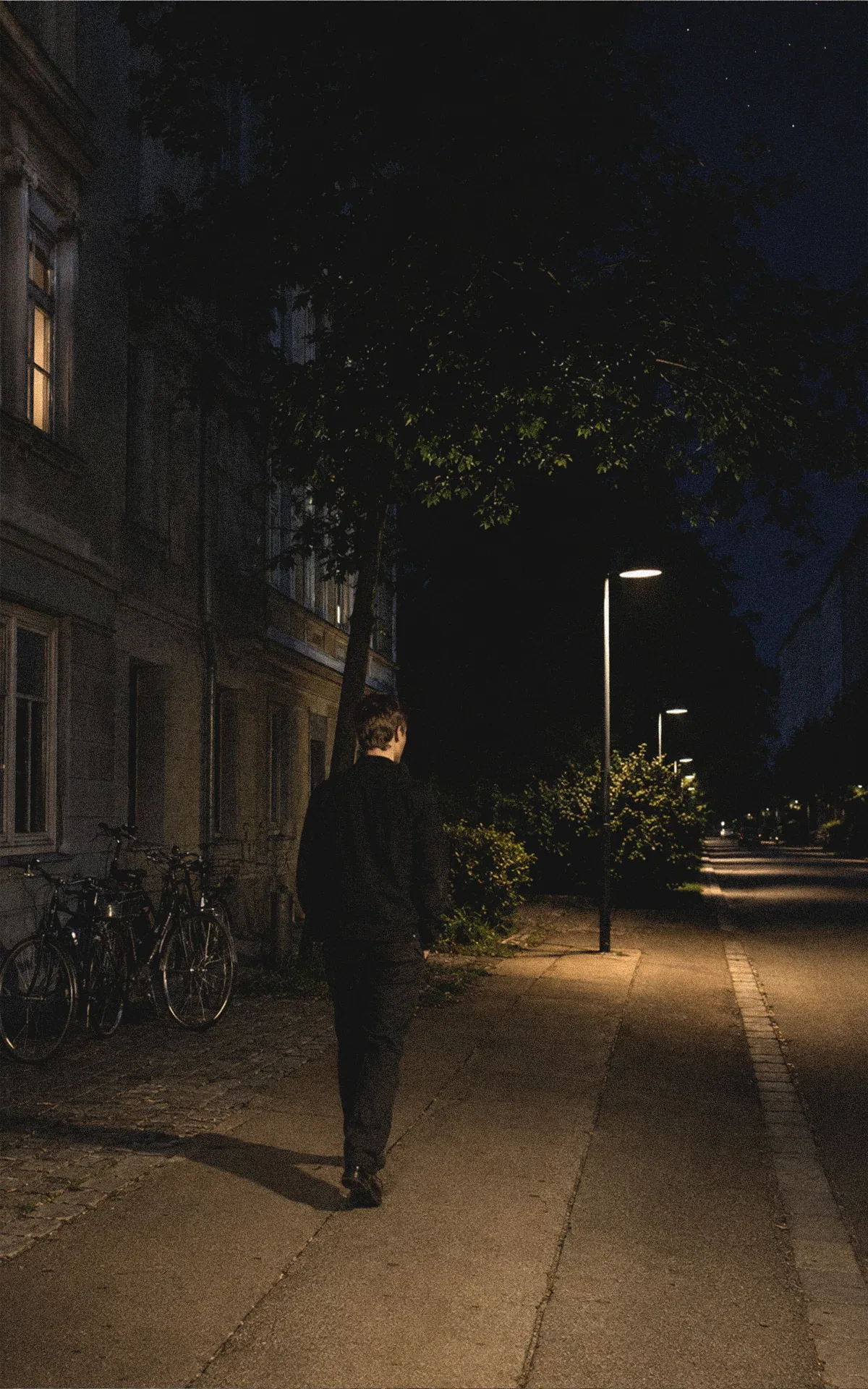
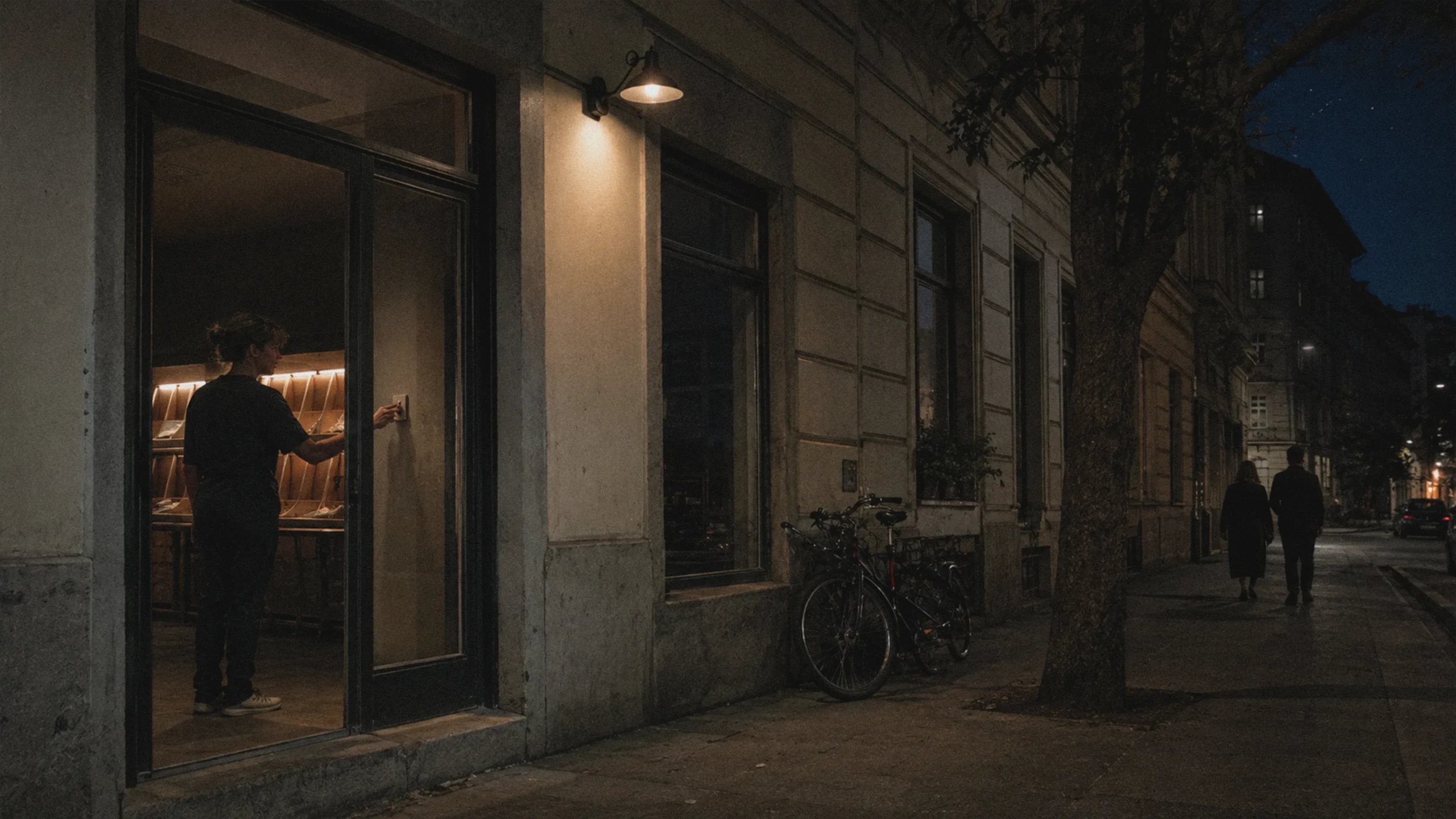
Light pollution in Vienna has significantly decreased due to public street lighting. Since 2015, the city has reduced the contribution of streetlights to brightening the night sky by approximately 75 percent. Modern lights direct the light specifically onto streets and sidewalks, rather than unnecessarily illuminating facades, treetops, and the sky.
Darkness is not a deficiency. It is a natural state and a habitat for insects, birds, bats, and plants. Vienna demonstrates that necessary lighting and the protection of the night can be compatible.
Light pollution in Vienna is significantly decreasing

iksHaus | KI-generiert nach redaktioneller Konzeption, 2026
Since 2015, the Kuffner Observatory has been investigating the brightening of the Viennese night sky on behalf of the city. Public street lighting accounted for approximately 8 percent of the total measured light pollution in 2015. In 2025, its share was around 2 percent.
The brightening caused by streetlights has therefore decreased by approximately 75 percent within ten years. This was mainly achieved through fully shielded lights that do not emit light above the horizontal plane.
By the beginning of 2026, approximately 80 percent of Vienna’s street lighting had been converted. The remaining lights are to be replaced by 2028. According to the Vienna Environmental Protection Agency, the modernized lighting requires approximately 60 percent less energy.
Darkness is a habitat
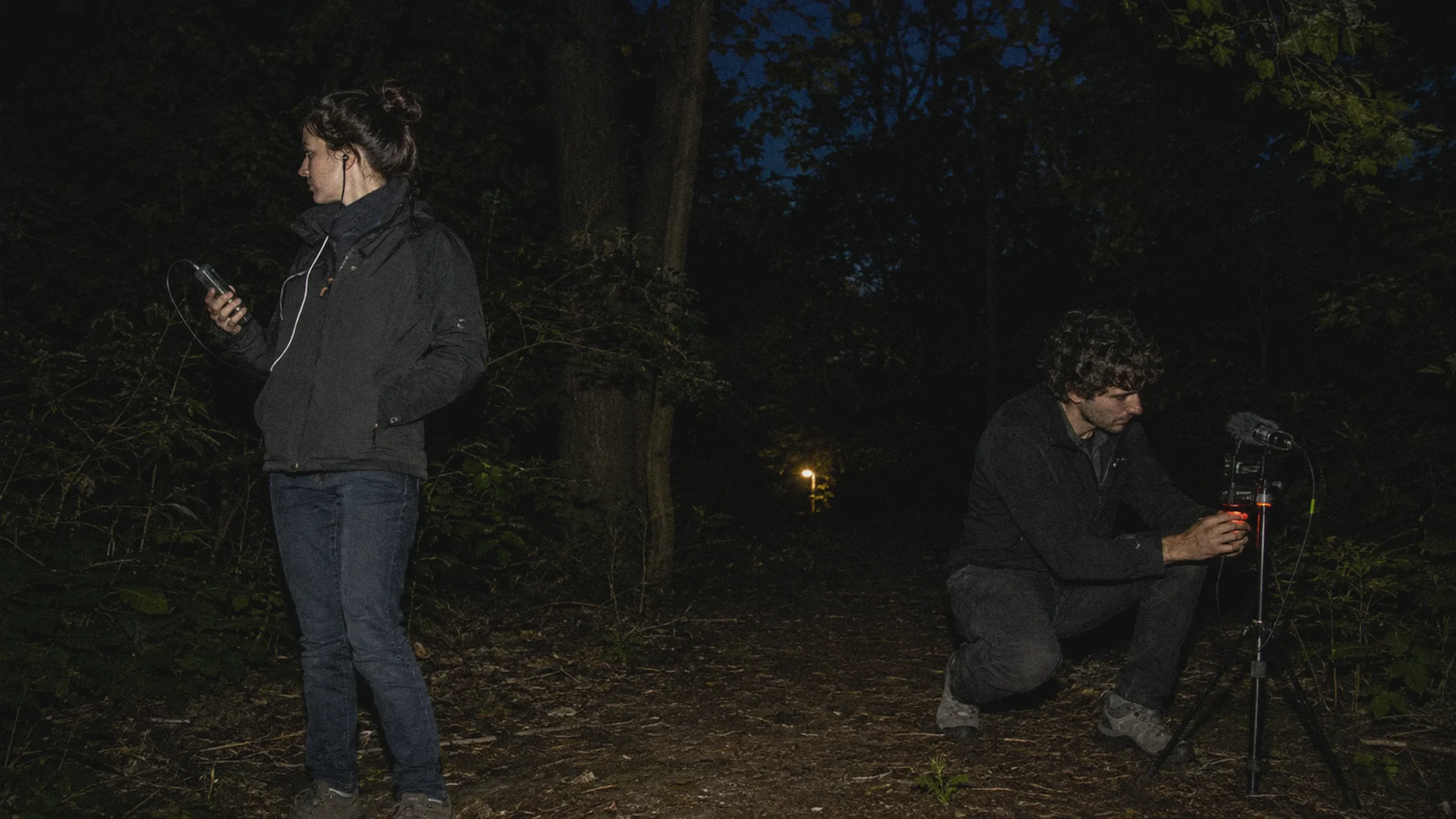
iksHaus | KI-generiert nach redaktioneller Konzeption, 2026
Moths, beetles, bats, and many other species become active when daylight disappears. Numerous birds use the night for their migrations. Plants regulate their growth, flowering, and dormancy phases according to the natural cycle of light and darkness.
Artificial light can alter these processes. Insects sometimes circle light sources until exhaustion, preventing them from foraging, reproducing, and pollinating. Lights with a high blue light or UV component have a particularly strong effect. Warm white light below 3,000 Kelvin attracts significantly fewer insects than cool white or bluish light.
Migratory birds can lose their orientation near illuminated facades and strong signal lights. In the case of bats, the reactions vary depending on the species. Light-sensitive species avoid illuminated paths. Therefore, well-developed connections between residential areas and hunting grounds are important.
- Water bodies and shorelines
- Forest edges and dry meadows
- Hedges and green courtyards
- Breeding and roosting sites
- Known flight routes of bats
Unnecessary lights can be quickly switched off
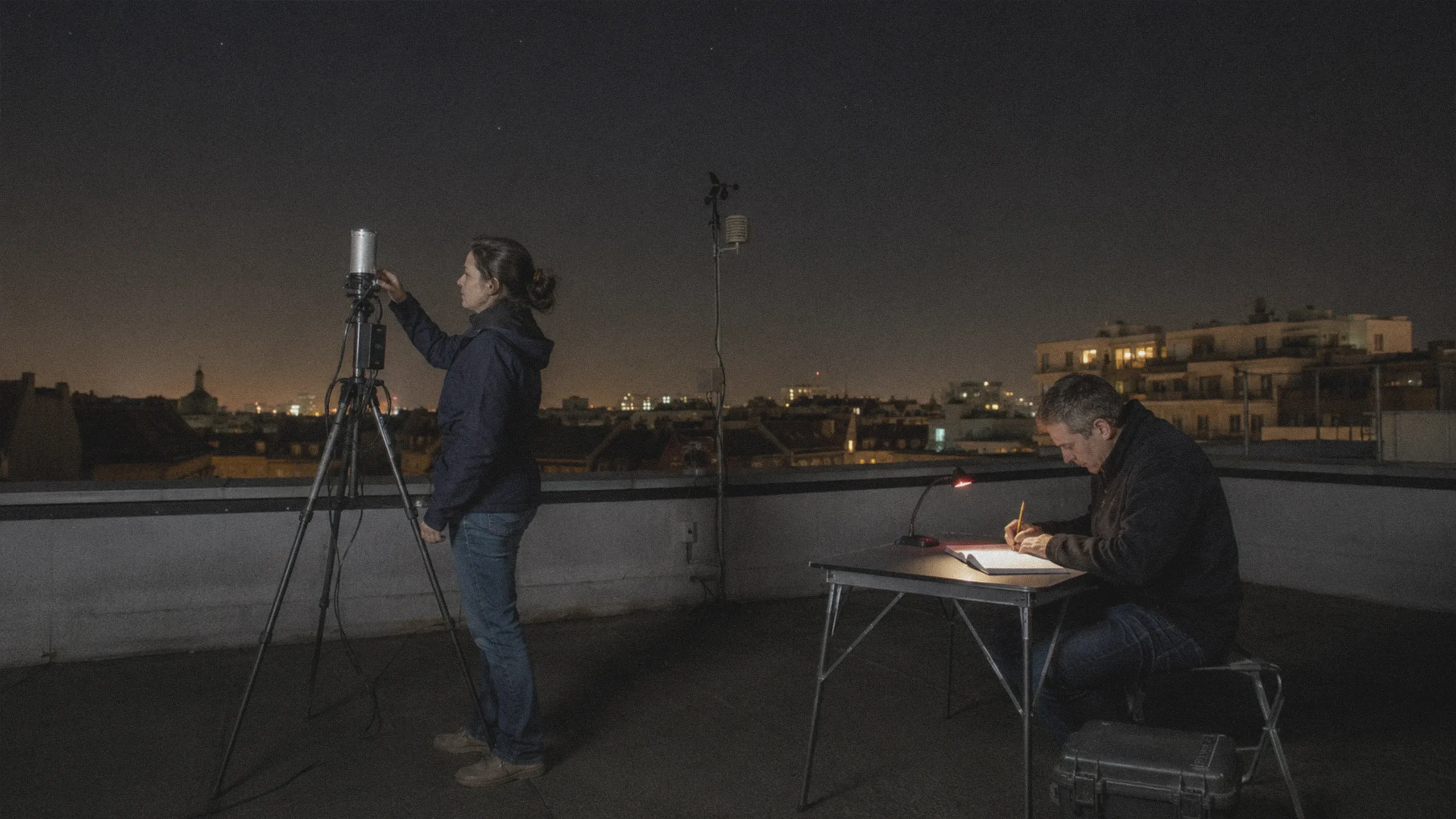
iksHaus | KI-generiert nach redaktioneller Konzeption, 2026
Public streetlights are only a part of Vienna’s light dome. Facades, shop windows, advertising displays, office buildings, sports fields, parking lots, and private garden lighting also contribute to the nighttime brightness.
Many improvements do not require large construction projects. Storefronts can be switched off after business hours, facade lighting can be time-limited, and pathways can be illuminated with motion sensors. Curtains and external blinds reduce light spillage from the interiors.
During Earth Night 2025, Vienna reduced or eliminated, among other things, the exterior lighting of the City Hall, the decorative lighting on the Danube Canal bridges, and the lighting of the Urania facade, starting at 10 PM. The event demonstrated for one night how quickly the nighttime cityscape can change with less unnecessary light.
More light does not automatically mean better lighting
Older, spherical streetlights emit light downwards, to the sides, and directly into the sky. Part of the energy is consumed without making the sidewalk more visible.
Modern, shielded lights direct the light onto the intended area using reflectors and optical elements. In addition to brightness, the position, shielding, light color, height, and operating time are crucial.
Good exterior lighting clarifies where and when light is needed, what level of brightness is sufficient, and how to prevent unnecessary light pollution from affecting trees, windows, or the sky.
LED technology is not automatically environmentally friendly
LED technology saves energy and can be precisely controlled. However, because it is efficient and relatively inexpensive, additional areas can be illuminated. This efficiency gain is then partially lost.
Environmentally friendly exterior lighting emits light only downwards, uses warm white light, and has a closed housing. It is dimmed or switched off when not needed, and does not illuminate trees, shrubs, or bodies of water.
It is not the technology itself that determines its effect, but its specific application. Further information is available from the City of Vienna.
Austria needs common rules for the night
Light pollution does not end at the borders of Vienna. Industrial areas, ski slopes, sports facilities, parking lots, tourist attractions, and private gardens change the night sky throughout Austria.
Rural areas, nature parks, river valleys, and alpine regions are particularly sensitive, as they still largely retain dark nights. Austria has a guide for environmentally friendly outdoor lighting. According to the source material, a comprehensive and binding legal regulation against light pollution is still lacking.
A common framework could consider the need for light, the direction of the light, the color of the light, the operating duration, and the protection of sensitive habitats.
Vienna demonstrates the impact of many small changes
A single upgraded street light only changes a limited area. However, thousands of properly shielded lights create a measurable effect. Less light reaches windows, tree canopies remain darker, and insects are less likely to be attracted.
Vienna has reduced the brightening of its night sky caused by public street lighting by approximately three-quarters since 2015. The next step involves private, commercial, and decorative lighting.
A modern city does not necessarily have to illuminate the night completely. It can use light precisely where it is actually needed.