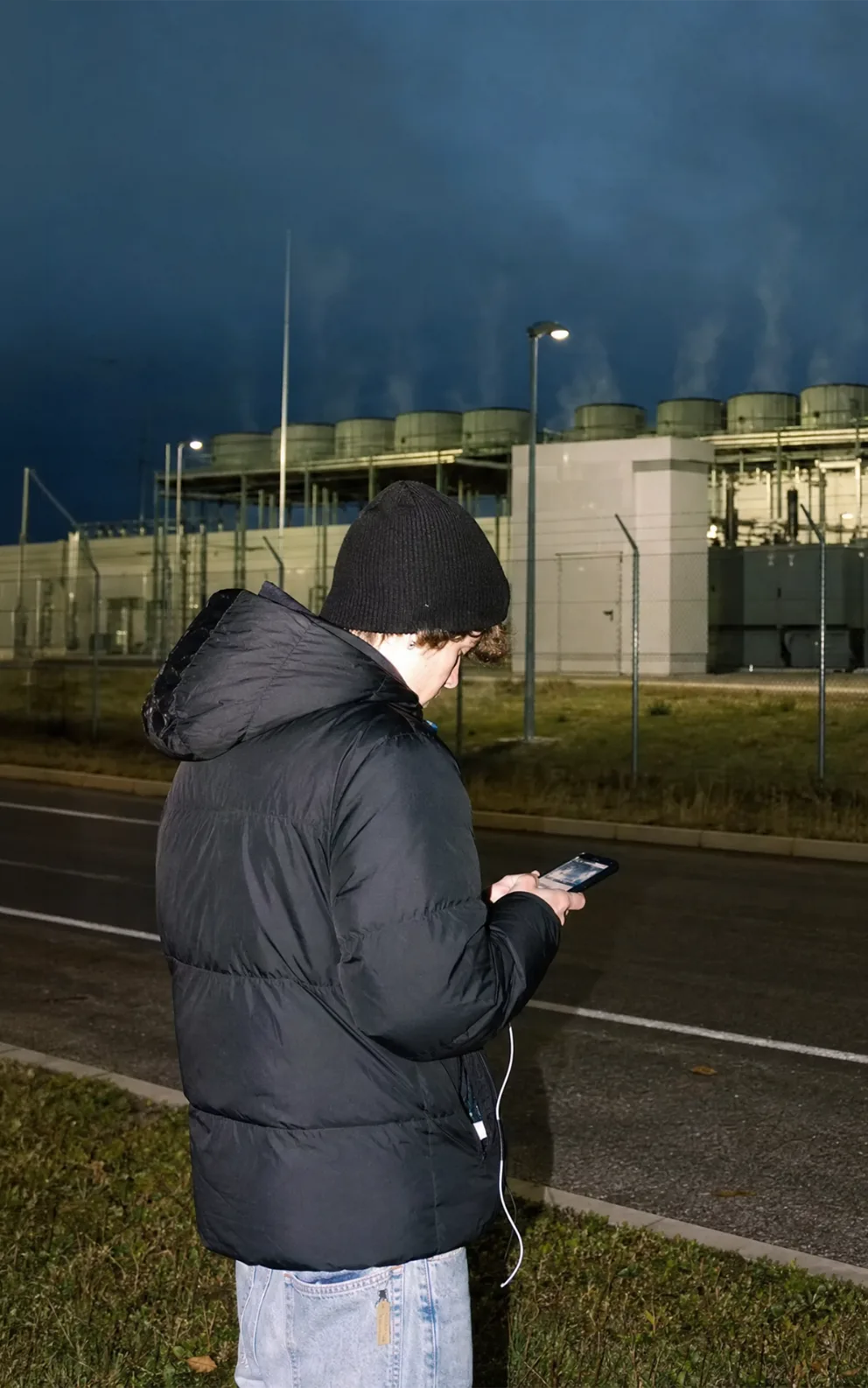
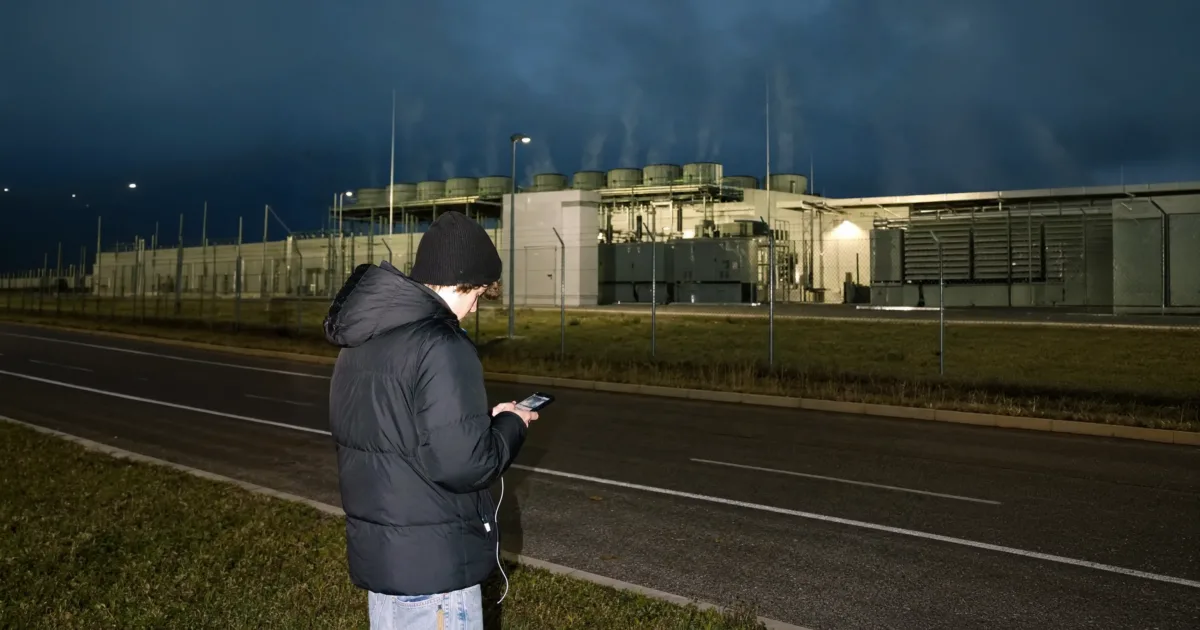
Young generations use algorithms, social media and artificial intelligence to draw attention to the climate crisis, analyse corporate communications, expose greenwashing and organise political movements.
At the same time, they run into an uncomfortable contradiction.
The physical infrastructure on which this digital activism takes place is among the fastest-growing areas of global electricity consumption.
Cloud services appear disembodied. A video seems simply to materialise on a screen. A search query vanishes after a few seconds. An image is uploaded, shared and forgotten.
Yet behind each of these actions lies a material chain.
Data centres process and store the content.
Cooling systems carry away the heat that is generated.
Transmission networks move data across great distances.
Mobile network installations, routers and end devices consume additional energy.
Microchips, batteries, servers and screens have to be manufactured, transported, cooled, maintained and eventually disposed of.
Digital space therefore has a physical reality.
Its ecological footprint is only slightly less visible than a car’s exhaust or the smoke from a factory chimney.
It is precisely this invisibility that forms the digital shadow.
It describes the quantity of energy, raw materials, water, infrastructure and greenhouse gas emissions that stands behind an apparently immaterial digital action.
For young climate activists, this realisation can trigger a crisis of self-understanding.
How can you mobilise against fossil infrastructure when your own reach is built on platforms whose servers are partly powered by electricity from fossil sources?
How credible is digital activism when every campaign, every video and every endless feed consumes energy itself?
The answer cannot be to reject digital communication wholesale.
Digital tools can connect social movements, spread scientific information and make power relations visible.
What matters instead is to stop blanking out the material basis of these tools.
The Metric of Invisible Pollution: The Thermodynamics of TikTok

iksHaus | KI-generiert nach redaktioneller Konzeption, 2026
Digital environmental behaviour is psychologically hard to gauge.
Anyone driving a car sees a fuel gauge and knows the fuel consumption. Anyone heating a flat receives an energy bill. A video in the feed offers no comparable signal.
No lorry loaded with coal visibly pulls up to supply the smartphone. The data centre may be hundreds of kilometres away. The emissions arise distributed across devices, servers, cooling systems and power grids.
As a result, scrolling feels almost free.
Calculations by the Paris-based carbon accounting consultancy Greenly have attempted to translate this invisible infrastructure into a comprehensible usage metric. The figures below are modelled estimates, not emissions data published or measured directly by the platforms.
| Platform | Estimated emissions per minute of use | Estimated annual emissions per average user | Equivalent journey in a petrol car |
|---|---|---|---|
| TikTok | 2.921 g CO₂e | 48.49 kg CO₂e | approx. 198 km |
| YouTube | 2.923 g CO₂e | 40.17 kg CO₂e | approx. 164 km |
| 2.912 g CO₂e | 32.52 kg CO₂e | approx. 133 km |
The differences per minute are surprisingly small. In this model, YouTube even comes out slightly above TikTok.
The decisive difference does not arise primarily from the emissions of a single minute, but from the duration and frequency of use.
For the TikTok calculation, Greenly assumed an average of 45.5 minutes of daily use. The higher usage times cited in other market analyses, for instance for particular age groups or individual countries, must not be combined with the same annual emissions figure. The result of 48.49 kilograms rests on the assumptions of this specific Greenly model.
This brings a fundamental design problem into view.
If several platforms generate a similar footprint per minute of use, an application’s ability to hold attention for as long as possible itself becomes an environmental factor.
TikTok is optimised for continuous video playback. The next clip starts automatically. Users do not have to make an active decision in order to load new material. The feed has no natural end.
To the individual user, each additional minute seems insignificant.
Across millions or even billions of users, however, this adds up to a substantial technical load.
The ecological effect therefore does not lie in the individual video alone. It also lies in a business model that generates economic value from attention held for as long as possible.
The Physical Reality of the Cloud
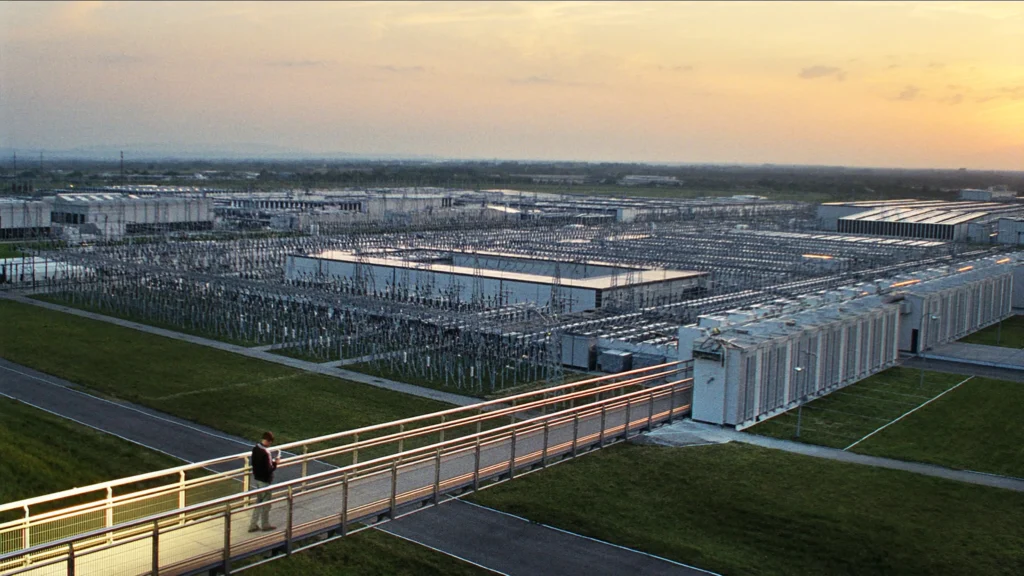
Data centres consist of thousands of servers, storage systems, network components, power supplies and cooling units.
They have to function without extended interruptions. Content is meant to be available at any time, regardless of whether users are accessing a feed in Vienna, London, New York or Tokyo.
This availability requires energy.
According to the International Energy Agency, data centres worldwide consumed around 415 terawatt hours of electricity in 2024. That corresponded to about 1.5 percent of global electricity consumption. By 2030 this consumption could more than double, to around 945 terawatt hours. Artificial intelligence is an important growth driver, but conventional cloud services, video streaming and other digital applications are also contributing to rising demand.
Part of this additional demand is covered by renewable energy.
That does not mean, however, that the entire digital infrastructure is run emissions-free.
The IEA estimates that the electricity physically consumed by data centres worldwide currently comes about 30 percent from coal, 27 percent from renewable sources, 26 percent from natural gas and about 15 percent from nuclear power. The actual mix differs considerably from region to region.
A data centre can purchase renewable electricity on paper while at the same time hanging on a local grid in which gas- or coal-fired power plants supply electricity at certain times of day.
It is therefore important to distinguish between accounting-based climate targets and the physical electricity supply of a facility.
When a Feed Reaches the Scale of a Country
iksHaus | KI-generiert nach redaktioneller Konzeption, 2026
Greenly estimated the climate impact associated with TikTok in the USA, the United Kingdom and France in 2023 at around 7.6 million tonnes of CO₂e.
From these countries’ share of the global user base, a worldwide order of magnitude of roughly 50 million tonnes of CO₂e was then derived.
This figure is not an officially audited emissions balance from ByteDance or TikTok. It is an extrapolation by an external consultancy and depends on assumptions about usage time, electricity mix, data traffic and data centre operations.
To date, TikTok has not provided global energy and emissions data detailed enough to verify this estimate fully and independently.
Despite this limitation, the figure illustrates the possible order of magnitude.
Greenly compared the estimated 50 million tonnes with Greece’s total annual greenhouse gas emissions, which were put at around 51.67 million tonnes for 2023.
The scale also becomes apparent in comparison with Finland. Finland’s official greenhouse gas emissions excluding land use amounted to around 41 million tonnes of CO₂e in 2023. Such comparisons serve only as illustration, however, since a modelled platform balance and a national emissions inventory are not methodologically identical.
The problem is therefore not that an individual TikTok user personally runs a small power plant every year.
The problem lies in the scaling.
A relatively small burden per minute is multiplied by long usage times, automatic video playback and an enormously large user base.
The platform also needs electricity during playback.
Videos have to be uploaded, stored several times over, processed, analysed, moderated, recommended and transmitted at various quality levels across global networks.
Training and operating the recommendation systems also require computing power.
The ecological balance sheet of the feed begins long before the moment a video appears on the smartphone.
Transparency Remains Part of the Problem
ByteDance has announced that it will source fully renewable electricity for its global operations by 2030. TikTok also points to a data centre in Norway that is to run on local renewable electricity.
Such steps are relevant.
They do not, however, solve the fundamental transparency problem.
Without comprehensive public data on electricity consumption, locations, the actual electricity mix, hardware procurement, water use and the value chain, the precise global climate balance remains hard to verify.
Greenly’s figures must therefore not be treated as definitive measurements.
Above all, they are an indication of how large the invisible ecological footprint of an attention-intensive video service can become.
Nor may responsibility be shifted entirely onto individual users.
A person can reduce their personal screen time. They can watch videos at lower quality, use devices for longer or switch off automatic playback.
The far larger decisions, however, rest with platform operators, data centre companies, network operators, hardware manufacturers and political institutions.
They decide how applications are designed, which data is stored, how long attention is held, where data centres are built and what electricity runs them.
Permacomputing: Radical Optimisation as a Political Answer
iksHaus | KI-generiert nach redaktioneller Konzeption, 2026
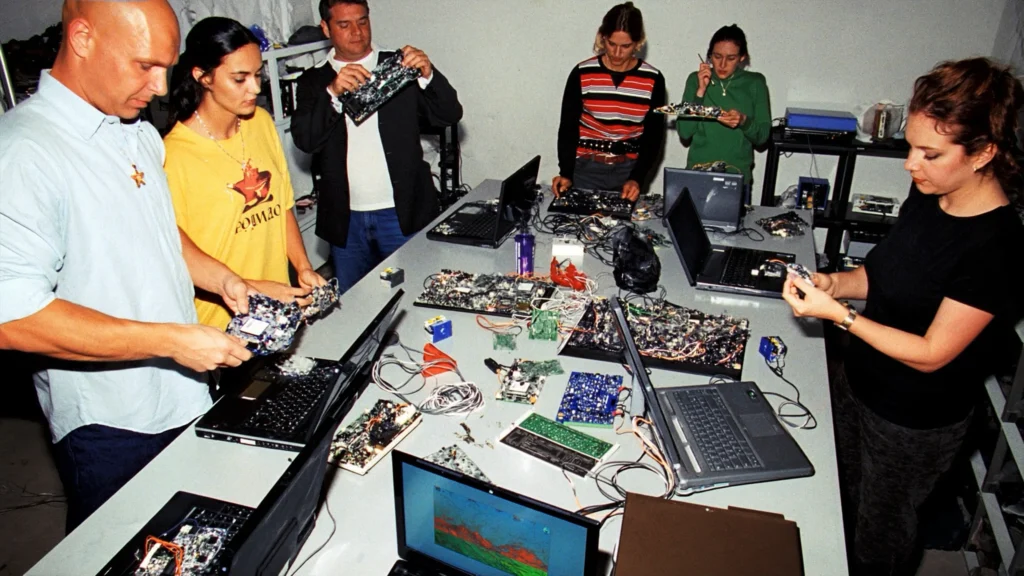
The realisation that digital infrastructure is neither immaterial nor unlimited has helped give rise to a technological counter-movement: Permacomputing.
Permacomputing takes its cue from permaculture.
Just as permaculture seeks not only to make industrial agriculture more efficient but also to question its basic assumptions about soil, resources and growth, Permacomputing questions the dominant culture of computing.
The movement regards computers, storage, bandwidth, energy and microchips as finite material resources.
It opposes a technology policy that treats permanent increases in model size, device numbers, resolution and data production as self-evident progress.
The Permacomputing community explicitly describes itself as a political and anti-capitalist project. Its influences include degrowth, ecology, anarchist approaches, decolonial thought and intersectional feminism.
There is neither a certified product nor a ready-made “Permacomputing kit”.
Permacomputing is instead an invitation to rethink digital culture as a whole.
Its central principles include:
caring for existing hardware,
minimising resource consumption,
designing systems to be repairable and comprehensible,
enabling offline functionality,
making dependencies visible,
integrating renewable and biological resources,
and orienting technology towards a long service life rather than rapid replacement.
Three particularly important practical directions can be derived from these principles.
Frugal Computing: Computing With Less
Frugal computing does not treat computing power as an infinite resource.
The central question is not:
What can we build with the maximum available power?
It is:
How little energy, storage, data traffic and hardware do we need in order to perform a meaningful task reliably?
That can mean writing smaller programs, removing unnecessary scripts and developing websites without constant animations, tracking systems or automatically loaded videos.
It can also mean compressing images more heavily, favouring local processing and designing applications so that they also work on a slow connection.
A frugal website is not automatically primitive.
It can decide deliberately which functions genuinely add value and which were added only because technical resources appeared to be available for free.
Research on sustainable computing stresses that operating electricity is not the only thing that counts. Manufacturing new devices likewise causes considerable emissions. A sound climate strategy must therefore take account of both energy-efficient software and longer hardware life cycles.
Frugal Computing thus poses a cultural question:
Does every digital experience have to be high-resolution, permanently available, personalised and algorithmically optimised?
Or can digital quality also arise from simplicity, clarity and deliberate limitation?
Salvage Computing: Using the Devices That Already Exist
iksHaus | KI-generiert nach redaktioneller Konzeption, 2026
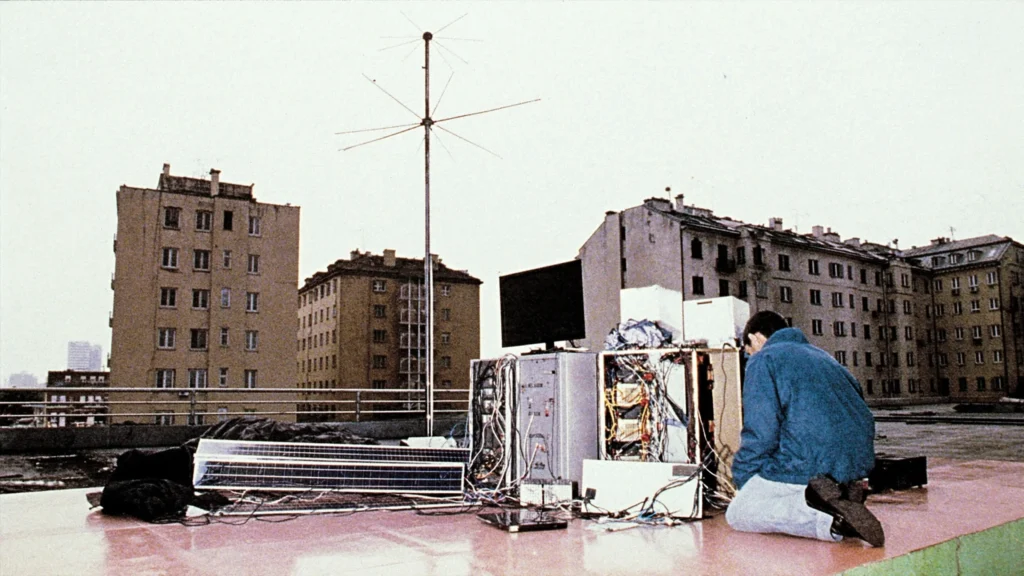
Salvage Computing goes a step further.
It concentrates on hardware that has already been produced.
The basic idea is to create new technical possibilities not automatically by buying new devices, but through the care, repair, modification and creative reuse of existing machines.
Enormous quantities of working or partly working computers, smartphones, routers, displays and microcontrollers exist worldwide.
Many are thrown away because their original software is no longer supported, because a single component is faulty or because newer applications make unnecessarily high demands.
Salvage Computing does not regard these devices as obsolete waste.
It treats them as material resources that have already been extracted and produced.
A fifteen-year-old computer can become usable again with a lightweight Linux distribution, additional memory or a replacement storage drive.
An old smartphone can serve as a local display, as a sensor, as a camera or as an offline learning tool.
A discarded router can become part of a local communications network.
The official Permacomputing wiki describes Salvage Computing as the practice of using only computing resources that already exist and of drawing the greatest possible benefit from the millions of devices in circulation.
Behind this lies a different idea of technical care.
Microchips are not treated as short-lived consumables.
They are complex products of energy, raw materials, labour and global supply chains.
Extending their service life does not only reduce electronic waste. It also delays the need for additional raw material extraction and for new production.
Collapse Computing: Technology for an Unstable Future
Collapse Computing is the most radical strand within this debate.
It does not assume that global power grids, cloud platforms and supply chains will remain reliable and grow without limit for ever.
Instead it asks:
How must digital systems be designed if energy becomes scarce at times?
How do people communicate when a permanent internet connection is not available?
Which software works on weak hardware and through frequent power cuts?
Out of this come asynchronous communication systems, local networks, small solar-powered servers and applications that do not have to synchronise data constantly with distant cloud systems.
Such an approach is not necessarily a prediction of complete societal collapse.
It is also a form of technical resilience.
Systems that function under constrained conditions can already be relevant today for regions with unstable power grids, expensive data connections or limited access to new hardware.
Permacomputing is therefore not only trying to make technology lower in emissions.
It is trying to make it less dependent on a model of permanent expansion.
The Antithesis to Silicon Valley
Silicon Valley’s dominant model is based on scaling.
More users.
More data.
More computing power.
More personalised content.
More devices.
More time on the platform.
Permacomputing counters this logic with limitation, repairability and sufficiency.
While corporations build vast data centres for artificial intelligence and endless video feeds, small communities are developing locally run, energy-saving and comprehensible systems.
Groups around Hundred Rabbits, for example, experiment with low energy consumption, offline working and durable software tools. Permacomputing, however, is not confined to a particular programming language, a single project or a specific aesthetic direction. It is a broader community of practice.
Some projects develop solar-powered websites.
Others use reclaimed electronics for local servers.
Still others design websites whose complexity depends on the energy currently available.
When the power grid is heavily dependent on fossil sources, images can be reduced, animations switched off or content delivered in a lighter version.
The technology thus responds not only to users’ wishes.
It responds to ecological conditions.
One recent research paper, for instance, documents the move of a website from a commercial data centre to a self-operated, solar-powered server built from reclaimed electronics. Such experiments show both the potential and the practical difficulties of a digital infrastructure that deliberately operates within material limits.
The Digital Downside of Climate Activism
The contradiction between digital activism and digital environmental impact cannot be fully resolved.
A climate campaign can reach millions of people via TikTok while drawing on computing power, network traffic and end devices.
That does not automatically make the campaign worthless or hypocritical.
It merely shows that political communication never takes place outside material infrastructure.
The relevant question is therefore not whether digital media can be entirely emissions-free.
It is:
Which digital use creates a social value that justifies its resource consumption?
And which use was developed mainly to hold attention with no natural end?
A video documenting a local environmental disaster is not equivalent to an hour of automatic scrolling.
Both require infrastructure.
But they do not have the same social function.
A serious ecological debate about digitalisation must therefore go beyond individual screen time.
It has to take account of business models, platform design, hardware production, electricity systems and corporate responsibility.
It has to ask why applications are meant to claim as much attention as possible, and why efficiency gains are almost always eaten up by yet more usage.
A Technology That Does Not Make the Planet Invisible
Digital space is not weightless.
Every feed has a location.
Every cloud is made of buildings.
Every algorithm runs on hardware.
Every stored video needs energy, cooling and material.
This realisation does not demand that we give up technology.
It demands that we stop treating it as immaterial.
Permacomputing offers no ready-made universal solution.
It offers a different starting question.
Not:
How can we enable ever more digital activity?
But rather:
Which digital activity makes sense within ecological limits?
This shift changes the role of design.
Minimalism becomes more than a visual aesthetic.
It becomes a material decision.
Repair becomes more than a way of saving money.
It becomes a form of ecological responsibility.
Offline functionality is not regarded as a technical step backwards.
It becomes a form of resilience.
This does not make the digital shadow disappear.
But it becomes visible.
Only when users, designers, companies and political institutions acknowledge the physical reality of the feed can digital technology begin to serve people without consistently concealing its resource consumption from them.