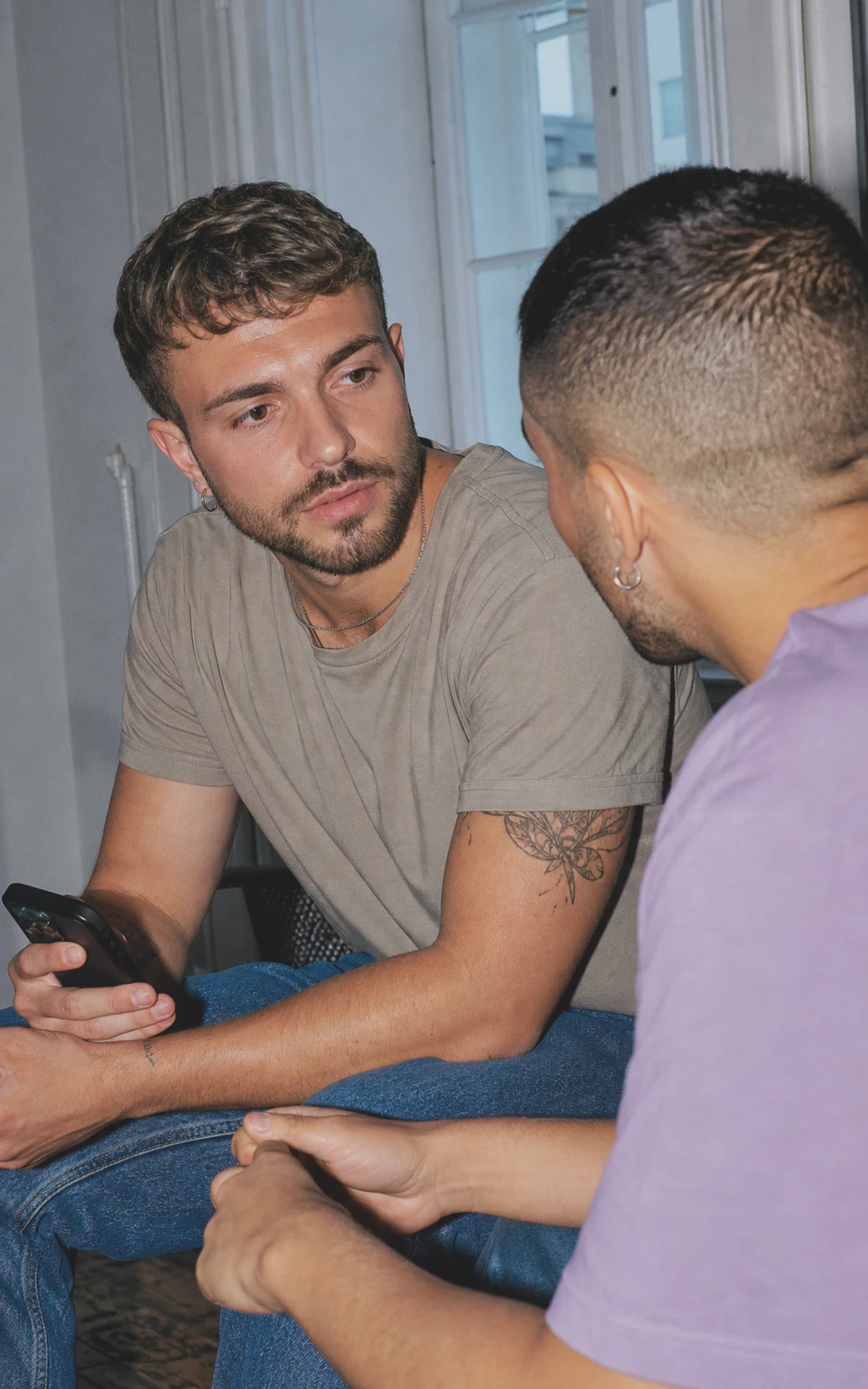
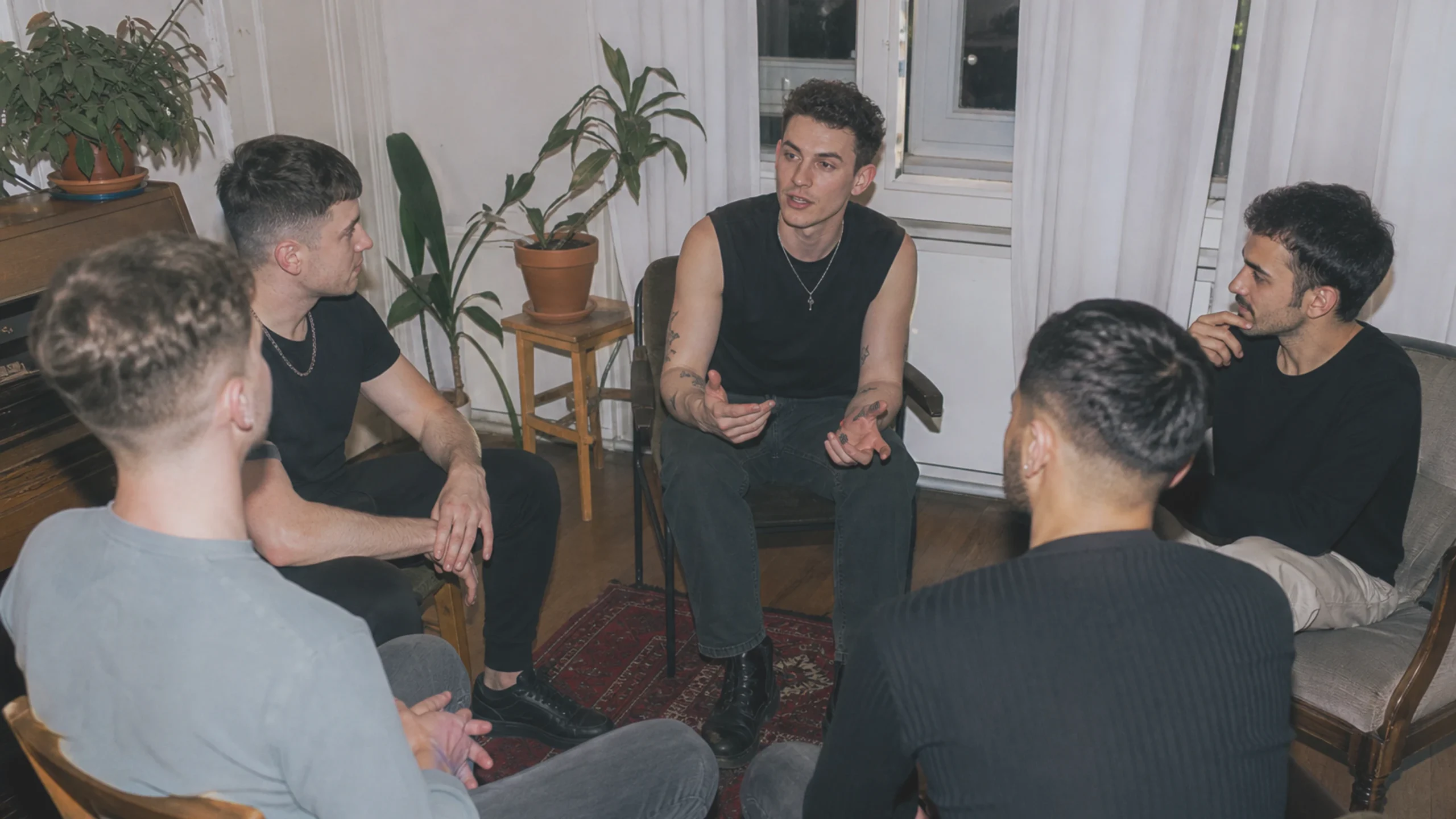
At some point, a certain behavior no longer seems like an exception. It becomes part of the background. We no longer perceive it in the same way. What once seemed risky can seem normal, simply because we encounter it often enough.
On September 14, 2026, the British magazine Attitude published an article by Callum Wells about the research project Drug Use, Chemsex and Harm in London’s LGBTQ+ Community, conducted by You Are Loved CIC.
The study included 1,156 LGBTQ+ individuals in London who had used at least one drug for recreational purposes in the preceding twelve months. The sample was self-selected, and 87 percent of the participants were gay men. The study was therefore not limited to gay men, but they represented the vast majority of the sample.
When risk becomes normal

iksHaus | KI-generiert nach redaktioneller Konzeption, 2026
28 percent of the participants reported having lost at least one person close to them to a drug-related death in the preceding five years. In some London boroughs, this figure reached 33 percent.
Among people who had used GHB or GBL, approximately two-thirds reported losing consciousness or unintentionally falling asleep during use. The researchers classify such incidents as overdoses.
Of the 560 participants who had used at least one of the three substances most closely associated with chemsex (GHB/GBL, crystal meth, and mephedrone), almost half expressed some concern about their own drug use. People who used these three substances described their drug use as harmful almost three times as often as people who used other recreational drugs.
Almost 60 percent of the people who used crystal meth expressed some concern about their use, while 20 percent described it as a “major problem.”
Drug use always carries a risk. The question is not whether a risk exists, but how high that risk is, how often it is repeated, and what happens when risky behavior becomes normal within a community.
These figures do not tell us that drug use itself has only one meaning, or that every experience with chemsex is the same. However, drug use always carries a health risk, even if it only occurs once. The more important question here is what happens when drug use during sex becomes normalized within a community, when something that inherently carries a risk gradually becomes accepted as a normal part of sexual and social life.
When a behavior is sufficiently widespread in a social environment, our perception of that behavior can change. We may become less sensitive to its risks. We may begin to regard consequences that should concern us simply as another part of the scene.
Here, the conversation needs to become more serious.
Talking about drugs, sex, and gay men
iksHaus | KI-generiert nach redaktioneller Konzeption, 2026
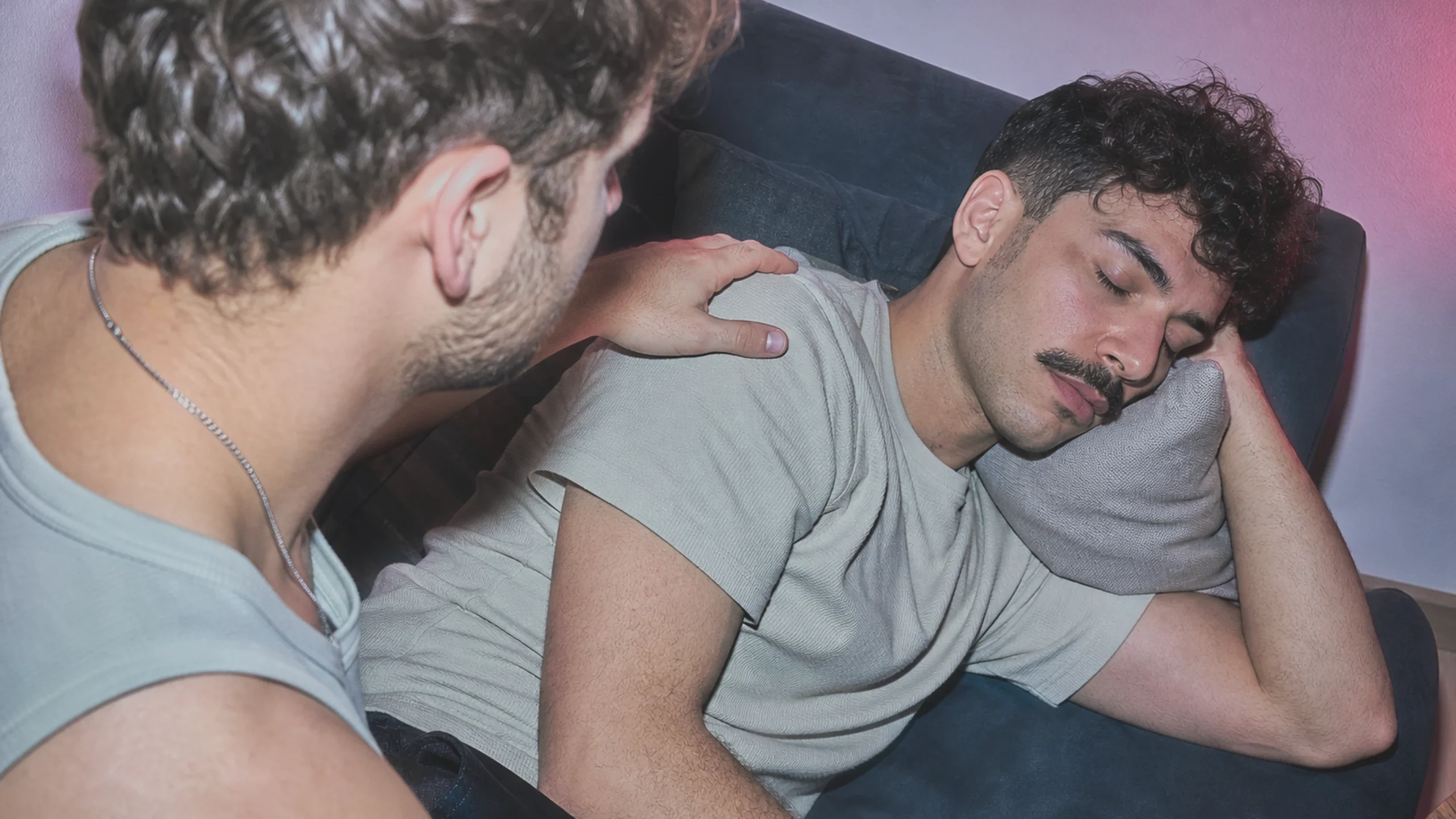
For years, conversations about drugs, sex, and gay men have often moved between two extremes. On one side, there was moral condemnation and stigmatization. On the other side, there was sometimes the fear of talking too openly about harm, because any critical discussion could be seen as an attack on sexual freedom, pleasure, or the right to make one’s own choices.
We need to overcome this impasse.
Understanding why people use drugs does not mean pretending that the consequences do not exist.
We can understand the need for connection, intimacy, excitement, belonging, and escape that can be part of drug use and chemsex. We can understand the loneliness, pressure, rejection, and isolation that may underlie some people’s search for intense forms of connection. At the same time, we can acknowledge that some patterns of drug use cause serious harm.
This is not about moralizing. It means taking each other seriously.
This is about caring for each other.
It is time for a more serious conversation
iksHaus | KI-generiert nach redaktioneller Konzeption, 2026
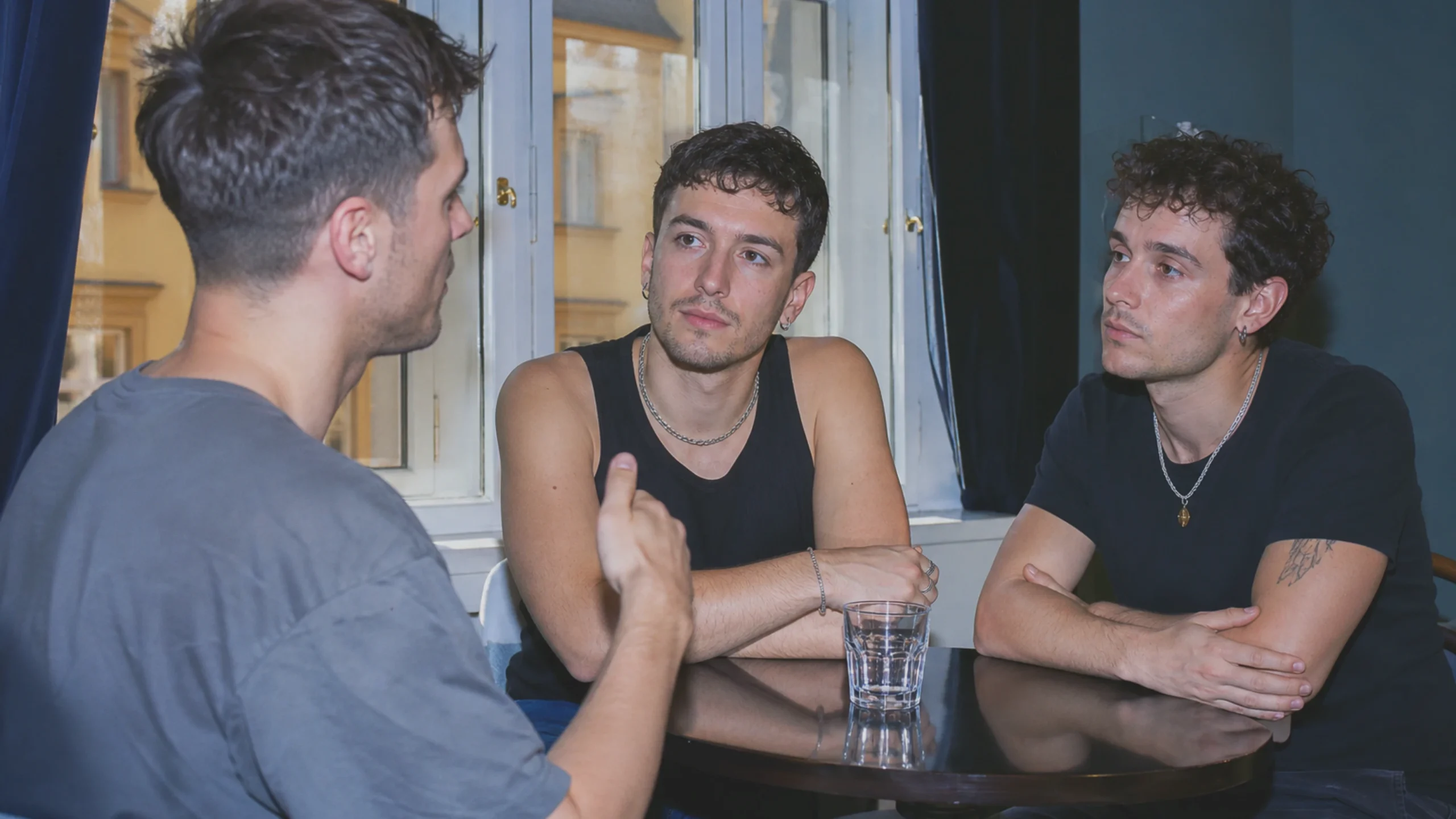
It’s time for a more serious conversation.
Not because we should condemn gay men who use drugs, but because we need to stop overlooking the consequences that are already visible.
If the gay scene needs anything today, it’s not less community. It needs more community.
It needs to expand into spaces where we can truly be human with each other. Spaces where we are not perceived primarily through our bodies, our sexual attractiveness, our status, our age, our desirability, or our usefulness. Spaces where we can see each other as people with deep needs for connection, belonging, understanding, care, and support.
And this must happen across generations of gay men.
We need places where a gay man can ask another gay man a simple question: “How are you really doing?”
We need relationships where the answer matters.
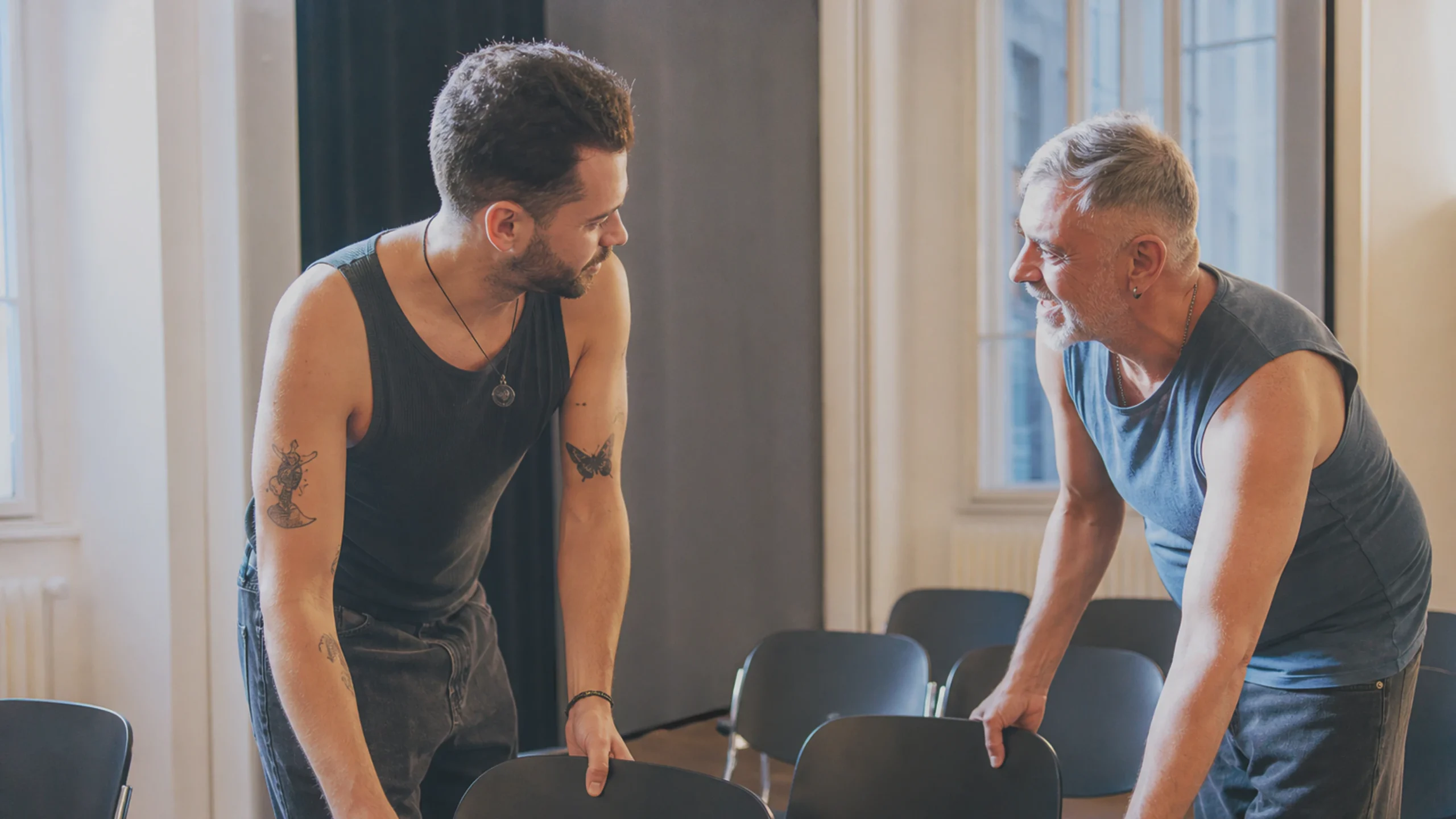
A community is not simply a group of people who share a sexual orientation. A community exists when there is some form of responsibility for each other.
If we don't start taking care of each other, then who will?
iksHaus | KI-generiert nach redaktioneller Konzeption, 2026
Therefore, the issue of drug use cannot be separated from the issue of community itself.
If our social spaces become places where people are primarily judged by how they look, what they can offer sexually, which substances they have access to, which parties they can get into, or what status they hold within a particular scene, then we should not be surprised if deeper human needs remain unfulfilled.
Gay men need places where friendship is not secondary to sex. Places where aging doesn’t mean becoming invisible. Places where vulnerability is not a weakness. Places where asking for help doesn’t mean losing status. Places where younger men can see older men not only as sexual possibilities or social contacts, but as people who can offer experience, perspective, and care.
We need structures of care.
Not abstract notions of community, but actual relationships, organizations, groups, services, and informal networks through which gay men can notice when another man is having difficulties and know what to do next.
If this text has any activist purpose, it is a call to gay men to talk more openly about what is happening among us.
Not only after someone dies.
Not only when there is an overdose.
Not only when someone reaches a crisis point.
Much earlier.
We need to be able to talk about drug use before it becomes a catastrophe. We need to be able to ask questions before someone disappears into a pattern they can no longer control. We need to be able to tell each other: I’m worried about you. I’ve noticed something. Do you need help?
This kind of care should not be seen as interference. It should be understood as one of the foundations of community.
We can accept people without accepting every behavior that puts them at risk.
We can defend freedom, pleasure, and sexual expression while also acknowledging that some consequences can no longer be treated as a normal part of that freedom.
The London study is not proof that the same situation exists in every European city. Its self-selected sample does not allow for that conclusion. However, London is a major European urban center with a large and very visible gay scene, and the results are serious enough to serve as a warning signal beyond the study itself.
The question is not whether London proves that the same thing is happening everywhere.
The question is whether we are sufficiently certain that it is not happening in our own communities to justify doing nothing.
Perhaps this is the moment to stop asking only how we can make the scene more exciting, attractive, and accessible.
Perhaps we also need to ask how we can make it safer, more connected, and more caring.
Not less community. More community.
Because normalization does not mean that something has become safer. Sometimes it simply means that we have been accustomed to danger for so long that we no longer perceive it.
Note
The research discussed in this article was conducted with a self-selected sample of LGBTQ+ individuals in London who reported using drugs for recreational purposes in the preceding twelve months. Gay men constituted 87 percent of the sample. Therefore, the results should not be considered representative of all gay men or all LGBTQ+ individuals, nor should they be taken as evidence that the same patterns necessarily exist in other cities.
A final thought
A community becomes stronger not by learning to ignore risks, but by becoming capable of caring for the people who are at risk.