

The potential cardiovascular risk associated with xylitol is attracting attention. According to Google Trends Germany, searches related to xylitol have increased significantly. At the same time, the European Society of Cardiology (ESC) is reporting data from 17,710 participants. High xylitol blood levels were associated with a higher number of serious cardiovascular events. This is a relevant signal, but it does not prove that xylitol in food causes heart attacks.
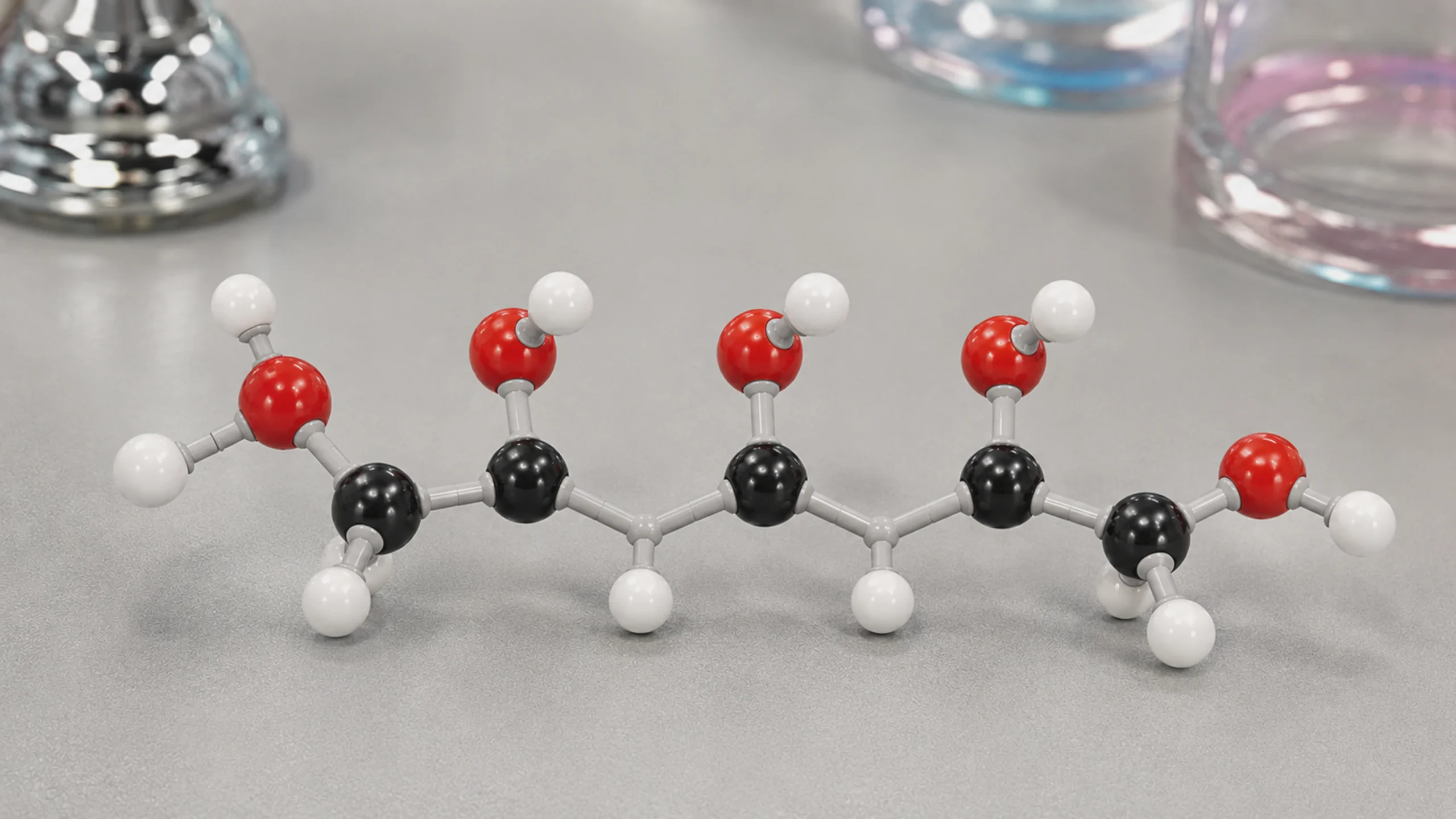
What does the study on the cardiovascular risk of xylitol show?
iksHaus | KI-generiert nach redaktioneller Konzeption, 2026
The analysis will be presented at the ESC Congress 2026 in Munich on August 29. It includes two prospective observational cohort studies. In the Canadian Longitudinal Study on Aging, people were observed for six years. The group with the highest xylitol levels in their blood had a 57 percent higher risk of death, heart attack, or stroke, after adjusting for known risk factors, compared to the group with the lowest levels.
This number describes a relative risk difference. It does not mean that 57 out of 100 people will become ill. The ESC statement does not mention absolute event rates or a specific number of additional people affected. Therefore, it is not possible to calculate a personal percentage risk.
In EPIC Norfolk, the observation period was 30 years. There, the risk in the highest xylitol group was 18 percent higher than in the lowest group. Both cohorts point in the same direction. Different effect sizes are not a contradiction, given different populations, time periods, and baseline risks.
The study design remains crucial. The analyses observed existing correlations. The participants were not randomly assigned to a diet containing xylitol or a control group. Therefore, unknown influencing factors cannot be completely ruled out, even with statistical corrections.
Why is a blood value not necessarily equivalent to xylitol consumption?

iksHaus | KI-generiert nach redaktioneller Konzeption, 2026
Xylitol is not only an added sweetener. The substance is also produced in small amounts in the human glucose metabolism. Therefore, a high fasting blood value does not automatically indicate how much chewing gum, candy, oral care products, or birch sugar a person uses.
A technical response published in the European Heart Journal in 2025 pointed out that fasting xylitol levels can also reflect the body’s own production and metabolic changes. Diseases and metabolic processes could both contribute to high levels and an increased cardiovascular risk. This explanation does not refute the observed correlation, but it limits its interpretation.
The new data builds upon a study published in the European Heart Journal in 2024. That study also found that high fasting xylitol levels were associated with more cardiovascular events. Laboratory experiments, animal models, and a small study with ten healthy individuals also provided evidence of a short-term increase in platelet reactivity.
These mechanistic findings strengthen the biological plausibility. However, the study with ten individuals did not have a placebo arm and only assessed a short-term reaction. It does not show how defined amounts of xylitol affect the body over years. According to the source material, a complete new publication with peer review was not yet available for the long-term data from 2026. A press release from the ESC and a conference presentation were publicly available.
What do the results mean for everyday life?
iksHaus | KI-generiert nach redaktioneller Konzeption, 2026
The data do not provide a threshold above which a certain daily amount of xylitol triggers a cardiovascular risk. They also do not show that occasional chewing of a xylitol-containing chewing gum is the same as a high fasting blood value in a long-term cohort.
Xylitol is commonly found in sugar-free chewing gum, candies, some baked goods, low-carbohydrate products, and oral hygiene products. It is advisable to check ingredient lists and the amounts used, without drawing personal conclusions about risk based on a single percentage value. Individuals who consume large amounts as a sugar substitute or have medical concerns should discuss their dietary choices with a doctor or a registered dietitian.
On ingredient lists, the substance may appear as xylitol or E967. In the EU, foods containing more than ten percent of added polyols must indicate that excessive consumption may have a laxative effect. This warning refers to known effects on digestion and is not a warning about cardiovascular risks.
The new ESC data do not automatically change existing regulations. However, scientific findings can be incorporated into future assessments. It is also important to distinguish xylitol from other sweeteners. Xylitol is a type of polyol and is not chemically or metabolically equivalent to high-intensity sweeteners such as aspartame or sucralose.
What are the implications of the new data?
The two cohorts, comprising a total of 17,710 participants, show a consistent risk signal. Previous studies offer a possible mechanism related to the reactivity of blood platelets. It remains unclear what proportion is attributable to diet, the body’s own xylitol production, and existing metabolic processes.
Therefore, the results are neither an acquittal nor proof of a harmful effect of consumption. The current finding is: High xylitol levels in the blood were associated with more cardiovascular events. It has not been proven that ingested xylitol causes these events.