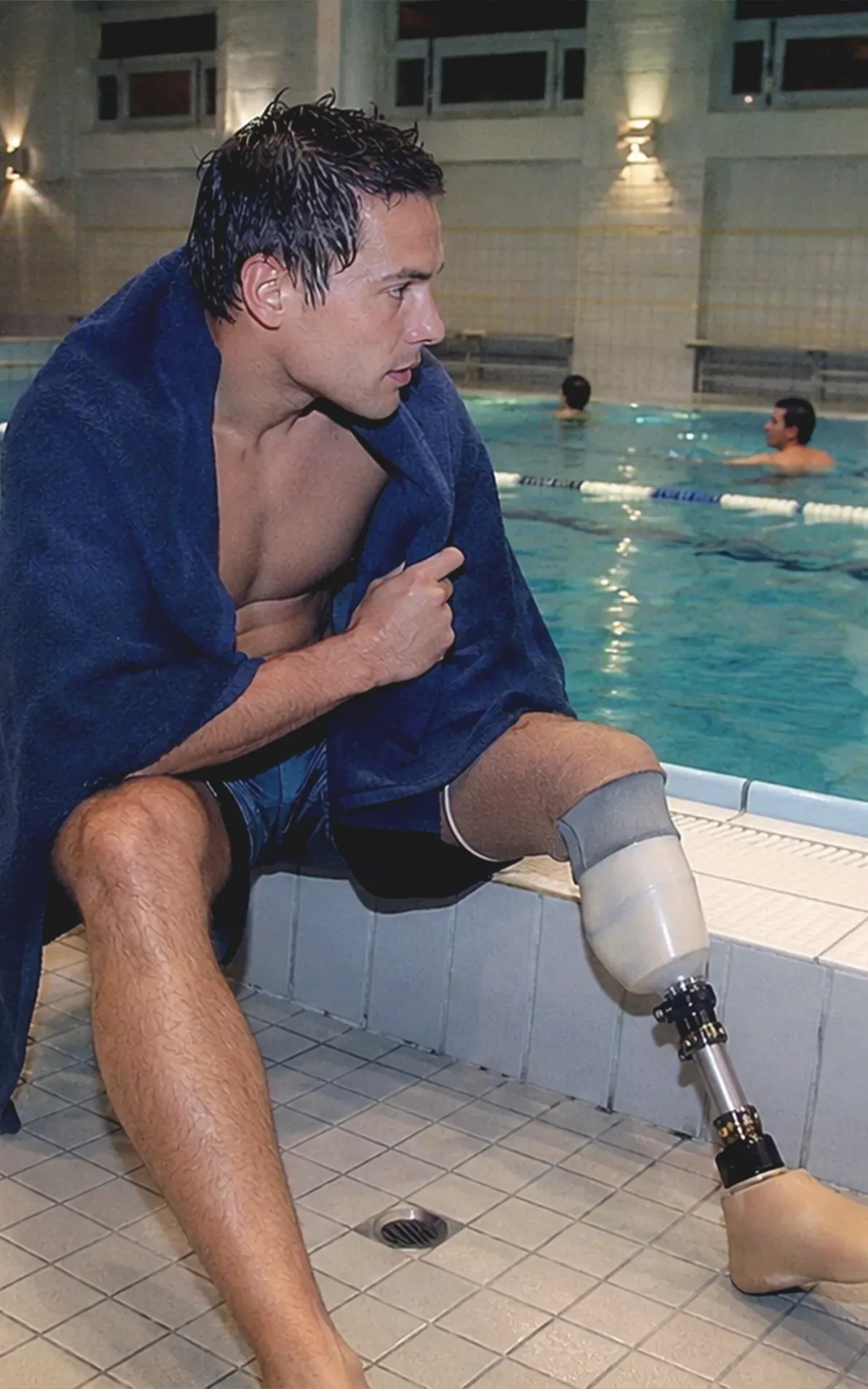
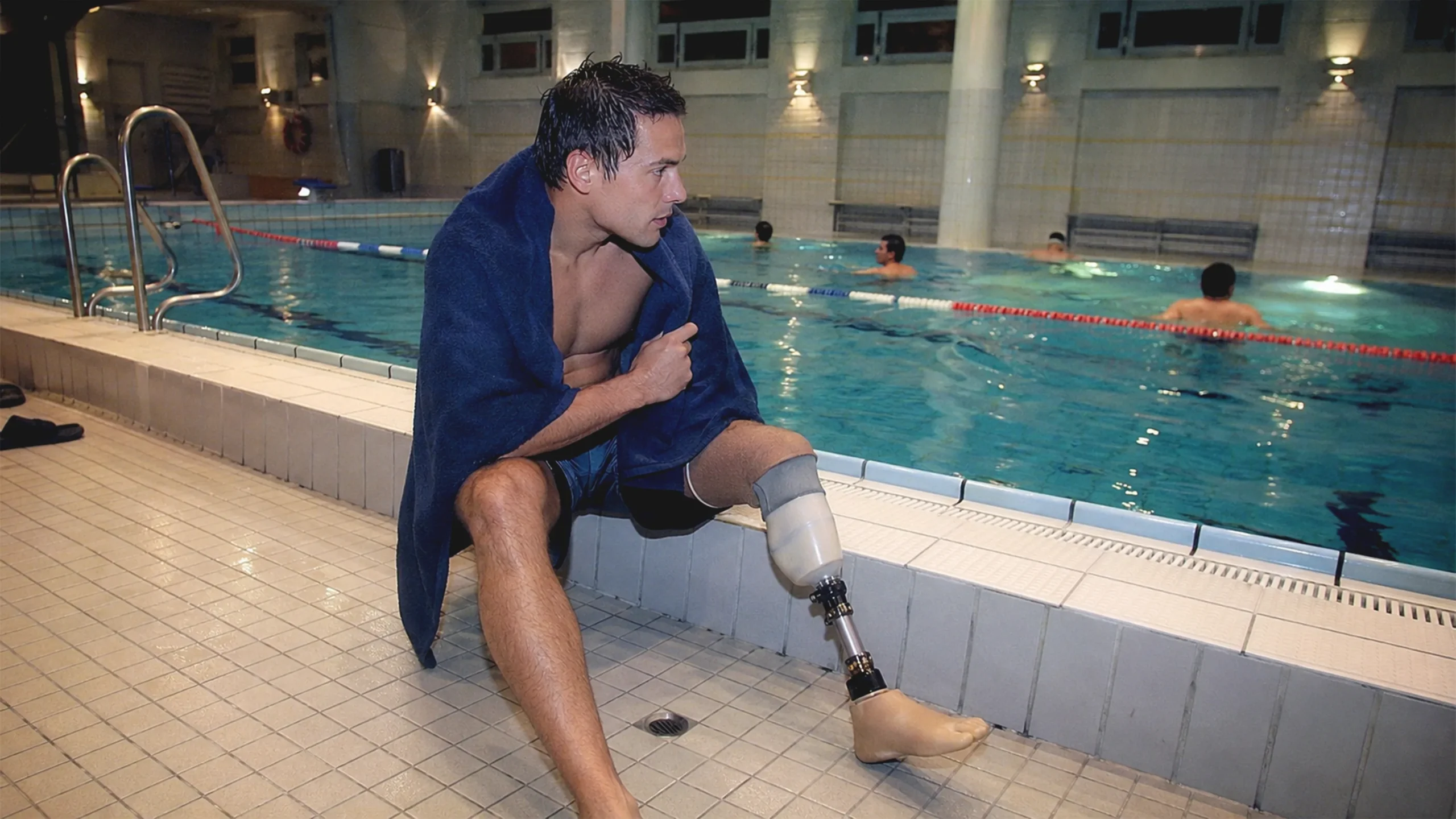
“The hardest part wasn’t losing what my body could do. The hardest part was no longer recognizing it as my own.”
For many people, a disability or chronic illness changes much more than just physical function.
A body that once seemed familiar and natural can suddenly appear unpredictable, painful, weak, scarred, or permanently exhausted. It may require medication, assistive devices, mobility aids, or support from other people.
Even seemingly everyday situations can change as a result.
Getting dressed.
Looking in a mirror.
Being photographed.
Moving around in public.
Allowing for closeness.
Or perceiving one’s own body in a space where other people can also see it.
Some people describe this experience as encountering a reflection of a stranger. The facial features are the same, but the relationship to one’s own body is no longer what it once was.
Psychological healing does not begin only when the body returns to its previous state.
Such a return may not be fully possible.
Healing can begin where a person stops solely searching for the lost body and gradually develops a new relationship with the body in which they live today.
We lose not only abilities, but also an identity
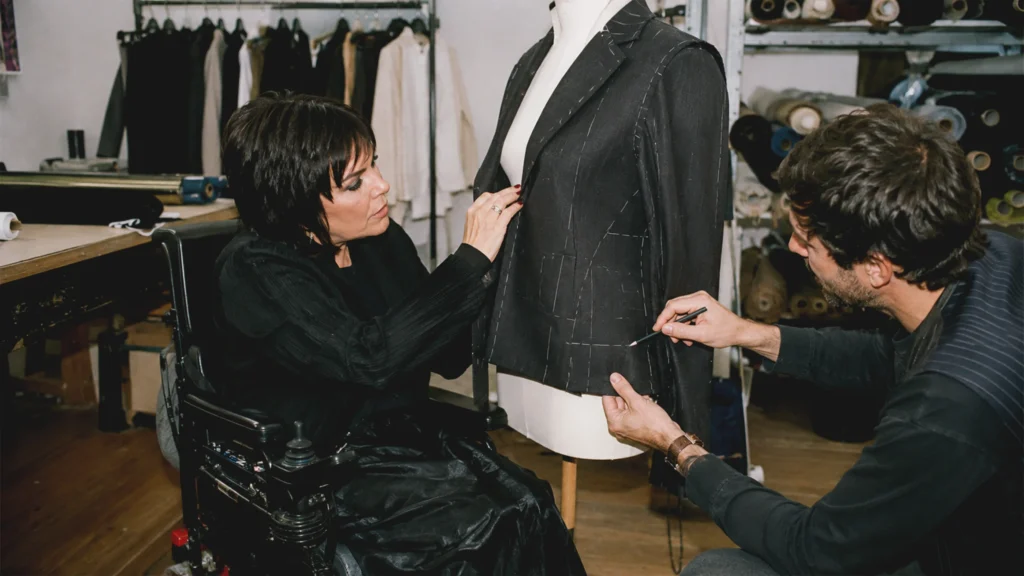
iksHaus | KI-generiert nach redaktioneller Konzeption, 2026
Our culture often treats the body as a project that constantly needs to be improved.
They should be efficient, young, attractive, independent, productive, and as error-free as possible.
Advertising, social media, and even parts of the healthcare system constantly convey the same message: a good body is one that functions, is pleasing, and never fails.
As long as one’s own body more or less meets these expectations, many of these beliefs remain invisible.
A disability or a chronic illness can shake these beliefs in a short time.
Suddenly, it’s not just about certain movements becoming more difficult or an activity no longer being possible. Familiar ideas about who one is and one’s place in the world can also collapse.
A person who defines themselves by their physical strength may lose an important part of their self-image.
A person whose profession relied on endurance or mobility may feel that they have lost not only an activity, but also their social role.
Others experience that people in their environment suddenly stop talking to them and instead talk about their diagnosis.
The person disappears behind a medical category.
In the eyes of others, a person with interests, relationships, humor, sexuality, abilities, and contradictions seemingly becomes only “the wheelchair user,” “the chronically ill person,” or “the patient.”
Therefore, the loss is not just physical.
It can become existential.
The question then is not solely:
“What can my body still do?”
Instead, it becomes:
“Who am I now?”
Body image is psychological, not just visual
Body image is often equated with satisfaction with one’s appearance.
In psychology, however, the term describes a much more complex internal system.
Body image encompasses how we perceive our body, how we emotionally experience it, what we believe it says about us, and how we imagine that other people see it.
Therefore, two people with the same physical disability can have completely different psychological experiences.
One person may relatively quickly integrate an assistive device as a natural part of their life.
Another person may experience the same assistive device as a visible sign of loss or as a threat to their own identity.
Physical changes also do not have a predetermined psychological meaning.
For one person, a scar may only evoke memories of pain.
For another, it will later become part of their own story, which does not need to be hidden or romanticized.
The body in which we live is never just biological.
It is also a narrative.
It contains memories, societal expectations, experiences with closeness and rejection, and ideas about what a dignified, attractive, or independent life should be.
Shame grows in silence

iksHaus | KI-generiert nach redaktioneller Konzeption, 2026
Many people with disabilities or chronic illnesses experience feelings that they rarely talk about openly.
Shame about needing support.
Discomfort when first using a wheelchair, prosthesis, or walking aid.
Fear that other people will only perceive limitations.
Grief over scars, weight fluctuations, or other physical changes.
Uncertainty about continuing to be perceived as attractive or desirable.
Guilt because partners, family, or friends often take on more practical tasks.
These reactions are understandable.
The problem is not that these feelings arise.
The problem begins when shame tells a person that they must hide these feelings.
Shame isolates.
It creates the feeling of being alone with one’s own experience and of being excluded by other people as soon as they recognize the supposed truth about the body.
Therefore, shame can become stronger, even though no one in the environment reacts openly negatively.
It thrives on the expectation of possible rejection.
A person begins to avoid situations before it can even be examined how others actually react.
Mirrors are avoided.
Photos are rejected.
New clothes are no longer tried on.
Intimacy is rejected, even though the desire for it still exists.
With each moment avoided, shame seems to find new confirmation.
Empathy works in the opposite direction.
It creates connection.
Self-compassion is not self-pity
One of the most persistent misunderstandings in psychology is that self-compassion means feeling sorry for oneself or giving up on personal development.
Kristin Neff’s research describes something different.
Self-compassion encompasses three interconnected abilities.
The first is to treat oneself with kindness, rather than reacting to pain with harsh self-criticism.
The second is to recognize suffering as part of the human experience, rather than deriving from it proof of being fundamentally different or inferior.
The third is mindful awareness. Painful feelings are neither suppressed nor equated with one’s entire identity.
A self-compassionate thought is therefore not:
“Everything is fine.”
Rather, it can be:
“This is difficult. I don’t need to punish myself further for the fact that it is difficult.”
In research, people with a stronger sense of self-compassion often report fewer depressive symptoms, less anxiety, and greater emotional resilience. Self-compassion can also support psychological adaptation to chronic health problems.
It does not eliminate the pain.
However, it prevents the pain from turning into self-hatred.
Self-compassion is also not the opposite of rehabilitation.
A person can train intensely, utilize medical support, develop new skills, and at the same time acknowledge that one’s inherent worth is not dependent on every progress or setback.
It is precisely this attitude that can make it easier to move forward again after difficult days.
The body is not the enemy
After an illness or injury, many people begin to talk about their bodies as if they had betrayed them.
“My body has failed me.”
“My body has destroyed my life.”
“My body is broken.”
These sentences do not arise from a lack of gratitude.
They often stem from pain, a loss of control, and the feeling that something familiar is suddenly working against one’s own desires.
However, in the long term, psychotherapy can raise a different question.
What happens when the body is not viewed solely as an enemy?
What happens when, despite all limitations, it continues to try to survive and adapt?
Even a body affected by illness continues to regulate countless processes.
It breathes.
It processes food.
It maintains body temperature.
It fights infections.
It heals wounds.
It changes movement patterns and seeks new forms of balance.
This does not mean romanticizing pain or loss.
It also does not mean that one must be grateful to the body for everything.
The perspective simply changes the relationship.
Instead of simply asking:
“Why has my body betrayed me?”
a person can gradually ask:
“How can I work with my body, instead of constantly fighting against it?”
This shift does not deny the suffering.
It changes the perspective from which it is viewed.
Rewriting the story of the body
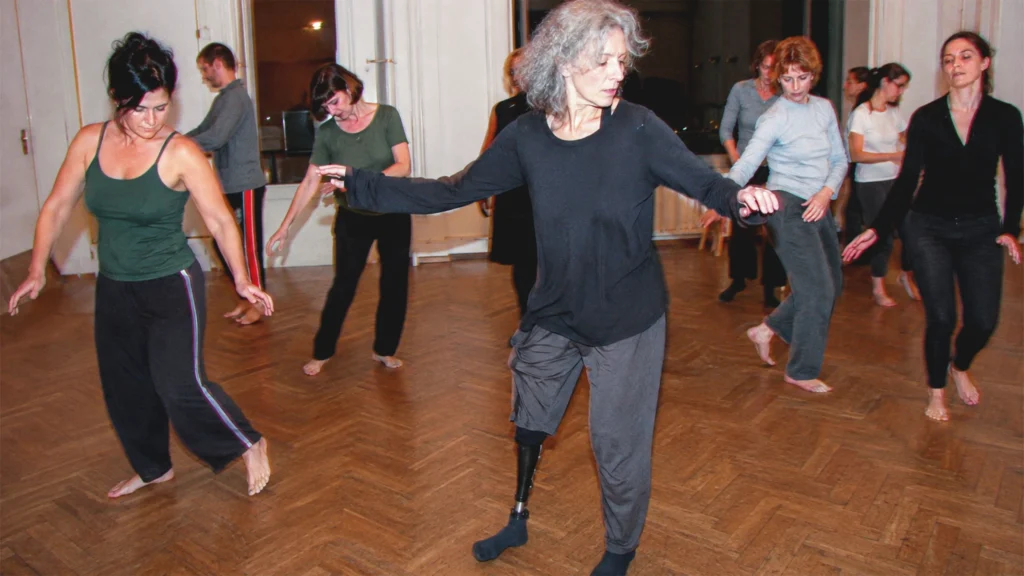
iksHaus | KI-generiert nach redaktioneller Konzeption, 2026
Constructivist psychotherapy assumes that people do not simply discover meaning.
They actively create and change meaning.
The body itself does not necessarily have to change.
However, the story told about it can change.
From the sentence:
“My body is useless”
it can gradually become:
“My body is different, but it is still my home.”
From:
“I have lost everything”
it can become:
“Some possibilities have closed, while others are beginning to emerge.”
A new narrative can acknowledge loss.
It doesn’t have to gloss over it.
It can recognize that certain abilities, roles, or life plans have indeed been lost.
At the same time, it can prevent this loss from becoming the defining characteristic of a person.
Heinz von Foerster articulated the ethical principle of acting in a way that increases the number of possibilities.
Psychological healing can begin precisely there.
Not by claiming that everything is still possible.
But by seeking out possibilities that actually exist in the new reality.
Perhaps the form of creativity will change.
Perhaps new relationships with one’s own body will emerge.
Perhaps support will no longer be understood solely as dependence, but also as a form of mutual connection.
Perhaps an assistive device will not become a symbol of failure, but a tool that restores freedom of movement.
The new narrative is no less true simply because it unfolds differently than the previous one.
Beyond Acceptance
In the context of disability, the concept of acceptance is often discussed.
Acceptance is important.
It can mean no longer comparing the present reality daily with the past, or not fighting against unchangeable facts.
However, perhaps there is something that goes beyond acceptance.
Respect.
Respect means judging the body not only by what it has lost.
It also means acknowledging what the body achieves every day.
Respect does not demand enthusiasm.
A person does not have to love their body every morning.
They do not have to find every scar beautiful or interpret every limitation positively.
Respect can be much more pragmatic.
It can mean giving the body rest when it is exhausted.
Accepting help without devaluing oneself.
Wearing clothes in which one does not have to hide.
Making medical decisions not out of shame, but out of care.
Taking boundaries seriously.
And no longer punishing one’s own body for conditions that it did not choose.
A body does not have to be perfect to deserve kindness.
Neither does a person.
Concluding Remarks
The feeling of being at home in one’s own body rarely arises in a single moment.
It develops through repeated experiences.
Through clothing in which one experiences oneself as a person, not as a diagnosis.
Through relationships in which closeness does not depend on physical perfection.
Through spaces in which assistive devices do not need to be explained or apologized for.
Through days when the body seems capable, and through other days when care is more important than performance.
Many people gradually feel more comfortable in their bodies over time.
Not necessarily because the body returns to its previous state.
Rather, because the relationship with the body becomes more nuanced, respectful, and compassionate.
The body may no longer be the same.
Nevertheless, it remains the place where one’s life unfolds.