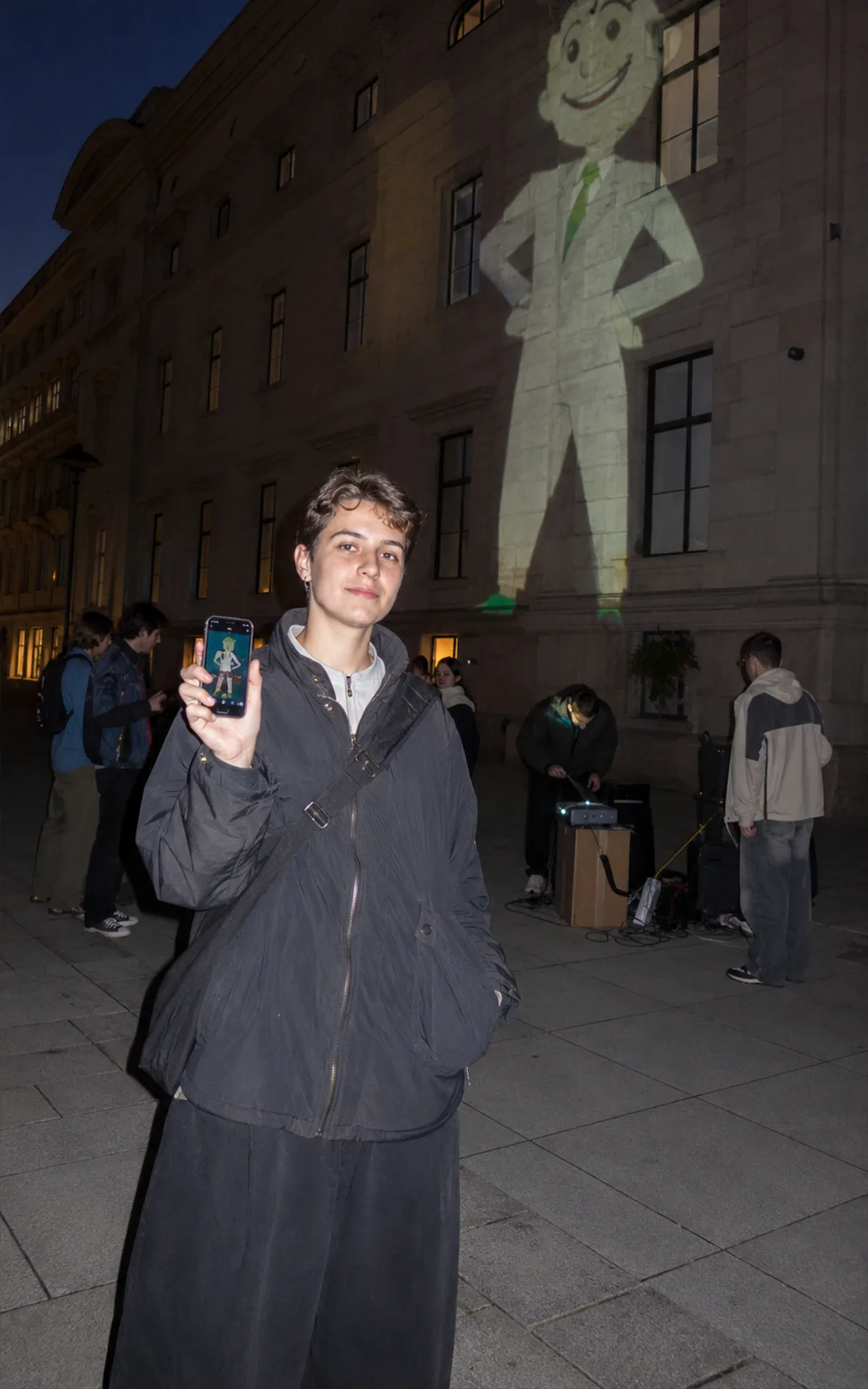

Conventional tools of democratic participation have not become meaningless.
People continue to sign petitions, organize demonstrations, work in NGOs, speak with journalists, file complaints, and try to influence political decisions outside of institutional processes.
However, for many young people, these processes seem slow, difficult to access, and structurally inferior to global corporations or established political elites.
A petition requires organization, time, and clearly defined support.
A formal political process requires access to institutions.
A press report must be researched, edited, and published.
In contrast, a meme can be created, copied, modified, and disseminated to a completely different public within a matter of minutes.
It is precisely this speed that gives rise to meme activism.
It is not simply about publishing political jokes. It uses humor, irony, remixing, and cultural recognition to reframe an issue.
A complex piece of legislation becomes an absurd image.
An opaque corporate report is reduced to a single contradiction.
A carefully produced sustainability video is confronted with a scene that undermines its credibility.
Satire does not always attempt to explain the entire problem.
Its strength often lies in making the crucial contradiction so visible that it becomes difficult to ignore.
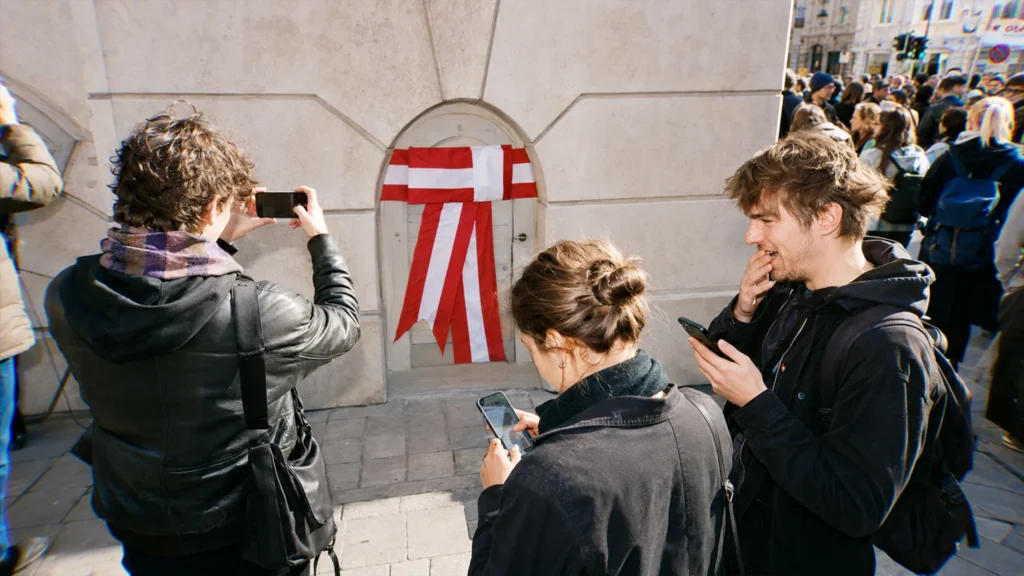
When irony circulates faster than a press release
iksHaus | KI-generiert nach redaktioneller Konzeption, 2026
Theories about networked publics explain how people on digital platforms no longer act solely as passive recipients of information.
They comment on, edit, combine, and disseminate content further.
A political message no longer belongs solely to the organization that originally formulated it. It becomes part of a cultural production in which thousands of users create new variations.
Framing theory helps to understand why this process is politically relevant.
Every complex problem can be presented in different ways.
A company can describe a price increase as a necessary adjustment.
A meme shows the same decision as a bonus payment to executives, funded by customers.
A government describes a measure as a technical reform.
A satirical video frames it as an attempt to hide responsibility behind administrative terminology.
The content is not only simplified in the process.
Its moral perspective is altered.
A study of memes during the protests against the 2024 Kenyan Finance Act explicitly used the theory of networked publics and framing theory to analyze how satirical content constructs political accountability, mobilizes citizens, and interacts with platform algorithms. The results of this specific case study should not be interpreted as a universal success rate for all meme activism, but they demonstrate how systematically such content was used within a specific protest.
TikTok has a particularly suitable architecture for this.
In traditional social networks, the reach of a post depended heavily on how many people followed an account.
In contrast, TikTok’s “For You” page can show users content from creators they have never seen before. An analysis of nearly two million political TikTok videos showed that the recommendation system partially replaces the importance of existing follower networks and also offers smaller accounts a chance for algorithmic distribution.
This changes political communication.
An organization does not necessarily need a large existing community for a message to be visible.
It needs a format that people react to.
Humor is particularly well-suited for this because it fulfills multiple functions simultaneously.
It reduces cognitive load when dealing with complex topics.
It creates an emotional reaction.
It creates a sense of shared understanding.
And it invites repetition.
When someone shares a meme, they are not only spreading information.
The person is simultaneously signaling: “I recognize the contradiction.” “I understand the code.” “I belong to the public that laughs at it.”
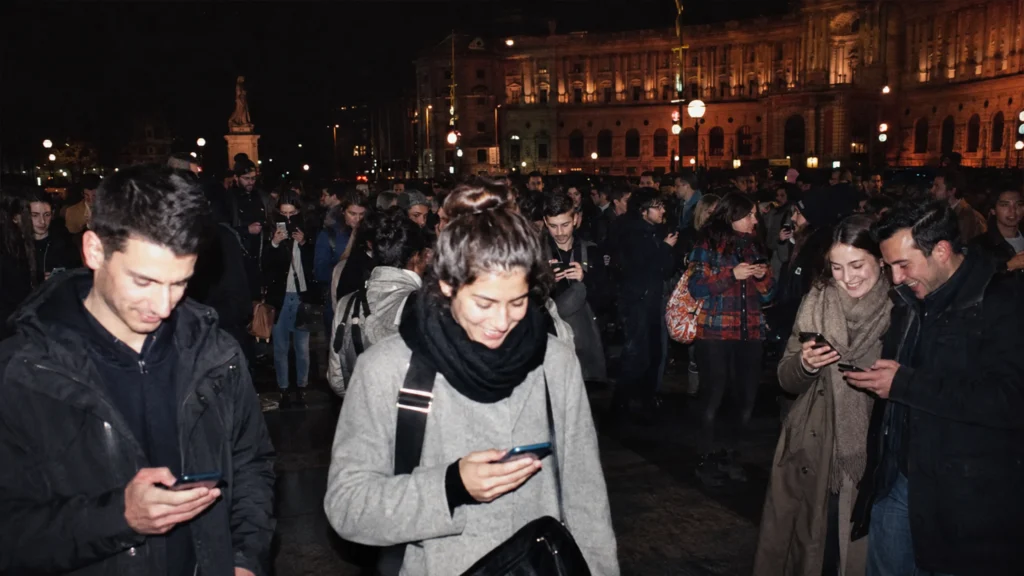
What the quantified values actually show
iksHaus | KI-generiert nach redaktioneller Konzeption, 2026
In the aforementioned study of the Kenyan protests against the 2024 Finance Act, satirical images and short video memes accounted for 62 percent of the content that was classified as effective.
An additional 24 percent consisted of viral political jokes, and 14 percent involved remix culture.
The study also reported that the analyzed meme campaigns generated public pressure in 74 percent of the cases examined. In 58 percent of the cases, a reaction from state institutions was observed.
| Metrics within the examined protest communication: | Percentage |
|---|---|
| Satirical images and video memes | 62 % |
| Cases with demonstrably generated public pressure | 74 % |
| Cases with institutional or state reaction | 58 % |
These figures are noteworthy.
However, they do not mean that 58 percent of all memes published worldwide force a government to enact political changes.
These are results from a specific protest movement, a particular political conflict, and a clearly defined research design.
Their significance lies not in a universal formula for success.
They show that memes, within a networked movement, can be more than just decoration. They can define the language in which accountability is publicly presented and repeated.
At the same time, the study distinguished between public pressure and sustainable political reform.
An institution can react to a campaign without fundamentally changing its policies.
A minister can hold a press conference.
A company can delete a criticized post.
An authority can announce an investigation.
All of this are reactions.
However, they are not automatically structural changes.
Meme activism is particularly good at exposing scandals and focusing attention.
For lasting legal and political results, journalism, unions, courts, NGOs, parliamentary work, and organized protest movements are often still necessary.
Why satire undermines carefully constructed PR narratives
Companies invest significant resources in controlling their public image.
Critical events are framed as challenges.
Environmental damage is presented as transitional risks.
Layoffs are portrayed as strategic realignments.
Fossil fuel infrastructure is presented as part of a sustainable transformation.
Satire exposes this controlled language.
It translates corporate jargon back into a moral statement.
This method is particularly effective in cases of greenwashing.
Young consumers are not inherently opposed to sustainability communication. However, they are sensitive to the difference between a verifiable action and an aesthetically “green” campaign.
A 2025 study of Italian Gen Z consumers found that the perception of greenwashing had a significantly negative impact on the intention to purchase products marketed as sustainable. Within the model studied, the perception of greenwashing was even the strongest negative predictor of purchase intention.
This explains why irony can be effective where a lengthy sustainability report barely attracts attention.
A report requires time, expertise, and concentration.
A satirical image can immediately highlight the central discrepancy:
The company talks about a green future, while its business model continues to rely on high emissions, short-lived products, or constantly increasing production.
Once this contradiction is culturally encoded, it can become detached from the original campaign.
The company’s slogan becomes raw material for parodies.
The advertising figure is used against its own brand.
The carefully produced video serves as a template for remixes.
Companies do not automatically lose money as a result.
However, they sometimes lose control over the meaning their communication receives in the public sphere.
Scrubby Greenwash: A sponge against the LNG narrative
iksHaus | KI-generiert nach redaktioneller Konzeption, 2026
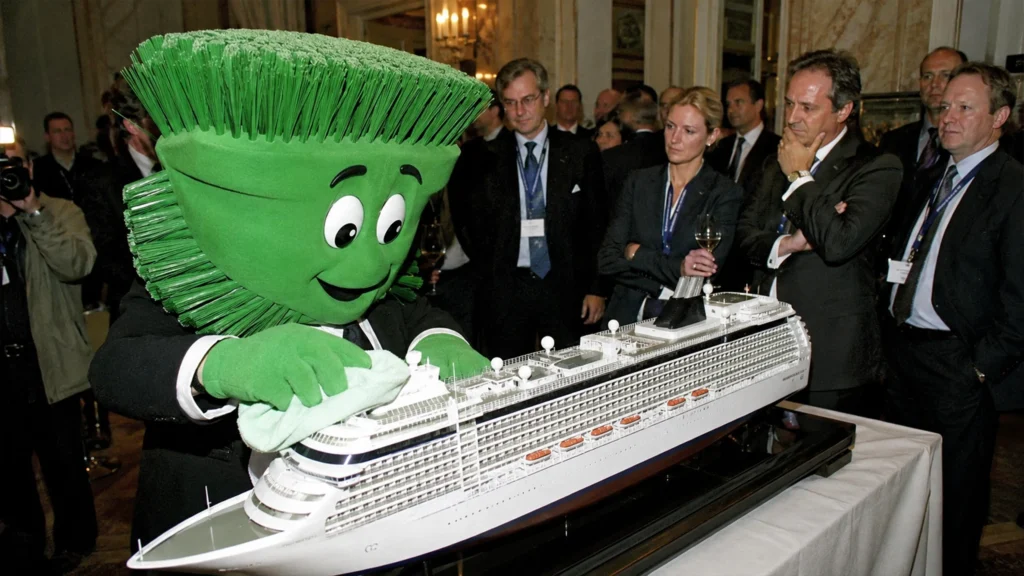
A particularly clear example was provided by the campaign surrounding the satirical figure Scrubby Greenwash.
The green sponge figure first appeared in September 2024 during an action by Ocean Rebellion in front of the International Maritime Organization (IMO) in London. Scrubby was presented there as an exaggerated embodiment of greenwashing and greeted delegates discussing the future of liquefied natural gas in shipping.
In February 2025, the activist collective The Yes Men placed a paid advertisement in the industry magazine The Maritime Executive.
The advertisement advertised a supposed communications agency called GreenCurrent Group, which was supposed to support companies in marketing liquefied natural gas.
The agency did not exist.
Instead, a QR code led to a satirical video in which Scrubby Greenwash symbolically scrubs away unpleasant facts about LNG. The goal of the campaign was to target the greenwashing narratives of the shipping and cruise industry, including the portrayal of Royal Caribbean and the marketing of LNG as a particularly clean fossil fuel.
The method was precisely chosen.
The activists did not only publish the parody in their own social networks.
They smuggled it into precisely that professional medium that is read by executives and investors in the maritime industry.
The joke was therefore aimed at two audiences at the same time.
For the general public, Scrubby was an easily understandable figure.
For the industry, the fake advertisement was a direct intervention in their own communication space.
The campaign aimed at a real scientific conflict.
LNG is primarily composed of methane. Methane has an approximate warming effect 80 times greater than the same amount of carbon dioxide over a period of 20 years. Methane can escape throughout the LNG chain, during extraction, processing, transportation, and use. Unburned methane can also be released as “methane slip” from ship engines.
Satire does not replace this scientific analysis.
However, it provides a visual representation.
The phrase “clean fossil gas” is presented as a linguistic contradiction through the exaggerated depiction of a cleaning sponge.
Scrubby does not explain every technical detail of the LNG balance.
The figure illustrates what greenwashing does:
It does not clean up the emissions.
It cleans up the public perception of the emissions.
This is the strategic strength of the campaign.
The targeted company can ignore a scientific report or respond with its own report.
A ridiculed brand message is difficult to repair.
However, there is no reliable evidence that this specific campaign alone has changed the stock price of Royal Caribbean or prevented an investment decision.
Its measurable success lies primarily in the attention it has garnered, the media coverage, and the shift in public perception.
In the satirical narrative, what was presented as a supposed transitional solution (LNG) has become a product that requires a “green sponge” to conceal its fossil nature.
De-Influencing: Consumer criticism in the format of an influencer
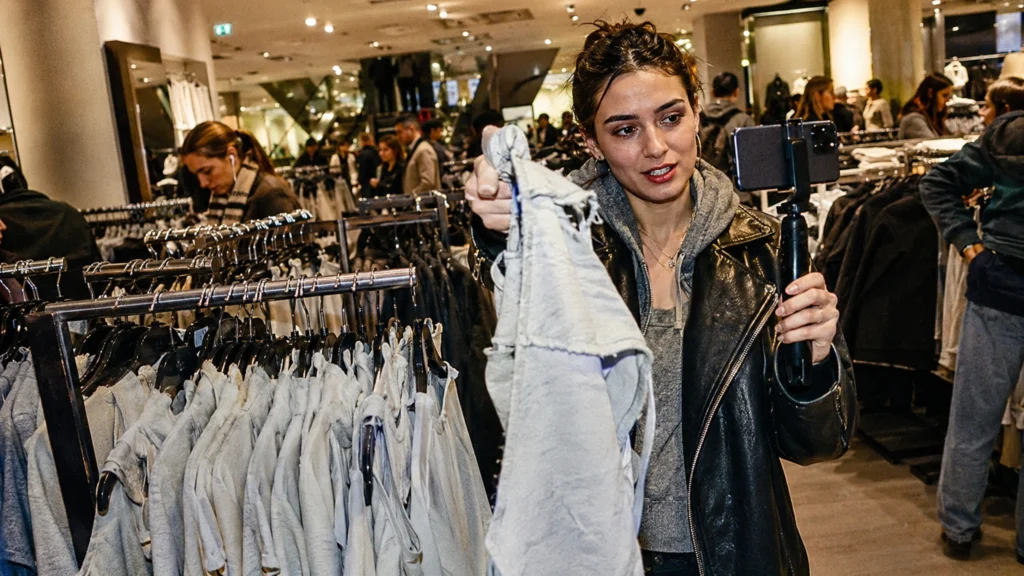
iksHaus | KI-generiert nach redaktioneller Konzeption, 2026
Meme activism is not only directed against governments or large industrial corporations.
It also changes everyday consumer communication.
De-Influencing emerged as a counter-movement to influencer culture, where new products, trends, and must-haves are constantly presented.
De-influencers do not say:
You need this product.
They say:
This product is overpriced.
The quality is poor.
You already own something similar.
Don’t buy it.
This trend became particularly visible on TikTok. As of March 2024, the hashtag #deinfluencing had more than 1.5 billion views. These numbers are snapshots and not a direct measurement of changed purchasing behavior, but they do demonstrate the enormous cultural reach of the format.
De-influencing works because it uses the same communication methods as traditional influencing.
The person speaks directly into the camera.
They show a product.
They talk about a personal experience.
They use a parasocial relationship, meaning the feeling the audience has of knowing the person and being able to trust their opinion.
The difference lies in the direction of the recommendation.
Peer-reviewed research confirms that de-influencers are often perceived as more credible by consumers than traditional influencers, and that de-influencing messages can influence attitudes and purchase intentions. Another qualitative study described de-influencing as a form of moral responsibility that can encourage users to make more informed decisions, choose more sustainable alternatives, or consume less.
This content often targets beauty trends, short-lived household products, and fast fashion.
Platforms like Shein and Temu are particularly suitable targets because their business models are based on high product volumes, low individual prices, rapid trend production, and repeated impulse purchases.
A video showing a poorly made seam, inaccurate product images, or an object that breaks after a single use can translate the abstract concept of “overconsumption” into a directly recognizable experience.
Nevertheless, it is important to distinguish between cultural influence and proven economic impact.
It is not possible to directly infer from a billion video views how much the sales of a particular company have decreased.
De-influencing can change purchase intentions, reduce impulse purchases, and affect brand credibility.
However, the direct effects on the sales of companies like Shein or Temu, or individual fashion chains, can only be reliably determined with company data and controlled market analyses.
Similarly, caution must be exercised when interpreting the frequently cited increase in search queries for minimalist wardrobes.
Google Trends data analyzed by Vogue Business showed an increase of 60 percent in search queries for “capsule wardrobe.” The value of 42 percent referred to the search term “uniform,” not “capsule wardrobe.” This development aligns with the growing interest in durable basics and consciously reduced wardrobes, but it does not prove that de-influencing alone caused this demand.
De-influencing also contains an inherent contradiction.
Some creators advise against buying a product and then recommend another.
Some earn money through affiliate links or their own brands.
This can lead to consumer criticism being transformed into consumer advertising once again.
The most credible form of de-influencing therefore goes beyond the question of which product is better.
It asks a more fundamental question:
Is a new product even needed?
The Limits of Rapid Digital Pressure
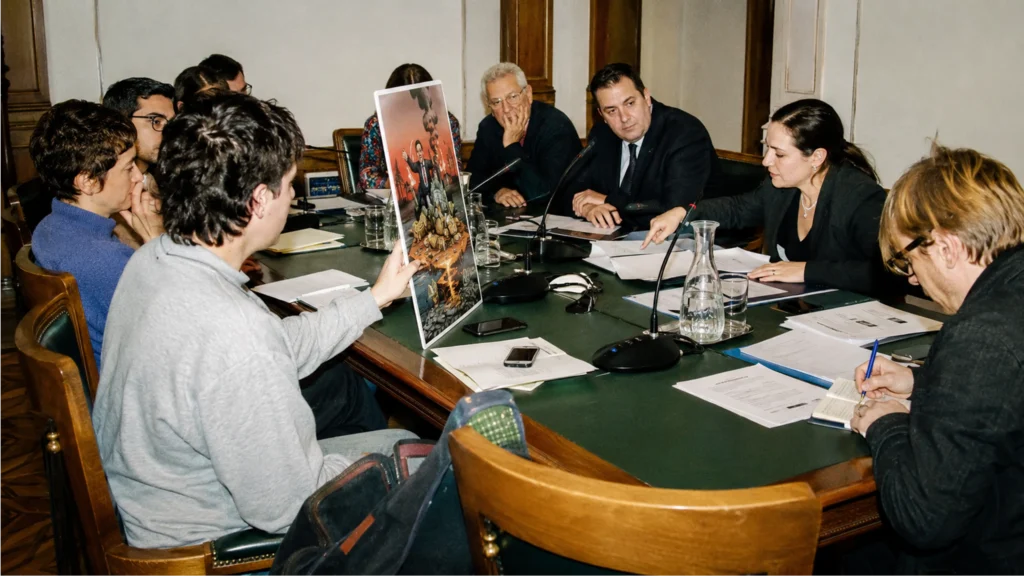
iksHaus | KI-generiert nach redaktioneller Konzeption, 2026
Algorithmic reach is powerful.
However, it is not stable.
A post can reach millions of people within a few hours and be practically invisible the next day.
Platforms determine which content is recommended, restricted, or removed. These decisions are often only partially understandable to users.
Activists can therefore simultaneously benefit from the enormous reach of a recommendation system and be dependent on its lack of transparency.
Interviews with pro-Palestinian TikTok activists, for example, showed how creators continuously adapt their communication to perceived moderation and visibility rules. They reported uncertainty about whether content was technically restricted, and that a delayed restoration of a post could destroy the crucial moment of algorithmic distribution.
A recent study on environmental activism on TikTok also describes a fundamental contradiction.
The platform enables broad visibility through algorithms and viral spread. At the same time, it offers only limited conditions for long-term communities and stable political relationships. Therefore, successful activism often remains platform-independent and combines digital reach with other forms of organization.
Meme activism can bring an issue to the public agenda.
It can bring people together, create a language for shared frustration, and increase the reputational cost of silence.
However, it cannot file a lawsuit.
It cannot negotiate a collective bargaining agreement.
It cannot enforce an emissions limit.
It cannot control a supply chain.
For this, the movement needs institutions or counter-institutions: journalists, scientists, lawyers, unions, regulatory authorities, citizens’ initiatives, and political organizations.
Therefore, the most effective model is not “memes instead of protest.”
It is memes plus protest.
Satire opens up the conflict.
Research documents it.
Organization keeps it alive.
Institutional work translates it into rules and consequences.
Concluding synthesis: Five strategies of a generation
The five concepts described in this analysis are not separate internet trends.
They can be understood as interconnected reactions to the same political, ecological, and psychological situation.
The luxury of absence is a reaction to a digital culture that demands constant availability and uninterrupted participation.
People are trying to reclaim their attention by not responding to every message, not documenting every event, and not constantly using every platform.
The digital dark side and permacomputing make it clear that even seemingly immaterial technologies rely on energy, raw materials, data centers, and global supply chains.
Withdrawing from the digital overproduction is not only a psychological issue but also an ecological one.
Synthetic care refers to the attempt to use artificial intelligence not only for creating additional content.
Instead, it should filter information, detect manipulation, improve accessibility, and help people navigate an overloaded digital system.
Treatonomics and solarpunk are reactions to the loss of traditional economic security.
One strategy seeks short-term control through small, easily obtainable pleasures.
The other attempts to translate joy, repair, and sustainability into local, community-based structures.
Meme activism complements these reactions with a political language.
Even if people lack the financial resources of a corporation or the formal access to a political elite, they can still create meaning.
They can ridicule a campaign.
They can file a complaint.
They can force a brand to respond to a question it would rather ignore.
Together, these phenomena form a cultural defense mechanism.
Attention is limited.
The material infrastructure is made visible.
Technology is focused on care rather than expansion.
Joy is defended against resignation.
Satire is used against institutional control of language.
The era of the passive consumer does not automatically end
It would be an exaggeration to claim that passive consumption has already disappeared.
Platforms, fast-fashion companies, and digital advertising systems continue to generate enormous revenues.
Meme culture can also be commercialized.
Satire can become branded content.
“De-influencing” can be used to sell new products.
A viral protest can be displaced by the next trend just a few days later.
Nevertheless, the audience’s perspective is changing.
An increasing number of users no longer see advertising solely as information about a product.
They examine who benefits from the message.
They compare statements with corporate practices.
They document poor quality.
They parody “greenwashing.”
They organize boycotts, a culture of repair, and alternative public spaces.
Institutions that want to exist in this environment can no longer exclusively control what is said about them.
They must expect that every statement will be edited, archived, compared, and checked against their actual actions.
The question is no longer just:
Is our campaign convincing?
Instead, it is:
Will our claim survive the next screenshot, remix, and fact-check?
Meme activism is not a substitute for democratic institutions.
It is a warning system.
It shows when institutional language loses its credibility.
And it provides a networked public with the opportunity to make this failure visible more quickly than the institution in question can control.