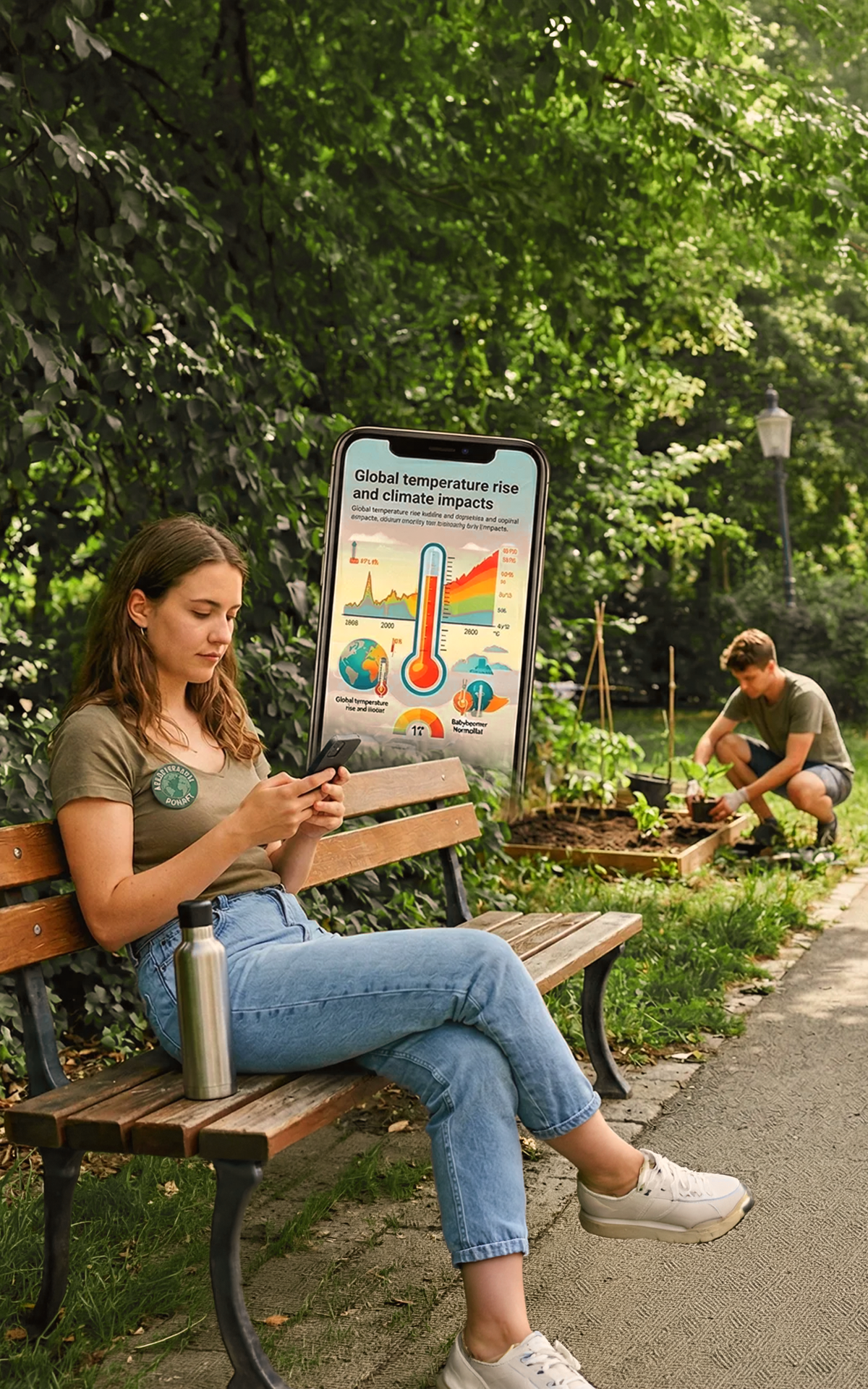
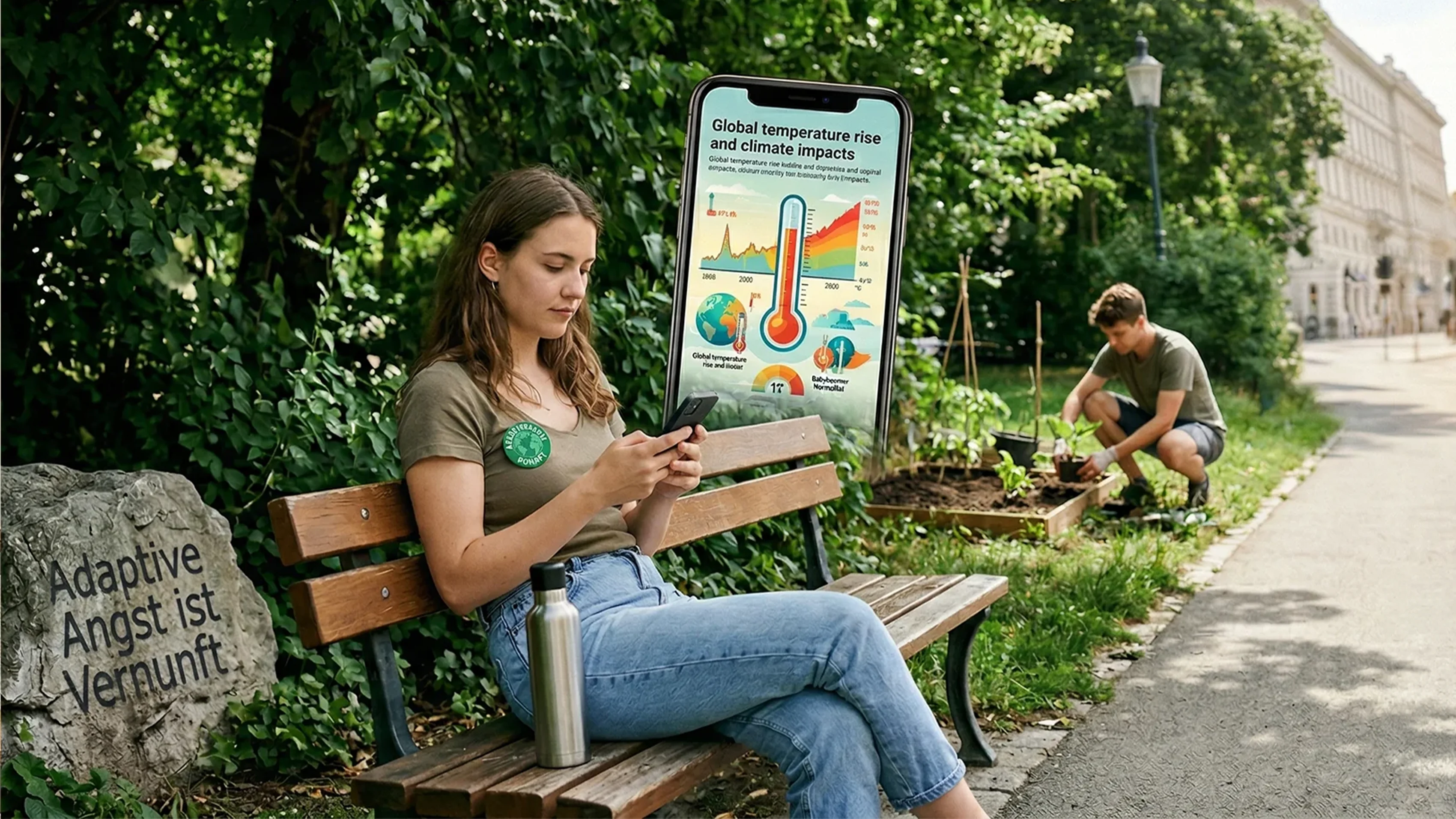
Many older people consider the concerns of young people to be exaggerated. However, researchers at the University of Vienna and WU Vienna show that eco-anxiety is not an illness, but a natural and rational reaction to a real threat. The central thesis: The climate anxiety of Generation Z is the most appropriate response of our time and is changing Europe.
In Vienna, scientists are no longer debating whether climate anxiety exists, but rather how it is changing our thinking in the 21st century. What was once hardly noticed is now a central research topic at the University of Vienna and WU Vienna. The experts state clearly: Those who are afraid for the Earth are not ill, but are attentive. This brings the question into focus of how exactly fear shapes our reactions to environmental threats.
Fear as an adaptive function
Traditionally, fear is often considered irrational in psychology. However, researchers such as Professor Sabine Pahl of the University of Vienna emphasize that fear serves an important protective function in a world with heat waves, microplastics, and the loss of biodiversity.
Previously, the fear of fire helped us survive. Today, young people recognize environmental dangers based on scientific facts. Studies from Vienna show that over half feel powerless and sad because they take these facts seriously.
The Generational Divide: The Burden of Inaction
The figures show a clear difference between the generations. Nearly half of Generation Z (born between 1995 and 2010) suffers significantly from climate anxiety. Among Baby Boomers, it’s only 11 to 17 percent.
This difference stems not only from anxieties about the future but also from a feeling of betrayal. Young people feel compelled to save the world while having to bear the consequences of years of inaction. This raises the question of how role models function in this situation.
The Role Model Paradox: “Don’t Look Up” in Practice
A team at the Vienna University of Economics and Business (WU Wien), led by Peter Vandor, found an interesting paradox in the study “Don’t Look Up?”: While role models in social entrepreneurship can be motivating, they can also amplify anxiety.
How is this possible? When we see people taking action, the problem becomes more tangible and personal. Role models offer hope, but they also reveal the true extent of the crisis. This makes the threat undeniable. This highlights the importance of urban environments for emotional well-being.
Green Spaces as a “Psychological Buffer”
Vienna is considered in research as an example of urban resilience. A study in Milan shows that green spaces are not only beautiful but also important for mental health. In Vienna, many people use parks to protect themselves from heat stress.
In other cities, heat waves without sufficient shade often lead to panic attacks. In Vienna, the integration of nature into the city helps to strengthen the psyche. Urban green spaces build up reserves that help to better manage crises. However, the credibility of climate measures remains an important issue in dealing with environmental threats.
Skepticism Towards “Greenwashing”
Generation Z is the first to have grown up with digital media and quickly recognizes greenwashing. Studies by Jörg Matthes show that young people immediately see through dishonest campaigns, especially in the aviation industry.
Older generations are more likely to believe in promises like “one tree planted per flight.” However, Gen Z understands how complex the carbon cycle is. Their anxiety only decreases when there is genuine transparency and evidence, not just empty advertising slogans. In this environment, the incentive for active change and engagement grows.
From paralysis to “active hope”
The path from paralysis to action is difficult. Young “change agents” and social entrepreneurs are facing alarming burnout rates. It is challenging to move from paralysis to action. Young people who want to make a difference often experience burnout. They feel the pressure that their failure could harm others – a burden that previous generations did not experience. This calls for collective action, a focus on local communities, and the development of support systems that recognize that grief for the ecosystem is an act of deep empathy.
The climate anxiety of Generation Z is not a disease, but a warning signal that deserves to be taken seriously. It shows that a truly sustainable future can only be achieved if we accept this anxiety and use it constructively.
Few Austrian stock market companies have women in leadership positions. The proportion of women on supervisory boards is only 13.8 percent. This was the result of a recent analysis by the consulting firm EY. None of the 54 companies has a female chair of the supervisory board. Of the 188 members of the supervisory board, only 26 are women.