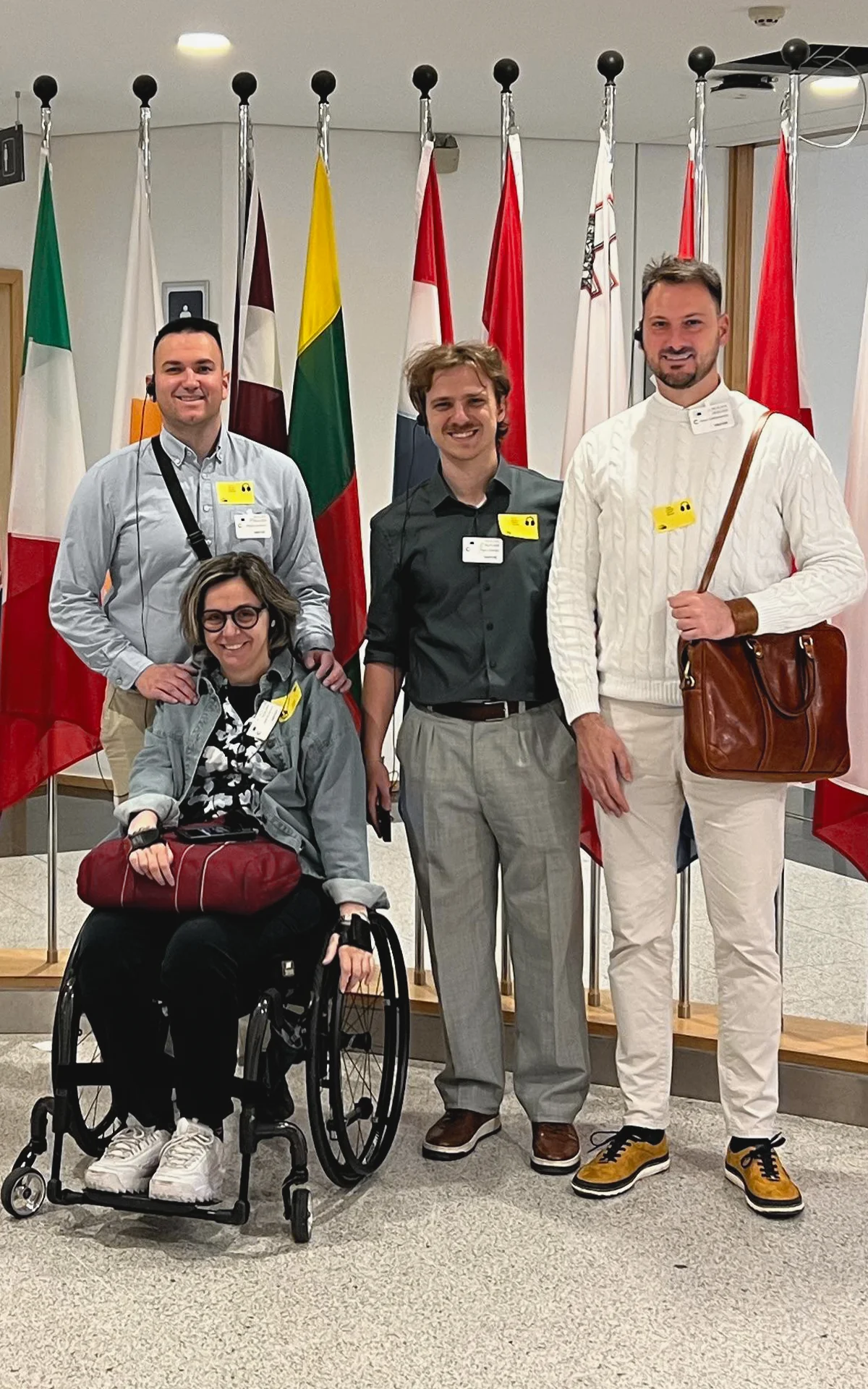
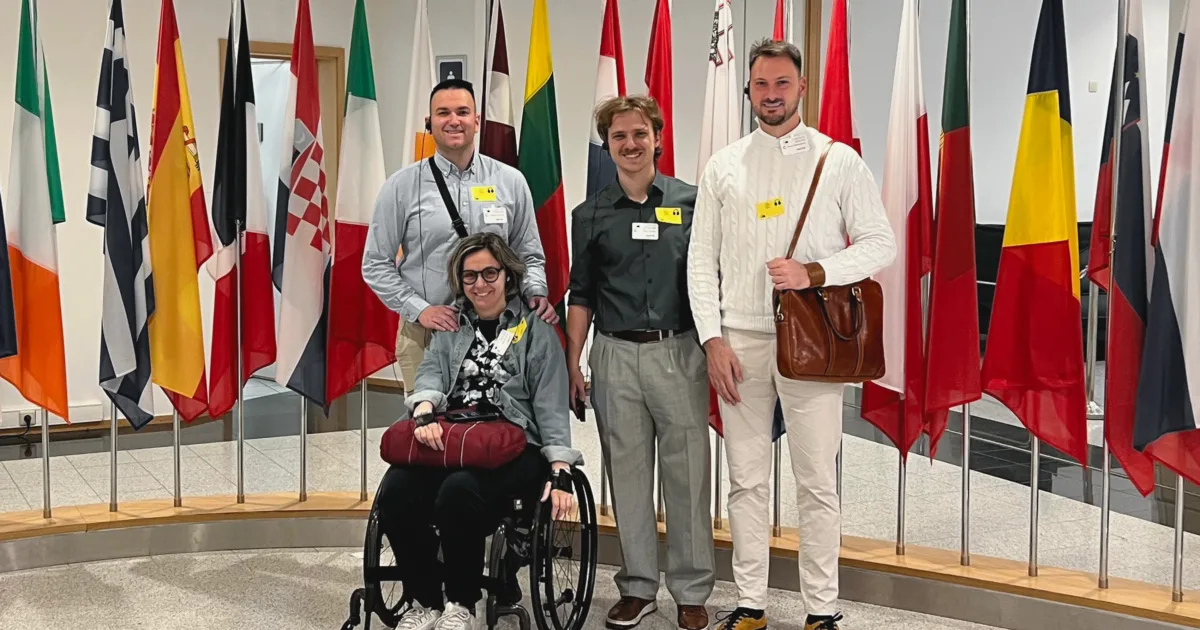
While marginalized groups and people with disabilities are frequently mentioned in political speeches, their actual involvement in decision-making processes often remains invisible. The EU project INCLUDE, led from Vienna, addresses this issue: genuine participation is not an act of courtesy, but a fundamental right and the foundation of good governance.
In modern political discourse, there is a trap that many decision-makers fall into: designing policies for the “average citizen.” The problem is that this average citizen does not exist in reality. Our world consists of people with different bodies, cognitive and sensory abilities, and life circumstances. When political measures and public services are tailored to a fictional average, the result is predictable – they fail to meet the actual needs of the people.
Decisions are too often made without those who are most affected. Consultations often take place too late, when the course of action has already been set. Public meetings are physically inaccessible, information is presented in incomprehensible bureaucratic jargon, and feedback channels are neither accessible nor trustworthy. The result is growing cynicism and political apathy.
To break this cycle, the Viennese association MOVEO (Association for Social Sustainability and Inclusion) launched the European project INCLUDE. The goal is clearly defined: to move inclusion from political aesthetics and symbolism towards a measurable, everyday practice.
Vienna and the new frontier of inclusion
Vienna is a city with a strong tradition of civic engagement and excellent public infrastructure. However, even here, inclusion often encounters obstacles at the curb or at the elevator. The INCLUDE project postulates that political participation represents the “next major frontier” of accessibility.
The logic is simple: those who cannot enter the space cannot participate in the discussion. But the opposite is also true: even those who are physically present may remain excluded if the format of the meeting ignores their needs.
The barriers in political life are numerous, but often invisible to those who are not directly affected:
- Events without induction loops or sign language interpretation. Documents filled with technical jargon and complex legal language. Digital content and surveys that are not compatible with screen readers. Meeting times that exclude caregivers or people with health limitations. A lack of quiet spaces for neurodivergent individuals.
INCLUDE does not view these obstacles as regrettable coincidences, but as design flaws. The project does not call on people to “become more active,” but rather works to redesign the system so that activism is even possible.
“Participation is not a favor that the state grants to its citizens. It is a fundamental right and, at the same time, a prerequisite for efficient administration.” Exclusion is what is expensive and slow, as it leads to flawed laws, public resistance, and failed projects.
Two parallel pillars: empowerment and tools for institutions
The project relies on two complementary strategies:
The first pillar is empowering citizens. For people with disabilities and marginalized groups, empowerment is often mistakenly reduced to mere motivational work. INCLUDE, however, defines it as a combination of capacity and access. Capacity means understanding how a budget is created, how a proposal becomes a law, and how to translate one’s lived experience into a structured political demand. Access means ensuring that these demands can be submitted on an equal footing.
The second pillar is equipping decision-makers. Many institutions, parties, and local governments want to involve citizens, but often don’t know how. INCLUDE offers them concrete tools (toolkits) to avoid “tokenism” (mere superficial participation in a photo album) and instead establish meaningful and early engagement.
Research “with” people, not “about” people
The methodology of INCLUDE breaks away from the traditional academic approach. Instead of treating marginalized groups as research objects, the project focuses on participatory research. This means that those affected and representatives of the communities themselves define the research questions. They are not mere sources of information, but co-authors of the solutions.
After the phase of needs analysis at the local level, the developed solutions undergo focus group discussions and a double pilot phase:
- The target groups test whether the developed formats and tools are actually accessible and usable in practice. Decision-makers (officials, politicians, project managers) test whether these tools can be applied within the real budgetary and time constraints of an institution.
This dual approach is crucial: A perfect inclusive tool that is not operationally feasible will remain ineffective. A tool that only pleases the administration but does not gain the trust of citizens will fail.
What does the “toolkit” for decision-makers include?
The term “toolkit” refers not to an abstract brochure, but to a set of operational instruments:
- Inclusive event design: Step-by-step checklists for venues and formats. Communication standards: Guidelines for easy language and accessible digital platforms. Alternative input methods: Opportunities for feedback from citizens who cannot participate in fast-paced, verbal debates. Feedback loops: Mechanisms that require institutions to transparently explain how citizen input has influenced the final outcome.
A particular focus is on political campaigns. Agendas are often set long before a bill reaches parliament. If campaigns are inaccessible, certain groups are excluded from the political agenda from the outset. INCLUDE supports campaign teams in integrating inclusion into their planning routines from the beginning.
Invitation to stakeholders in Vienna
Vienna serves as an ideal testing ground for these methods. With its dense network of civil society organizations and a stable administration, the city can develop models that serve as a benchmark throughout Europe.
The MOVEO association invites district administrations, political actors, NGOs, and organizations for people with disabilities in Vienna to become part of the project. The call is directed to those who are ready for practical changes: testing tools, identifying barriers, and setting new standards.
Ultimately, the success of INCLUDE will not be measured by the number of printed reports, but by small, systemic changes that become standard practice. Success is when a district council changes the format of a public meeting so that people who have never been heard before can speak. Inclusion is not achieved through a single event – it is created through repeated practice and clear standards. INCLUDE was specifically developed for this kind of work.
About MOVEO:

iksHaus | KI-generiert nach redaktioneller Konzeption, 2026
The MOVEO association, based in Vienna, works at the intersection of inclusion, accessibility, and practical implementation. Through training, consulting, and European cooperation projects, MOVEO supports public and private institutions in transforming good intentions into measurable social change.