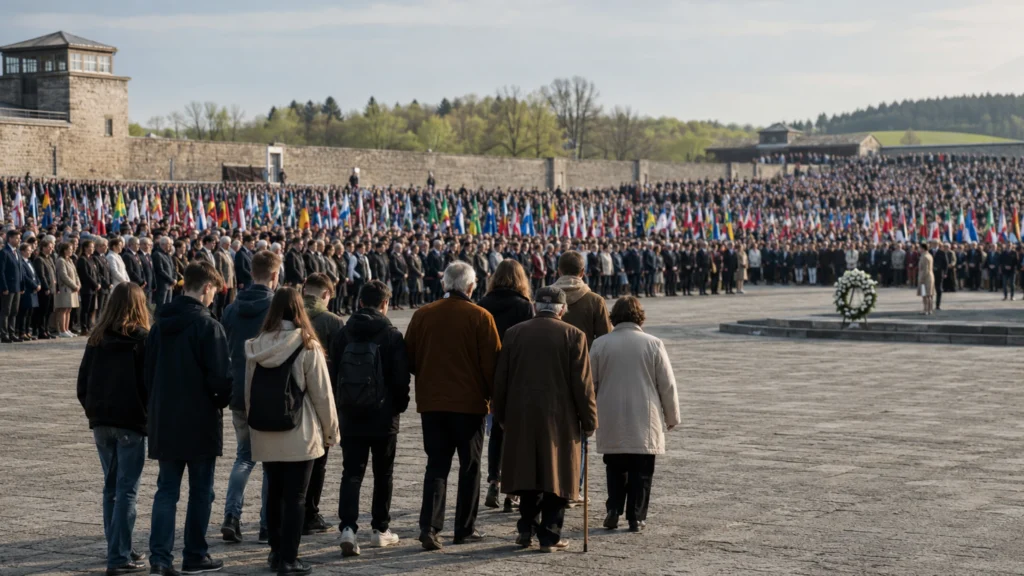
Today, May 10, 2026, more than 20,000 people are gathered on the hill above the Danube at the former assembly area of the Mauthausen concentration camp. It is the 81st anniversary of the liberation. Wreaths, pledges, a procession of young people and survivors – all as in previous years.
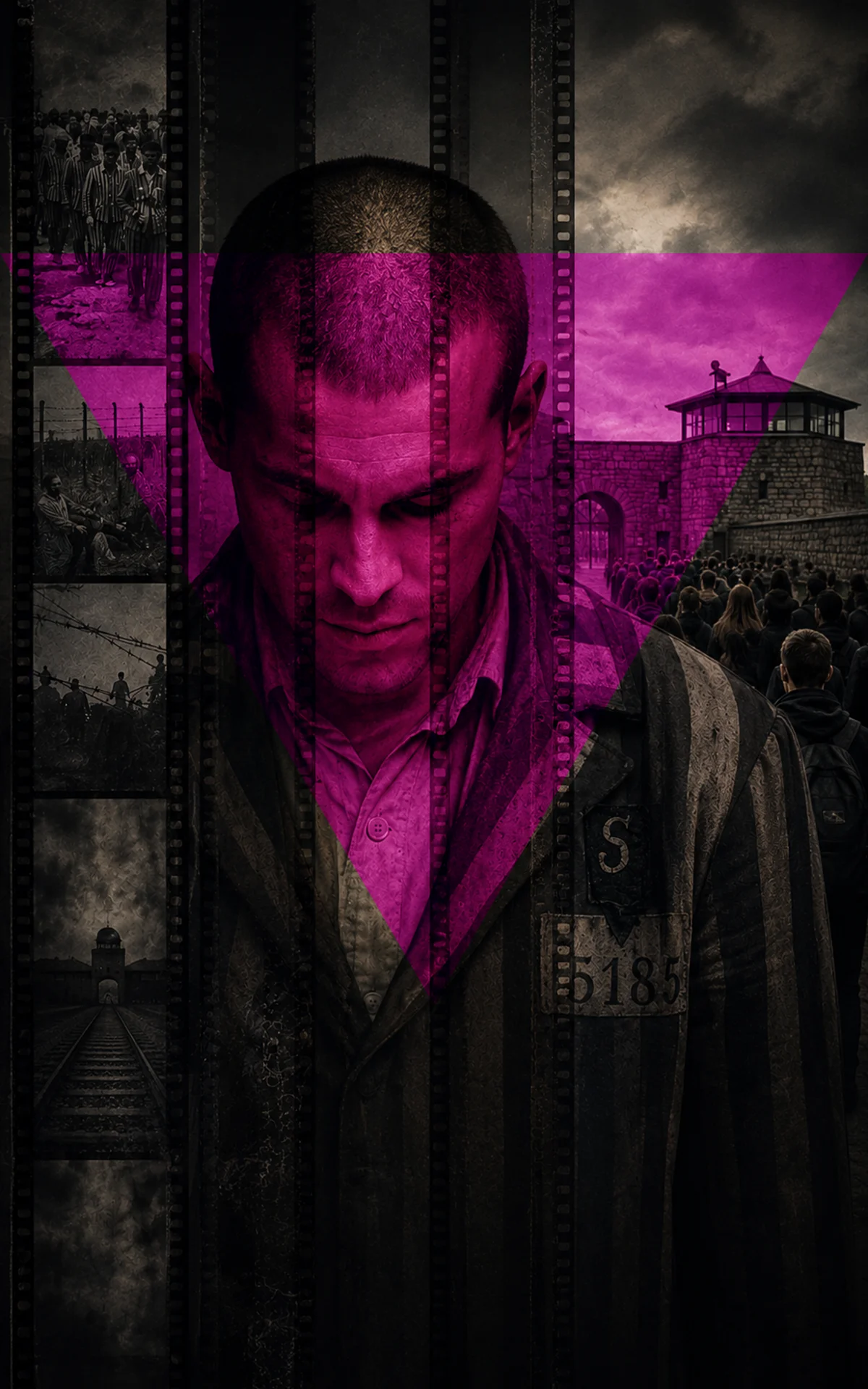
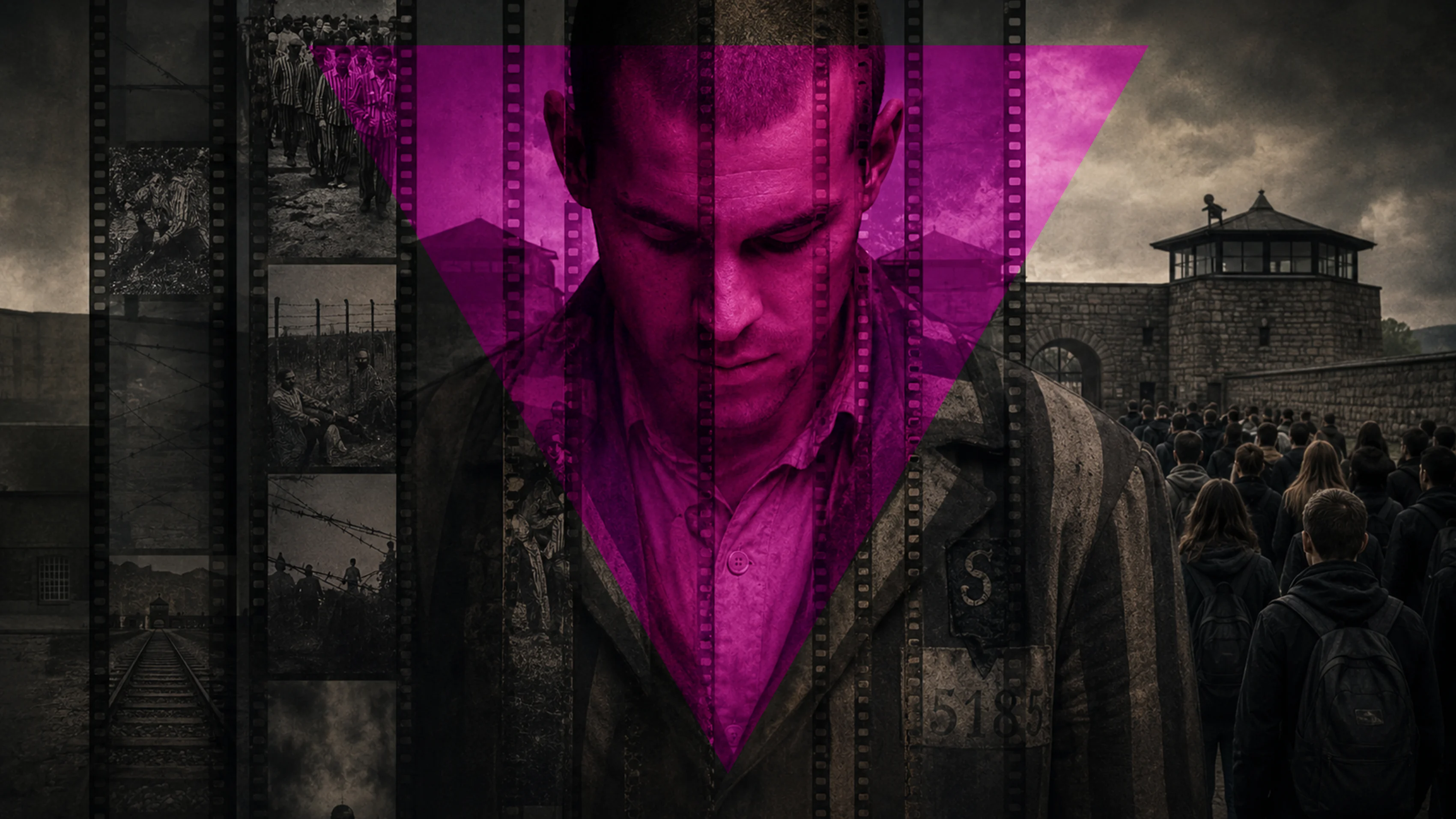
However, this commemoration is different. The Mauthausen Committee of Austria, together with the Comité International de Mauthausen and the Austrian Association of Former Camp Inmates, has chosen an uncomfortable theme for 2026: not the victims, not the liberators, but the perpetrators of National Socialism.
This is a statement that carries particular weight in the official Austrian culture of remembrance.
iksHaus | KI-generiert nach redaktioneller Konzeption, 2026
iks.haus | AI-generated based on editorial concept, 2026
What is actually changing
Since the end of the Second World War and throughout decades of post-war remembrance ceremonies, the focus of public Austrian remembrance of National Socialism has increasingly shifted in a particular direction: victims, the heroism of survivors, the triumph of liberation, a lesson for future generations. All of this remains important. However, the theme for 2026 deliberately sets a new emphasis. It asks how ordinary people became perpetrators.
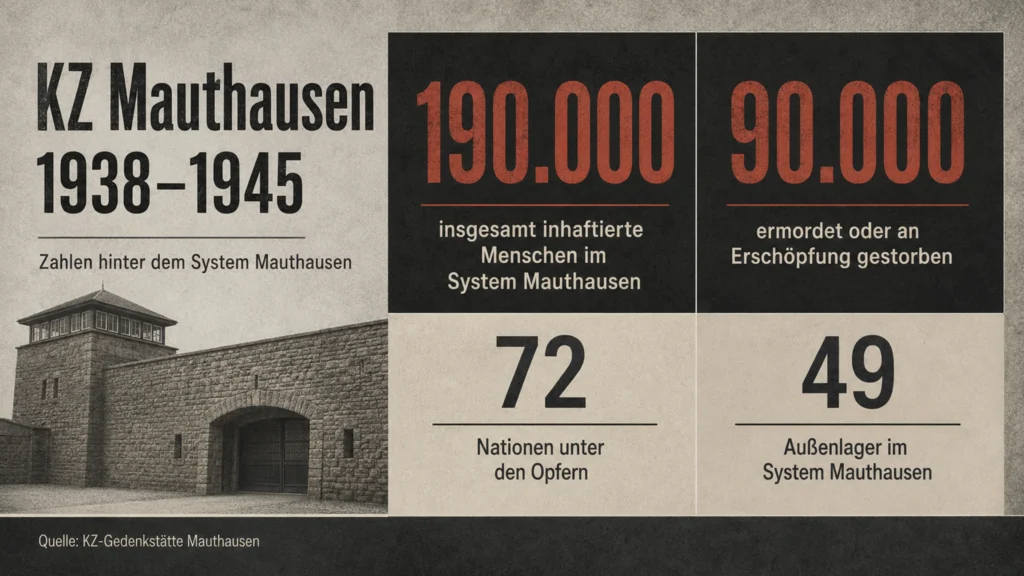
Who was the guard at the camp? Who drove the train? Who made the notes on the deportation files? Who remained silent in the neighboring village? Mauthausen held approximately 190,000 people from across Europe captive between 1938 and 1945. At least 90,000 were murdered or died from exhaustion. People from 72 nations. None of this happened by chance. Behind each number lies a chain of bureaucracy. People.
Therefore, the organizers of this year’s program, led by MKÖ President Willi Mernyi, frame the theme as a direct appeal to present-day Austria. The goal is not retroactive justice. The goal is to understand the conditions that can turn an ordinary person into an accomplice.
Pedagogy of Discomfort
This thematic shift is not limited to speeches. It is being implemented through concrete programs for young people. The Mauthausen Guides initiative offers specialized workshops for technical schools, vocational schools, and apprentices. Programs from Civil Courage Training focus on the pattern that historians call civil courage.
The idea behind this is as follows: When we understand how specific individuals agreed to participate in a system of violence, we can more easily recognize similar mechanisms in the present. Young people who participate in the program do not only learn history. They learn to recognize the structural signals that precede collective injustice. This is a preventative mechanism against today’s radicalization, integrated into the practice of remembrance.
The theme extends far beyond the central memorial site. In January 2026, a memorial event for the victims of the Nazi euthanasia program took place in front of the memorial stone at the Diakonie in Gallneukirchen. The Memorial Walk in Klagenfurt on April 24 explicitly links the theme of perpetrators with local atrocities around the Kremsbrücke bridge. A decentralization of remembrance, in other words, mirroring the decentralization of the Nazi apparatus itself.
iksHaus | KI-generiert nach redaktioneller Konzeption, 2026
iks.haus | AI-generated based on editorial concept, 2026.
Vienna, Gusen, Mauthausen: three points on the same line
The remembrance activities in 2026 are not an isolated event. They are a three-day geographical arc that begins on Friday, May 8, at the Heldenplatz in Vienna: the Festival of Joy, organized by the Mauthausen Committee of Austria. The location is not chosen randomly. It is the same square where Adolf Hitler proclaimed the “Anschluss” in 1938. A repurposing of the space through culture, a speech by the witness Lucy Waldstein from the USA, a concert by the Vienna Symphony Orchestra conducted by Ingo Metzmacher, and a performance by the soprano Eleanor Lyons. The entire event will be broadcast publicly on ORF III and streamed worldwide on YouTube.
On Saturday, May 9, the event moves to Gusen, the area of the former subcamp near Langenstein. The motto is: “We stand together.” Gusen was overshadowed by Mauthausen for decades, even though the mortality rates were sometimes higher. This year’s return to Gusen, with a train to the Memorial de Gusen and a wreath-laying ceremony at 6:15 PM, consciously closes this historical gap.
And today, the central ceremony takes place in Mauthausen itself. At 11:00 AM, the Oath of Mauthausen will be read – the text formulated by the survivors in the days after the liberation. It calls for solidarity and the eradication of fascism. It will be read in several languages. And with care: it will be read by young people.
Who leads the procession
This is perhaps the most profound symbol of the entire program. The memorial procession that circles the memorial site today is not led by a head of state. It is not led by ambassadors, ministers, or high-ranking military officials, although they are all present and arranged alphabetically by delegation. At the forefront are students from the Neue Mittelschule Mauthausen. They walk side-by-side with survivors and witnesses.
This reversal of the hierarchy is not merely cosmetic. When the last witnesses are no longer present, young people from the immediate vicinity of the former memorial site must take over the task of remembrance. Mauthausen 2026 publicly acknowledges that this is already happening. Remembrance today is cultural and digital remembrance; it is no longer solely a communicative remembrance by the survivors.
iksHaus | KI-generiert nach redaktioneller Konzeption, 2026
iks.haus | AI-generated based on editorial concept, 2026.
Technology breaks through the isolation
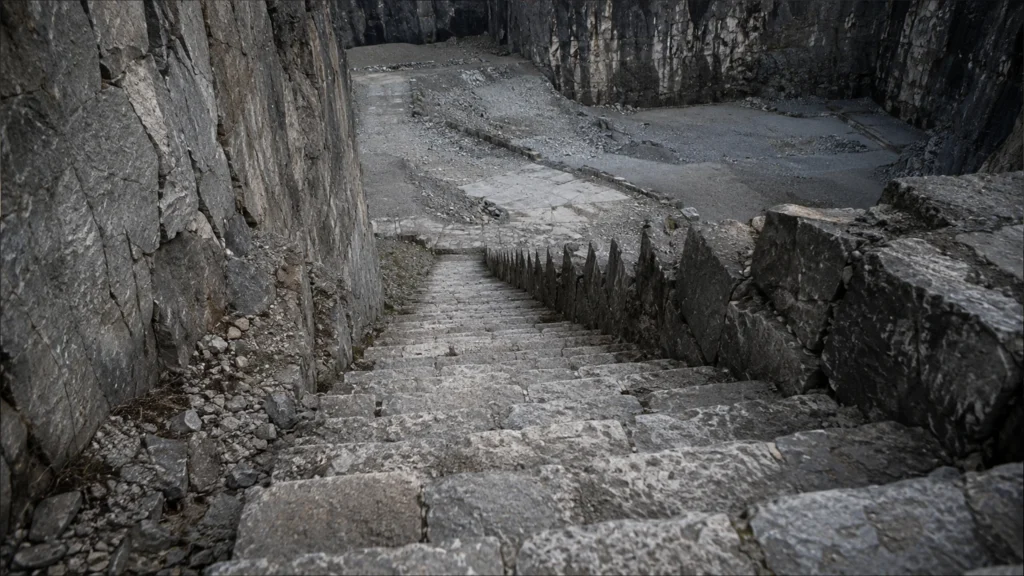
The SS architects built Mauthausen on a hilltop to hide it from the view of the local population. The entire infrastructure of the camp was designed for isolation. For decades, today’s organizers have been struggling with this topography: dead zones for radio signals, lack of visual contact with the main stage for most of the over 20,000 attendees, audio guides that had to be downloaded at home before arrival.
The strategic partnership between the Mauthausen Memorial and the Austrian telecommunications provider A1 changes everything. In 2026, for the first time, the entire area of the memorial site will have continuous access to high-capacity internet. A visitor waiting at the edge of the camp grounds has the same access to the speeches, the translation into Austrian sign language, the music of the Upper Austria military orchestra, and the ecumenical service that began at 10 a.m. in the former camp chapel, as a diplomat standing in front of the memorial.
The consequences are more significant than they initially appear. Mauthausen, as a place, is no longer limited by its own walls. It becomes a global platform for remembrance. Sign language interpreter Sabine Zeller ensures that deaf viewers can also follow the ceremony. The actresses Mercedes Echerer and Konstanze Breitebner host the event in multiple languages.
What this shift truly means
Behind the technical innovations, behind the carefully organized bus line 362, which serves the Linz–Gusen–Mauthausen Memorial route from March to October, behind the shuttle service from the Danube Park, and behind the strict protocol that prohibits neo-Nazi symbols on the memorial site, there is a clear message.
In 2026, Austria will publicly acknowledge that confronting the past is entering its most uncomfortable phase. A phase in which it is no longer enough simply to mourn the victims. It is necessary to ask how evil organizes itself, who finances it, and who allows it to happen.
The theme of “perpetrators” is precisely that: a mirror. And every visitor to Mauthausen during the days around May 10, 2026, takes this mirror home with them.
[Sources: Mauthausen Committee Austria, Austrian Parliament, Mauthausen Memorial, Regional Information Centre for Western Europe of the United Nations, ORF III, A1 Telekom Austria]