

Falco, as a Viennese myth, embodies the rise of an exceptional artist from the underground to the top of the international charts. While his innovative style achieved worldwide success, his relationship with his hometown was marked throughout his life by friction and belated recognition.
Johann Hölzel becomes Falco
iksHaus | KI-generiert nach redaktioneller Konzeption, 2026
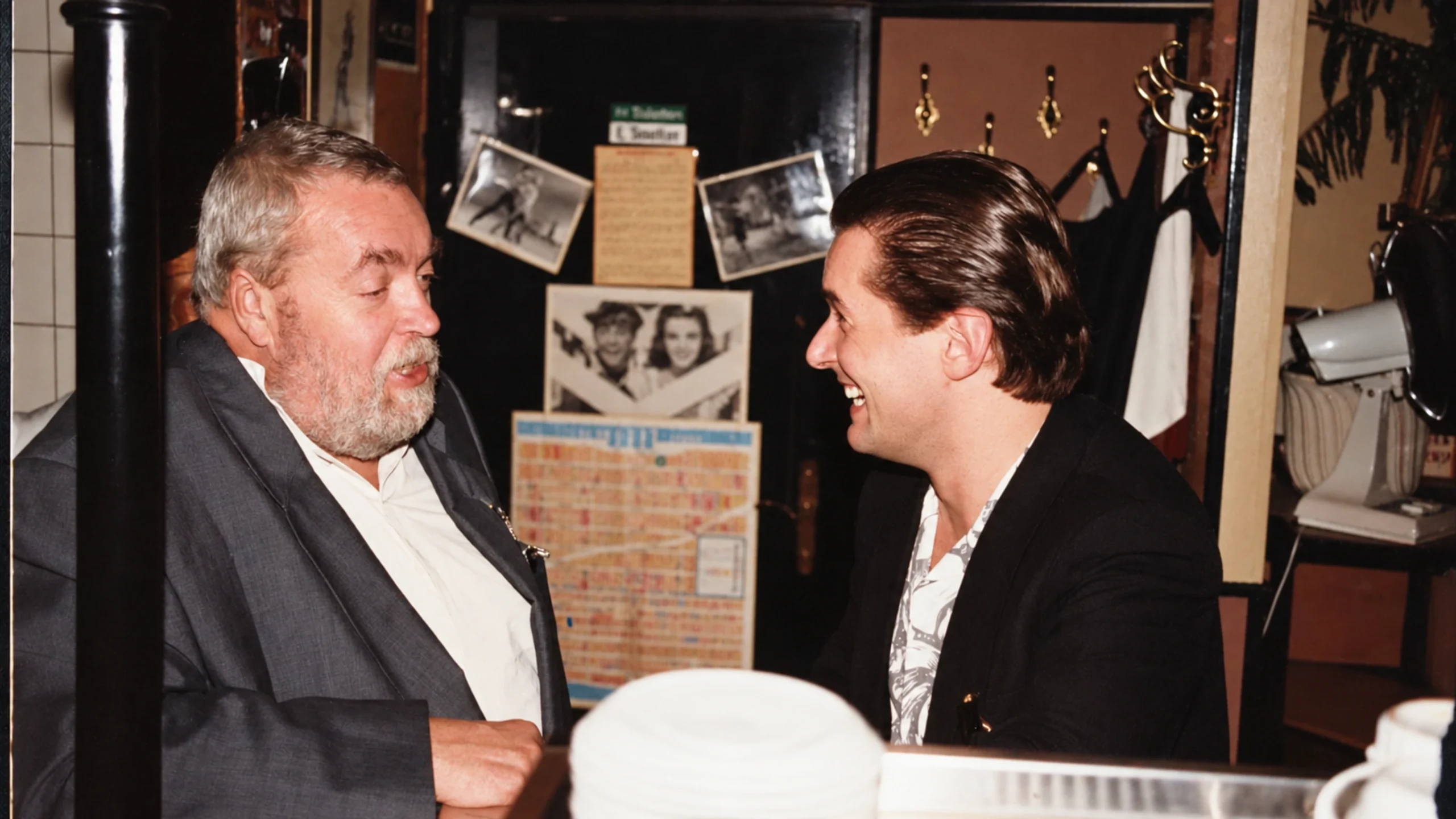
Johann “Hans” or “Hansi” Hölzel was born on February 19, 1957, in Vienna. Later, he would become one of the most successful Austrian musicians under the stage name Falco. He allegedly adopted his stage name under the influence of the East German ski jumper Falko Weißpflog. wien.orf.at
He was interested in music from an early age. He was drawn to classical music, rock, jazz, punk, and the new scene that developed in Vienna and Berlin in the late 1970s. During his military service, he focused particularly on the bass guitar. Afterwards, he attended the Vienna Conservatory and then moved to West Berlin, where he worked as a musician and street performer. wien.orf.at
After returning to Vienna, he joined the groups Spinning Wheel, Hallucination Company, and Drahdiwaberl. It was in this alternative and provocative scene that he began to develop the identity that would later become his greatest asset, but also the source of numerous conflicts.
Vienna as inspiration and adversary
Vienna was not only the place where Falco came from; it was the central material of his art. In his songs, the city appears as an elegant, dark, provincial, ironic, and at the same time fascinating space.
One of the first important songs was “Ganz Wien,” which dealt with the nightlife and the drug problem in the city. The radio largely avoided the song, while it became a cult hit in the clubs and the new-wave scene. wien.orf.at
Even then, the tension between Falco and part of the Viennese scene was evident. For part of the alternative scene, his music was too commercial, while at the same time it was too provocative for traditional media. Falco was between the underground and the mainstream, and this position was never entirely comfortable for him.
He used Vienna as a theme, language, and style, but he did not want to be constrained by the expectations of the city. The city shaped him, but at the same time, it stifled him.
"Der Kommissar" and a New Language of Pop
In 1981, “Der Kommissar” was released, followed by the album “Einzelhaft” in 1982. Falco combined electronic pop, funk, new wave, spoken word, and rap in his music.
His singing style was completely different from the standard of the time. He mixed Viennese dialect, standard German, English expressions, and street slang. His voice sounded cool, theatrical, confident, and ironic all at the same time.
“Der Kommissar” became a major hit in Austria and Germany. Falco didn’t want to record a simple English version of the song for the US market. The British band After the Fire later released an English cover version, which achieved greater success in the United States than Falco’s original. falco-compendium.at
Falco is often referred to as a pioneer of German-language rap. However, his musical work was broader than just rap. It was a combination of pop, rock, funk, electronic music, new wave, and spoken word.
"Falco 3" and International Success
iksHaus | KI-generiert nach redaktioneller Konzeption, 2026
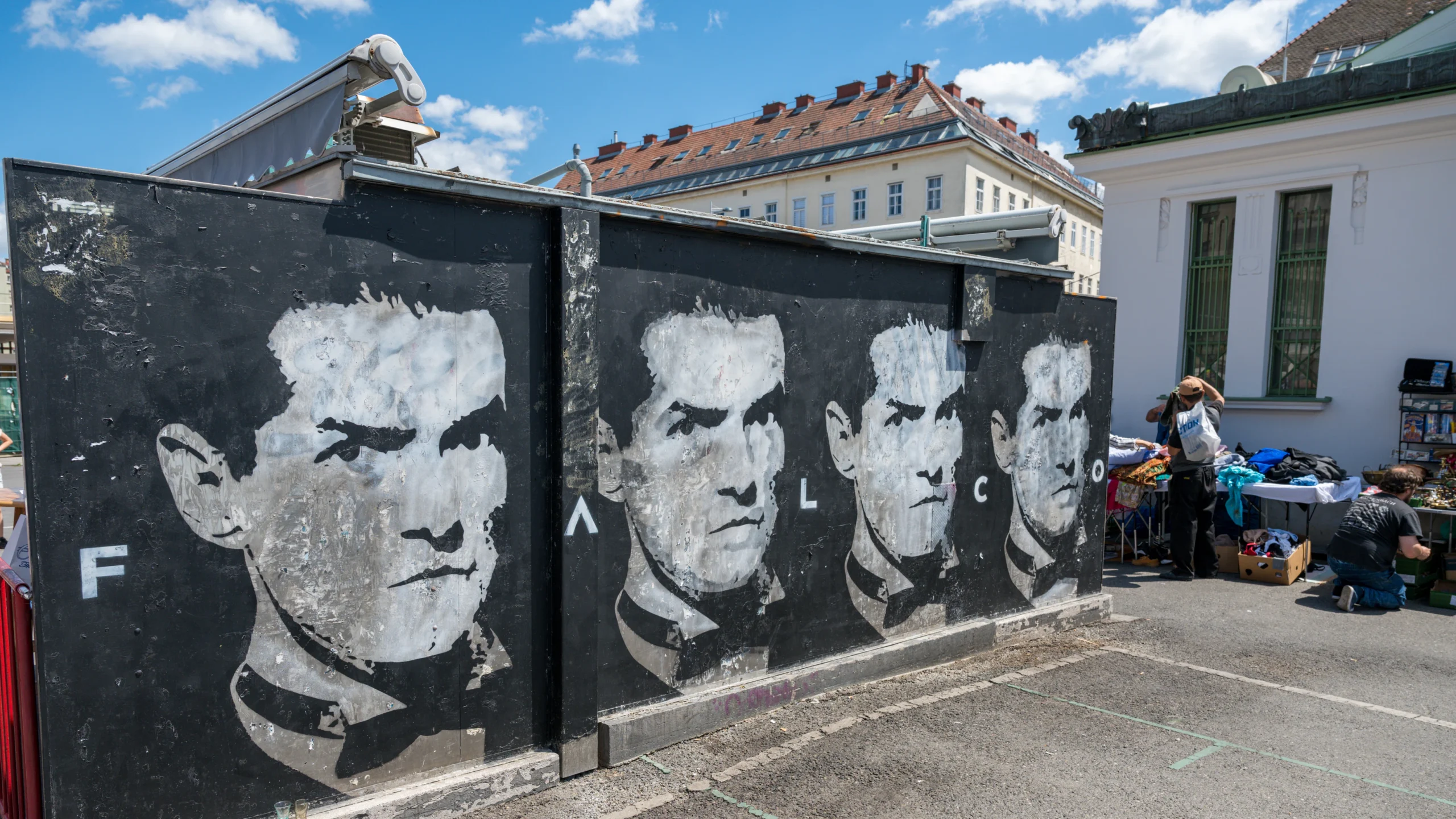
In 1985, Falco released the album “Falco 3,” which included the songs “Rock Me Amadeus,” “Vienna Calling,” and “Jeanny.” The album became his greatest international success. officialfalco.com
“Rock Me Amadeus” combined Mozart, Vienna, classical music, and the pop sound of the 1980s. The song was produced by Rob and Ferdi Bolland. Falco transformed Mozart’s figure into a modern pop myth and Vienna into an internationally recognizable stage.
In 1986, the song reached number one on the US Billboard charts. At the same time, it topped the British charts. To this day, it is considered the first and only German-language song to achieve such success in both countries. oe3.orf.at
Around this time, the Austrian perception of Falco also began to change. The artist, who had previously been considered difficult, arrogant, or too provocative, became a source of national pride. Austria only began to claim him more strongly once the international audience had already accepted him.
Arrogance, Anger, and the Incomprehension of the Viennese Scene
There is evidence that Falco believed that part of the Viennese and Austrian cultural establishment did not understand him. However, it is not accurate to claim that all of Austria did not support him. Viennese clubs, musicians, and the alternative scene were essential to his beginnings.
In an interview from 1996, Falco described his arrogant behavior as a kind of parody of the establishment. He argued that people didn’t understand that his arrogance was, in part, an artistic role. welt.de
Falco’s former manager, Horst Bork, later stated that Falco increasingly transferred the stage persona into his private life. According to Bork, arrogance and harshness had served him as a defense mechanism, but over time had become part of his actual public identity. donaukurier.de
Therefore, it is more accurate to state that Falco received the recognition he wanted abroad earlier, while in Austria he long remained a polarizing figure. He was simultaneously celebrated, criticized, found fascinating, and perceived as a difficult person. tt.com
His anger towards the Viennese scene was not just a matter of personal ego. It was also related to the feeling that he had to leave his own country in order to be taken seriously by it.
Crisis, Withdrawal, and Death
iksHaus | KI-generiert nach redaktioneller Konzeption, 2026
After the success of the album “Falco 3,” the subsequent albums could not repeat the same international success. The albums “Emotional,” “Wiener Blut,” “Data de Groove,” and “Nachtflug” showed that Falco was still searching for new forms of expression, but the audience no longer reacted with the same intensity. wien.orf.at
In the last years of his life, he struggled with alcohol, drugs, and the pressure to produce another major hit. At the same time, he increasingly distanced himself from Austria and from the identity he had created as Falco.
In 1996, he moved to the Dominican Republic, where he set up his own recording studio and worked on new material. He wanted a fresh start and greater control over his life and career. wien.orf.at
On February 6, 1998, he died in a traffic accident near Puerto Plata. After his death, the album “Out of the Dark (Into the Light)” was released, which became a major success. His death further solidified the myth of an artist whom Austria began to celebrate even more intensely only once he was gone.
Falco as a Viennese Myth
iksHaus | KI-generiert nach redaktioneller Konzeption, 2026
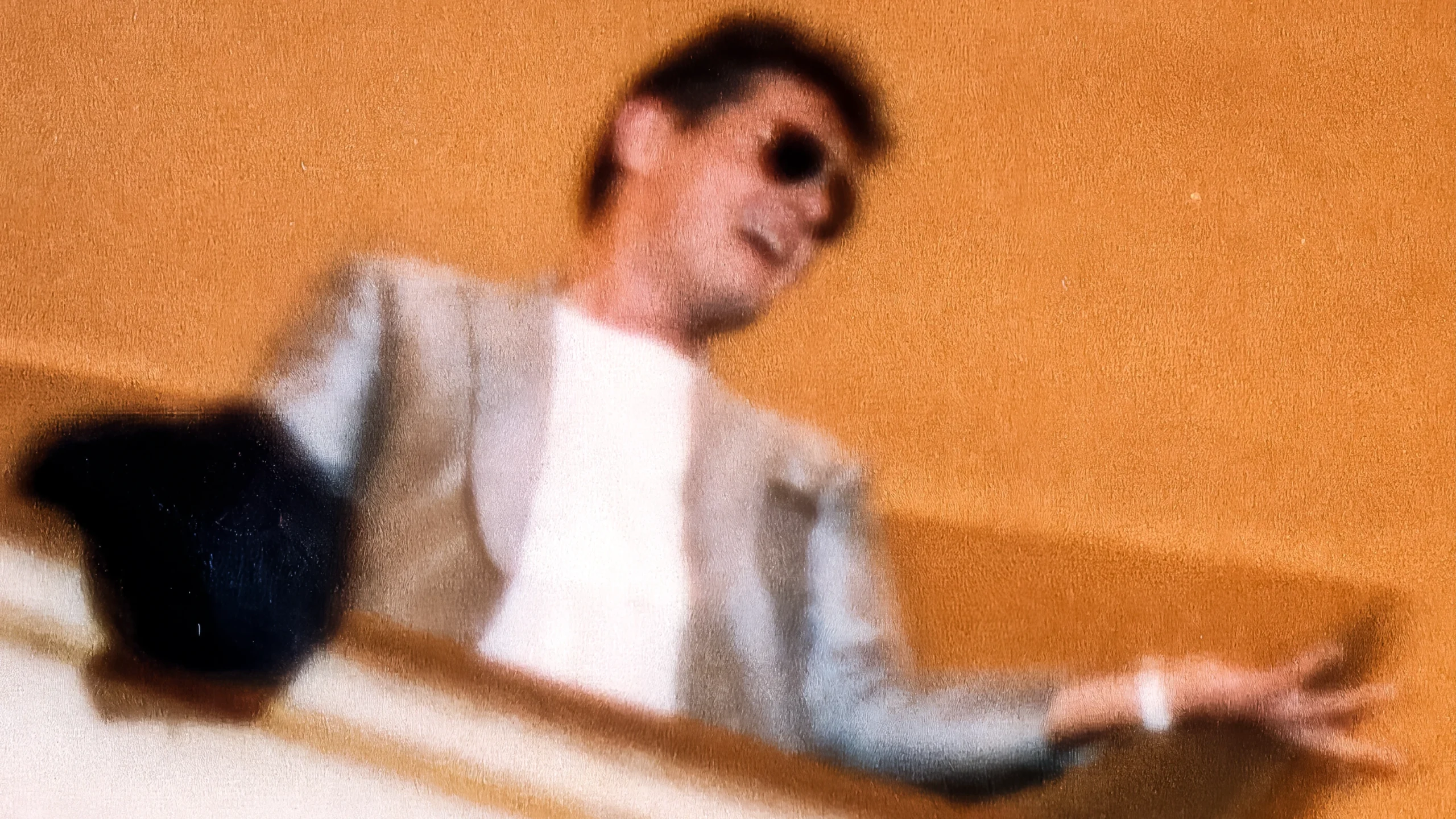
Falco was buried in an honorary grave at the Zentralfriedhof (Central Cemetery) in Vienna. His grave has become a memorial site for fans from Austria and other countries. Today, Vienna commemorates him through public spaces, cultural projects, graffiti, musical tribute programs, and the constant presence of the symbolism of his songs. friedhoefewien.at
His significance lies not only in having had an international hit. Falco proved that an artist with Viennese dialect, the German language, and a strong local identity could reach the top of global pop music.
He was an artist who sought recognition but simultaneously rejected it. He loved Vienna but wanted to escape the city. He used arrogance as an artistic shield, but this often led to him being isolated.
Falco is therefore not just an Austrian pop singer from the 1980s. He is a lasting figure in Austrian pop culture: a Viennese outsider, a world star, a provocateur, a self-created myth, and a vulnerable person behind the public mask.