
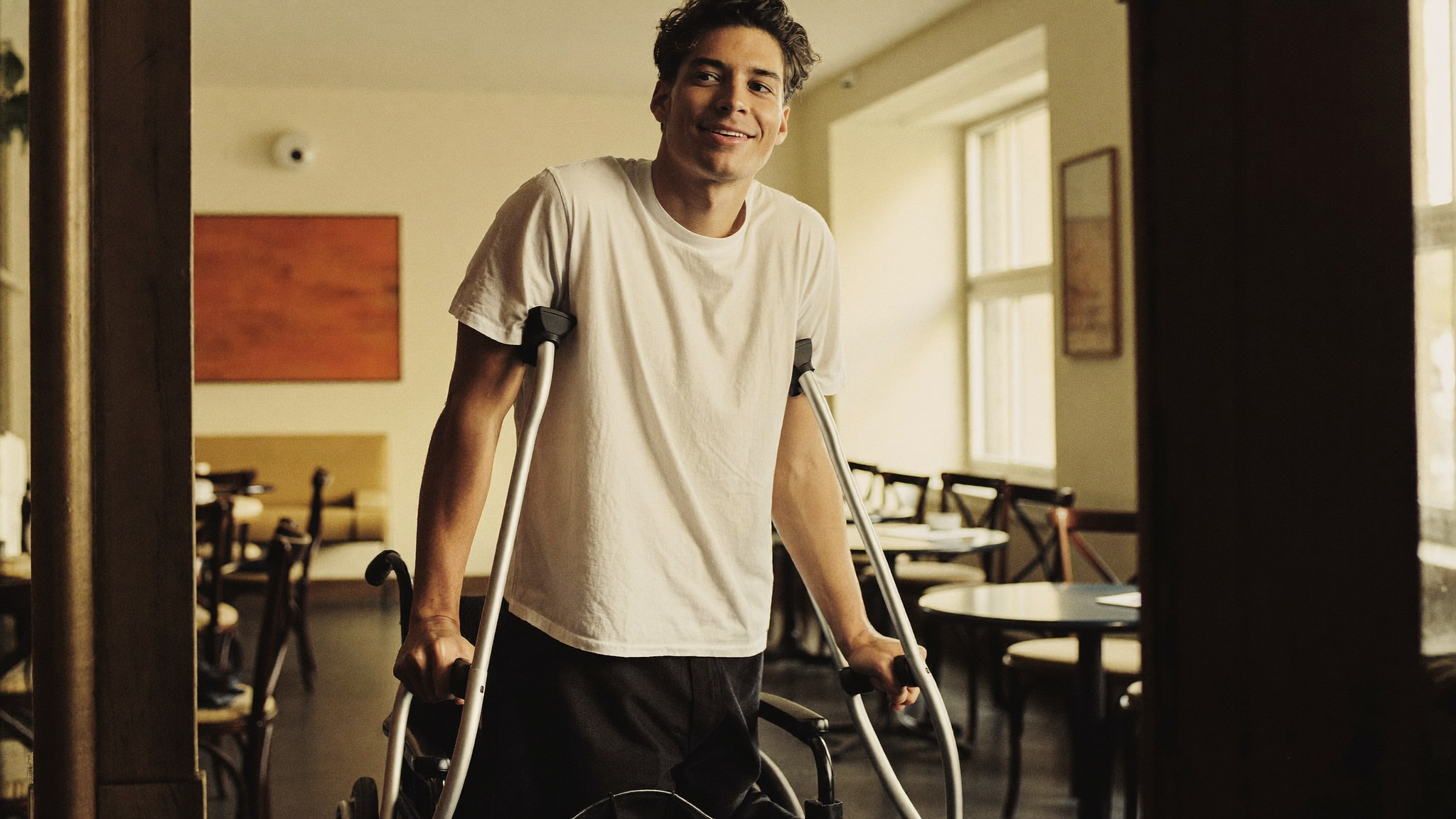
In 2023, according to Statistics Austria, approximately 760,000 people with a registered disability lived in Austria. This corresponds to 8.3 percent of the population. However, surveys on self-assessed impairment indicate a figure of around 1.4 million. Nevertheless, the term “Disability Pride” initially causes confusion for many. Some believe it is about celebrating a disability. Others believe that one should be grateful for illness, injury, or chronic pain. For people with a new diagnosis, the term can even be hurtful, because it creates the impression that grief and loss are not being taken seriously.
Such reactions are understandable. They often arise when the word “pride” is only understood in its everyday sense and not in the historical or psychological context from which the movement originates. Disability Pride does not celebrate suffering. The term does not imply that a disability is desirable, nor does it demand that pain or limitations be ignored. Instead, it is directed against the idea that dignity, worth, or humanity diminish when someone lives with a disability. This shifts the central question: it is no longer about whether a disability is good or bad, but about whether it is allowed to determine a person’s worth. This distinction is important because it changes the discussion. Those who understand this no longer see disability as the opposite of a good life. Instead, the focus shifts to the conditions under which people are recognized as equal.
What does Disability Pride really mean?
For many centuries, disability has been viewed almost exclusively through what is known as the medical model. According to this perspective, disability is primarily seen as a defect of a person, and society is supposed to heal, correct, or compensate for it. Medical care remains important, and few people are against better therapies, rehabilitation, or assistive devices. However, the medical model alone does not explain why two people with similar disabilities may participate in social life in very different ways.
The social model of disability brings about an important shift in perspective. Many obstacles are not only created within the body, but also in an environment that does not consider diversity. A staircase only becomes an obstacle when there is no alternative. Information is only inaccessible when it is offered in only one format. Prejudices only become a disability when they prevent genuine understanding. This model does not deny physical limitations, but rather sees disability as a constant interaction between the individual and the environment, as described in the International Classification of Functioning of the World Health Organization. In Austria, the Federal Disability Equality Act, which has been in force since 2006, is intended to eliminate such disadvantages. In theory. It determines who can begin training, who receives a job, and who can participate in cultural life. The same person can work independently in an accessible environment and be completely excluded in another, without their body having changed. Thus, the social model shifts the responsibility: from the idea of “fixing” the person, to the task of creating environments that enable participation. Accessibility is therefore not a special service, but a matter of justice.
A staircase only becomes a barrier when there is no alternative.

iksHaus | KI-generiert nach redaktioneller Konzeption, 2026
When prejudice turns into self-stigma
Physical barriers are often the focus, but psychological obstacles often remain invisible and can even cause more damage. Research on stigma has shown a clear pattern for years: those who are repeatedly confronted with prejudices, pity, exclusion, or low expectations will eventually internalize these views. External discrimination then leads to doubts about one’s own competence, attractiveness, intelligence, or worth.
This process is known as self-stigma or internalized stigma, and it demonstrates that discrimination does not remain with the individual. Over time, it becomes part of one’s self-image. In psychotherapy, this problem is encountered almost daily. Few people say: “Society has taught me to devalue myself.” Instead, one hears statements like: “I don’t want to be a burden to anyone.” Or: “No one will ever love me again.” Or: “I don’t belong anywhere anymore.” Such statements show that external prejudices have become an internal narrative. Changing this narrative is not about denial, but about a form of psychological liberation. This can manifest when someone doesn’t even submit an application, cancels a meeting, or ends a relationship before it can begin, out of fear of being a burden. External lowered expectations become lowered expectations of oneself. Psychotherapy can make this connection visible and separate what originates from the person and what has been attributed to them by their environment. This is not about glossing over reality, but about regaining a fairer self-image.

iksHaus | KI-generiert nach redaktioneller Konzeption, 2026
Belonging is a basic need, not a reward
People never develop their identity alone. Our self-image is formed in families, friend groups, schools, and communities. Social psychology has long recognized belonging as a basic need because it provides confirmation, emotional security, and recognition. Many people with disabilities report deep loneliness – not only because of physical barriers, but also because they often feel misunderstood. Communities in which disability is neither seen as a tragedy nor as a reason for pity can therefore make a significant difference.
While a disability is part of one’s identity, it is never everything. Those who see themselves only as patients often withdraw from important roles in life. Those who view their disability as part of a larger self-image are better able to maintain relationships, education, and future plans. Integration is psychologically healthier than denial or over-identification. Belonging also requires appropriate conditions. The Disability Employment Act obligates companies with at least 25 employees to hire one person with a recognized disability for every 25 employees. Otherwise, a compensatory tax is levied, which will be at least 335 euros per month and per open position in 2025. Those who feel discriminated against can request a free mediation process from the Social Ministry Service.
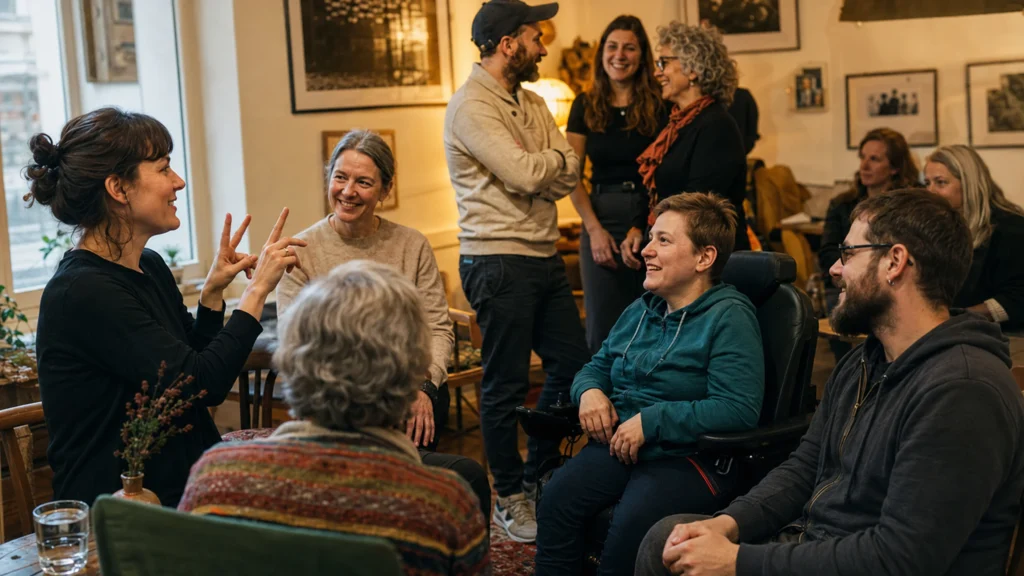
From a constructivist perspective, identity is not even found, but is constantly developed through relationships and experiences. Those who find communities where disability is not seen as a tragedy or an object of pity often experience a turning point. The question then becomes not: How will I become “normal” again? But: How can I live authentically as the person I am today? Supportive relationships are among the most important factors for good psychological adaptation. In Vienna, such places are emerging where culture, counseling, and encounters come together.
Belonging does not erase grief. It reduces isolation.
iksHaus | KI-generiert nach redaktioneller Konzeption, 2026
Often, the biggest challenge is avoiding two extremes. One view sees disability only as a personal tragedy and considers fulfillment impossible. The other romanticizes disability and pretends that suffering should be celebrated. Both perspectives fail to capture the reality. People can experience chronic pain and still have fulfilling relationships. They can grieve the loss of abilities while simultaneously being proud of their strength. They can wish for better treatment and still refuse to accept that they are therefore less valuable. Enduring these seemingly contradictory truths requires psychological maturity, because life rarely fits into simple opposites. Neither laws nor therapies can eliminate all barriers, but they can create frameworks in which new stories become possible. As the cyberneticist Heinz von Foerster said: Ethical action expands possibilities, rather than restricting them.
Disability Pride, therefore, does not mean the end of suffering or the absence of difficulties. It represents the recognition that every person has an inalienable dignity – regardless of physical ability, diagnosis, or dependence on others. This is also the goal of the Viennese platform iks.haus, with the motto “ALL EQUAL.” Perhaps this is the deepest meaning of pride: not that one has no vulnerability, but that one refuses to make one’s own worth dependent on it. You can find more information about inclusion in Vienna and accessibility in everyday life in the articles on iks.haus.&”EQUAL.” Perhaps that is the deepest meaning of pride: not that one has no vulnerabilities, but that one refuses to make one’s own worth dependent on them. You can find more information about inclusion in Vienna and about accessibility in everyday life in the articles on iks.haus.