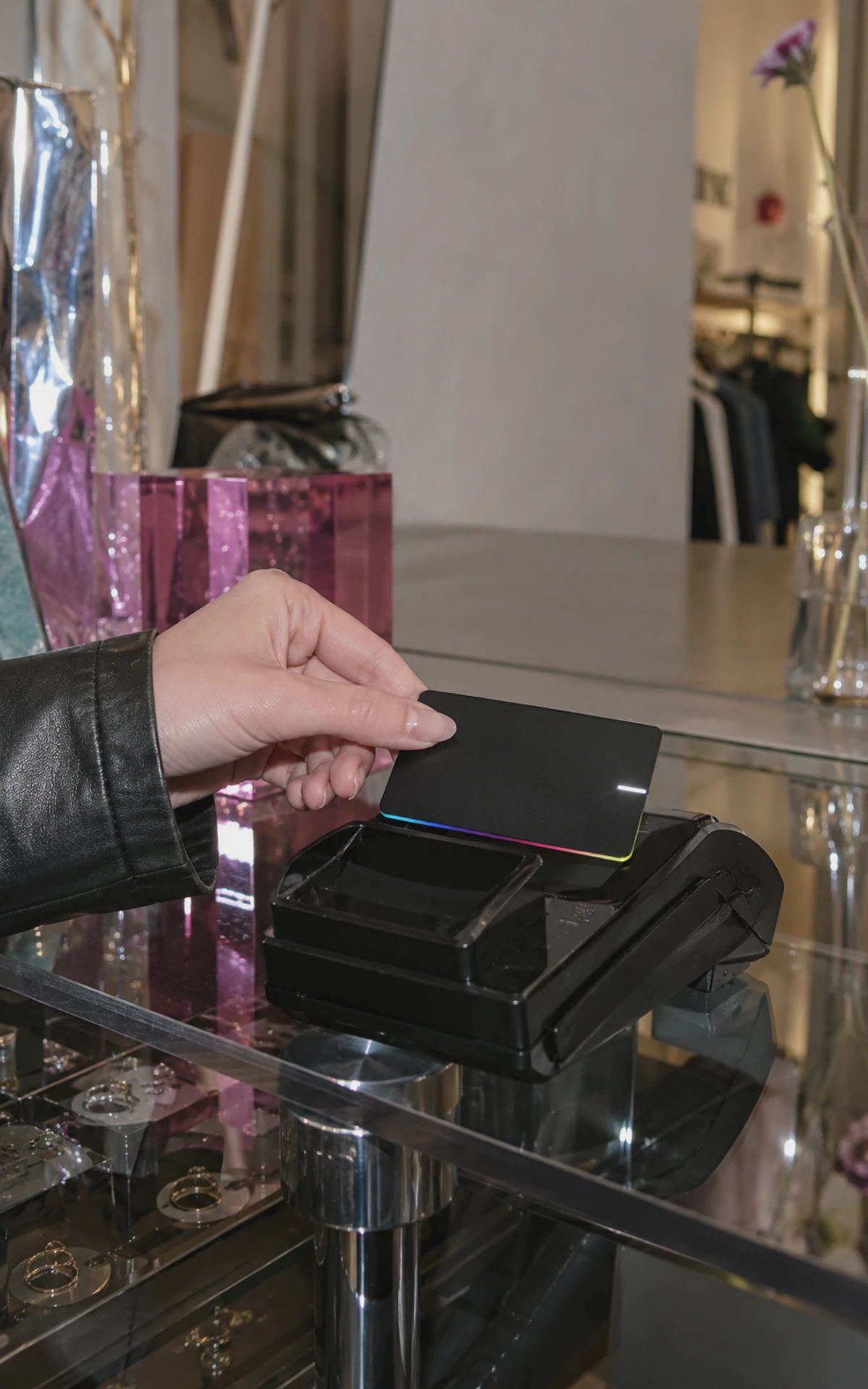
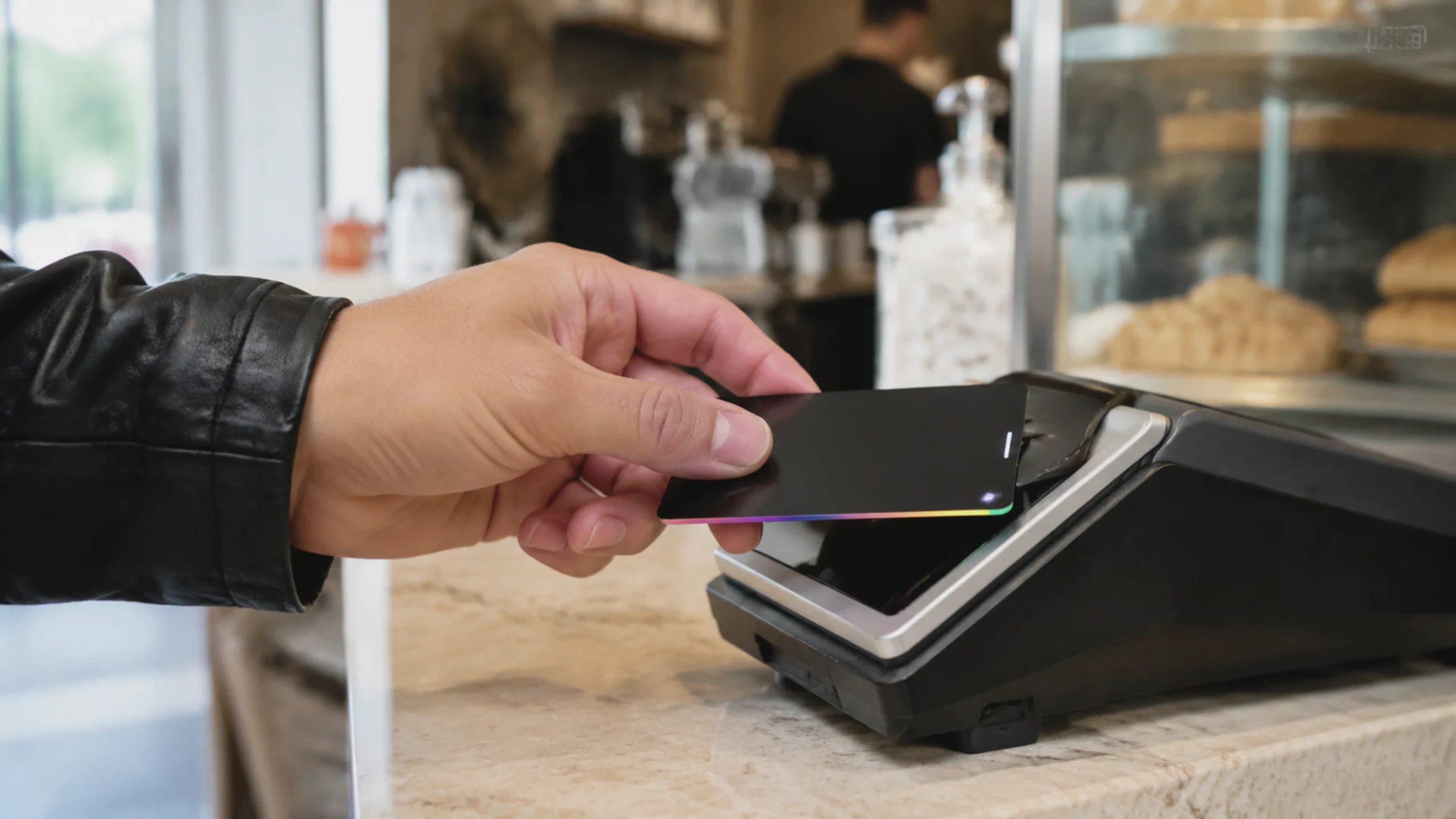
The bank card with LED combines contactless payment with the aesthetics of a limited-edition release. Erste Bank and Sparkassen offer a limited-edition spark7 debit card in Austria, which features an integrated LED that lights up during payment. According to the source material, it is available until November 15, 2026.
Technically, the card remains a standard debit card based on NFC and the established infrastructure for card payments. What’s new is primarily the visible presentation of a process that is usually inconspicuous in everyday life. This makes the card an example of how banks combine financial products with design, scarcity, and pop culture.
Why does a debit card become a limited-edition item?

iksHaus | KI-generiert nach redaktioneller Konzeption, 2026
The limited-edition Spark7 card incorporates design elements that are often found in fashion, gaming products, or collectibles. It is black, has a metallic-looking rainbow border, and creates a brief light effect during contactless payment. In addition, there is a limited promotional period.
This transforms a functional object into a visibly presented product. Youth banking competes not only for attention but also for costs, app features, or accessibility. The design and presentation in digital media also play a role. A brief light effect is easier to show and share than the technical infrastructure behind a payment.
However, the LED does not change the actual account functionality. Payments are still directly debited from the account. According to the product information, the card works wherever Mastercard is accepted. It can also be added to Apple Wallet or Google Pay. The distinctive design is therefore based on an established payment infrastructure.
How does the LED bank card light up without a battery?
iksHaus | KI-generiert nach redaktioneller Konzeption, 2026
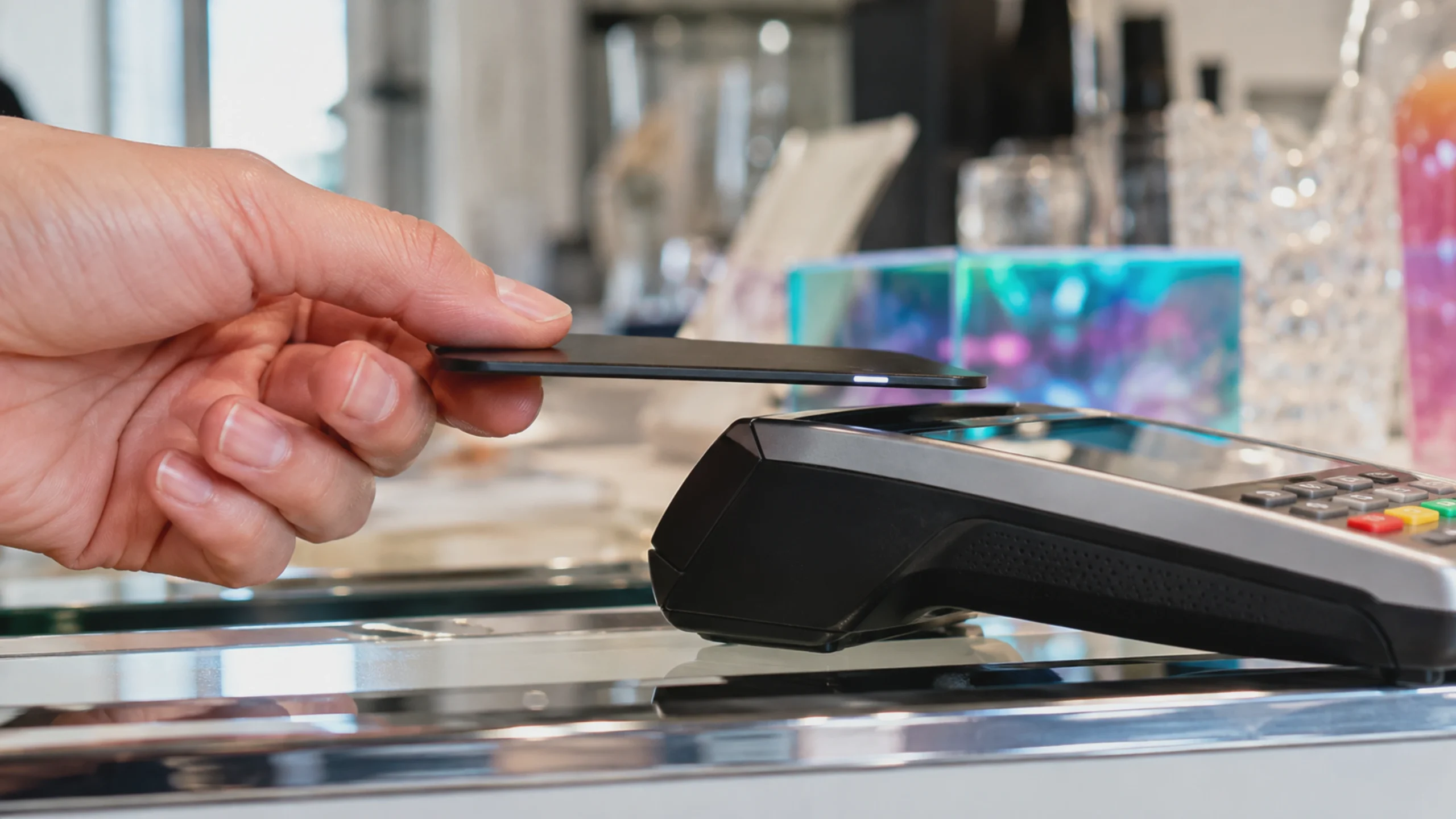
Contactless payment is based on near-field communication. According to the NFC Forum, NFC operates at a frequency of 13.56 MHz and over short distances. One side of the connection can provide energy via an electromagnetic field. Passive components can use this energy without needing their own battery.
When using the card, the payment terminal therefore not only provides the environment for data exchange. It also supplies the small amount of energy that triggers the brief light effect. According to the report from CHIP cited in the source material, the spark7 card does not require its own battery.
The card is not charged like a smartphone. It is a brief flow of energy during the contactless interaction. An LED is suitable for this because it consumes very little energy for a short, visible pulse.
What does the hype surrounding payments in Austria show?

iksHaus | KI-generiert nach redaktioneller Konzeption, 2026
Contactless card payments are already commonplace in Austria. According to data from the European Central Bank cited in the source material, approximately 764.645 million contactless card payments were registered in the first half of 2025. Their total value was approximately 27.354 billion euros.
According to a calculation by IKS-Berechnung.HAUS, this results in an average amount of approximately 35.77 euros per contactless payment. In the entire Eurozone, approximately 29.6 billion contactless card payments were recorded during the same period, which is 12.8 percent more than a year earlier.
The LED card does not enable a new payment process. It makes an already widespread process visible for a moment. While payments via card, smartphone, or smartwatch are increasingly becoming unobtrusive, the design deliberately emphasizes a visible effect.
What are the terms and conditions for the youth account?
The limited-edition card is linked to the Spark7 youth account. According to the provider, account opening, account maintenance, and the debit card are free until the age of 19. The account can be opened online from the age of 14, and according to the product information, it cannot be overdrawn.
Until November 15, 2026, the promotion also includes a bonus of 20 euros. After the promotional period, a regular replacement card without the limited-edition design can be sent in case of loss or theft. The account function therefore remains independent of the card’s collector’s value.
Why isn’t the LED an additional security feature?
The light effect visually indicates that the card is within the terminal’s field. However, the security of the payment does not rely on the LED. The EMV chip technology is responsible for that. According to EMVCo, a one-time use security code is generated for each contactless transaction.
Even with a distinctive card, the usual rules apply. The PIN should remain secret. In case of loss, the card should be blocked immediately. Notifications and bookings in the banking app can help to keep track of account transactions.
What should be considered before opening an account?
A limited-edition design may attract interest, but it should not be the sole reason for choosing an account. More important are potential future fees, set limits, the card lock, notifications, app functions, and the handling of personal data.
The time limit creates an additional incentive to buy. However, an account is a long-term financial decision. Therefore, it is crucial to determine whether the conditions and functions are still suitable even after the visual appeal of the card fades.
The card represents less of a technological revolution and more of a new financial aesthetic. Banks are making invisible digital services visible through cards, apps, and wallets as designed products. The LED connects this trend with an already established NFC infrastructure.