

In the second episode of the vodcast “Here We Are,” therapist Tomislav Bišić-Pauletić and Dr. Alexandru-Teodor Zaharie discuss Chemsex, the need for acceptance, and boundaries that become more complex under the influence of substances. At the heart of the conversation is the question: What are people seeking in these encounters, and what do they lack outside of them?
To feel desired. To be seen. To belong to a group where one does not have to justify one’s sexuality. These are needs that are easy to understand. It is much more difficult to talk about what happens when their fulfillment is linked to substance use and sexual encounters.
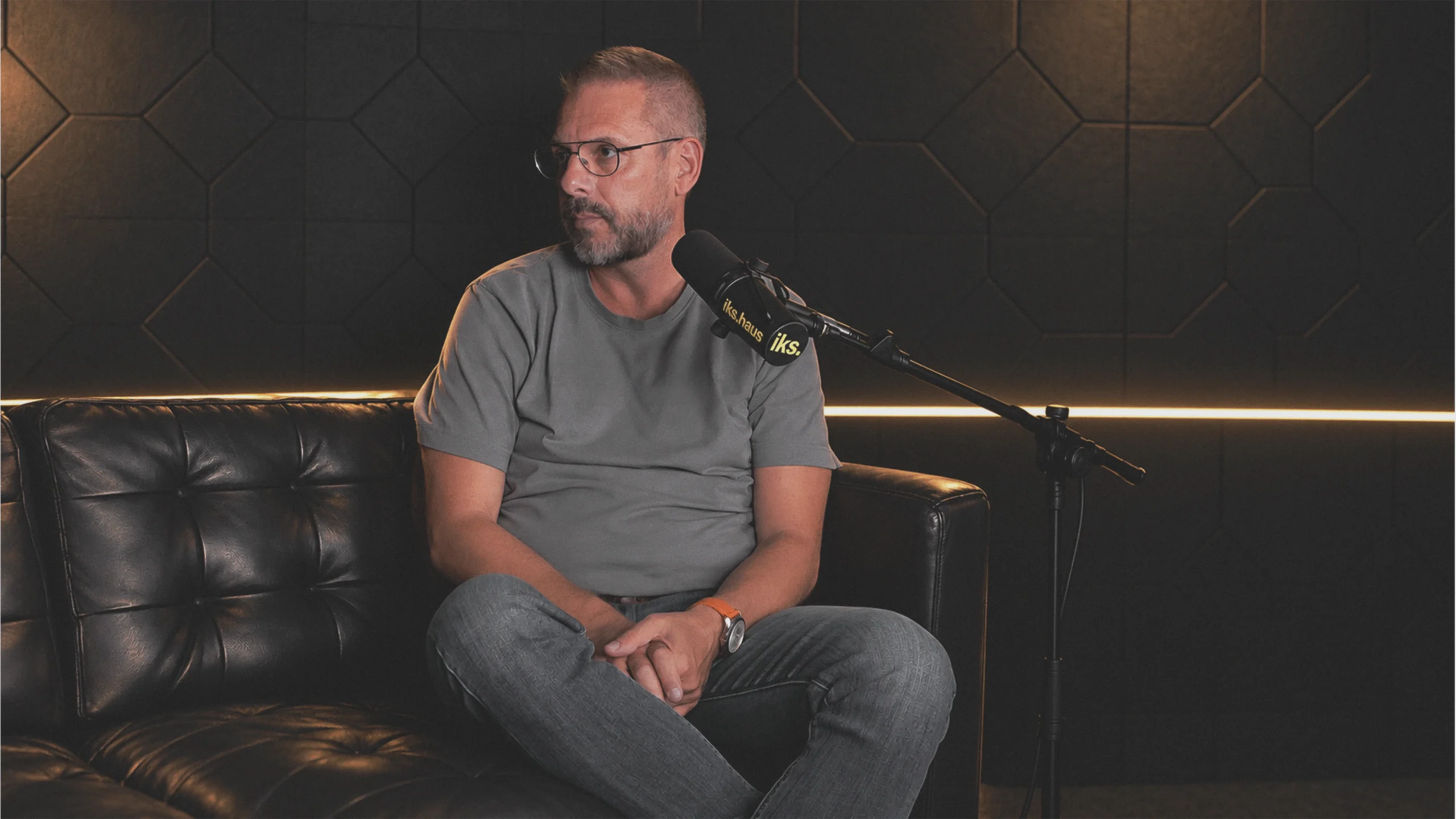
This is precisely the space that the second episode of the vodcast “Here We Are,” a production of iks.haus from Vienna, opens up. Tomislav Bišić-Pauletić and Dr. Alexandru-Teodor Zaharie approach the topic of Chemsex and freedom through personal experiences, relationship dynamics, and questions of individual autonomy. The conversation avoids both judging people and romanticizing freedom in simplistic terms.
At the beginning, Zaharie makes it clear from what position he is speaking: He is a radiation oncologist, not an addiction specialist. His interest in the topic stems from his membership in the LGBTQ+ community, his own research, and his fascination with behavioral patterns. This distinction is essential for understanding the episode: it is a dialogue that combines therapeutic expertise with a personal perspective, not individual medical advice.
There is a context behind the substance
iksHaus | KI-generiert nach redaktioneller Konzeption, 2026
One of Alexandru’s central messages is that Chemsex cannot be understood if one only looks at what is being consumed. It is necessary to consider the circumstances: who one is with, what expectations exist, how one feels, and what behavioral patterns develop.
The conversation addresses the tension between sexual freedom and stigmatization. Tomislav recalls a history in which the sexuality of gay men was a cause for devaluation and exclusion. Alexandru distinguishes between the general struggle for sexual liberation and the specific phenomenon of Chemsex. These areas intersect but do not tell the same story.
In his remarks, minority stress plays a significant role: growing up and living with the message that one’s attraction, one’s body, or one’s way of expressing oneself is not acceptable. He speaks about stereotypes and religious pressure that can make it difficult to have a spontaneous and carefree approach to sexuality.
At the same time, he warns against oversimplifying the motives. Not every instance of participation can be explained by trauma. Sometimes, people simply seek experiences, pleasure, curiosity, or a sense of community. Understanding their motivations means allowing for different life stories.
Chemsex and freedom: How much freedom remains in one's own choices?

iksHaus | KI-generiert nach redaktioneller Konzeption, 2026
The discussion becomes particularly direct when the topic of consent arises. Zaharie addresses the combination of different substances and the making of decisions in an altered state of consciousness. Tomislav ties this aspect back to personal freedom: What happens to the freedom of choice when the chemical effect changes the experience of one’s own boundaries?
The speakers also question the difference between a genuine desire for a particular experience and the urge to numb discomfort in order to be able to participate at all. Do I really want this? Am I trying to meet the expectations of the group? Can I recognize the moment when something no longer feels right to me?
It is considerations like these that give weight to the exchange. Simply referring to freedom does not, in itself, answer the question of how much freedom a person can actually exercise in a given moment. Even a previous agreement does not negate the need to respect altered boundaries and to allow a way out.
Accepting attention is not always the same as wanting an encounter
One of the most striking examples in the episode goes beyond the narrow scope of Chemsex. Alexandru describes a person with low self-esteem who goes to a bar, drinks alcohol, and receives attention from someone. So as not to have to go home alone, the person agrees to an encounter that they may not actually want.
This case study in no way equates different situations and their risks. However, it raises a familiar question: How much is a decision driven by one’s own desires, and how much by the fear of being alone?
In this part of the dialogue, Chemsex becomes the starting point for a broader reflection on interpersonal relationships. The desire to be chosen by someone can make it harder to decide for oneself to leave. And the possibility of leaving always remains a fundamental part of freedom.
A few hours of what is missing every day

iksHaus | KI-generiert nach redaktioneller Konzeption, 2026
Tomislav describes Chemsex from his therapeutic perspective using the metaphor of a cocktail: In a few intense hours, feelings of desirability, acceptance, and belonging that the person lacks in everyday life can become concentrated.
This shifts the focus to life outside of these encounters. Is there closeness there? Does the person find a safe space where they feel seen? Can they belong without constantly having to prove themselves?
Alexandru picks up on the theme of shared group dynamics and the sense of connection. In his assessment, the complexity grows the moment these feelings become intertwined with the effects of substances. Then it is no longer just about what is being consumed, but about what acceptance, intimacy, and one’s own self-esteem are linked to.
When substances become the focus of the encounter

iksHaus | KI-generiert nach redaktioneller Konzeption, 2026
In the final part of the episode, Alexandru shares an observation from conversations with acquaintances: In some gatherings, sexuality gradually fades into the background, while substance use takes up more and more space. This is a personal impression from his own circle, not a universally valid finding for all Chemsex participants.
Nevertheless, this shift raises a fundamental question about the actual purpose of the encounter. Does a person come for sexuality and closeness, or has the encounter primarily become a setting for substance use?
The speakers also talk about dating apps, recurring behavioral patterns, and one’s relationship with one’s own body. Running through all these topics is the same question: To what extent do we still listen to what we feel and want, and to what extent do we follow a predetermined script?
A conversation that begins with understanding
The value of the second episode of “Here We Are” lies in the willingness to talk about a sensitive topic without reducing people to their consumption behavior. Tomislav emphasizes the need to first set aside any judgment and try to understand the person. At the same time, this attitude leaves room for serious questions about personal boundaries, consent, and possible consequences.
After the conversation, one thought remains that goes far beyond the context of Chemsex: How can we create an everyday life in which intimacy, desire, and belonging are accessible even outside of a few intense hours?
Watch the second episode of “Here We Are”: “Chemsex is a topic that is very close to my heart” — S01E02.
The article is based on the complete English transcript of the episode from October 16, 2026. The views and experience-based observations of the speakers are presented as their personal perspectives.