In 2025, one in four young people in Austria report experiencing poor mental health, according to the results of the Ö3 youth study, which involved approximately 28,000 young people between the ages of 16 and 25. The numbers speak for themselves: this is not a generation that is coddled. This is a generation that is openly discussing what happens when the brain never switches off and the body finds no way to recover.
While previous generations remained silent out of shame, young people in Austria are now openly talking about doomscrolling, burnout, and toxic productivity. Therapy is no longer a sign of weakness, but a status symbol. And “soft life,” a term that originated in Nigeria and became global through TikTok, has become a manifesto for those who refuse to function in a “24/7” mode.
iksHaus | KI-generiert nach redaktioneller Konzeption, 2026
iks.haus | AI-generated based on editorial concept, 2026
Doomscrolling: How the Algorithm Hijacks the Brain
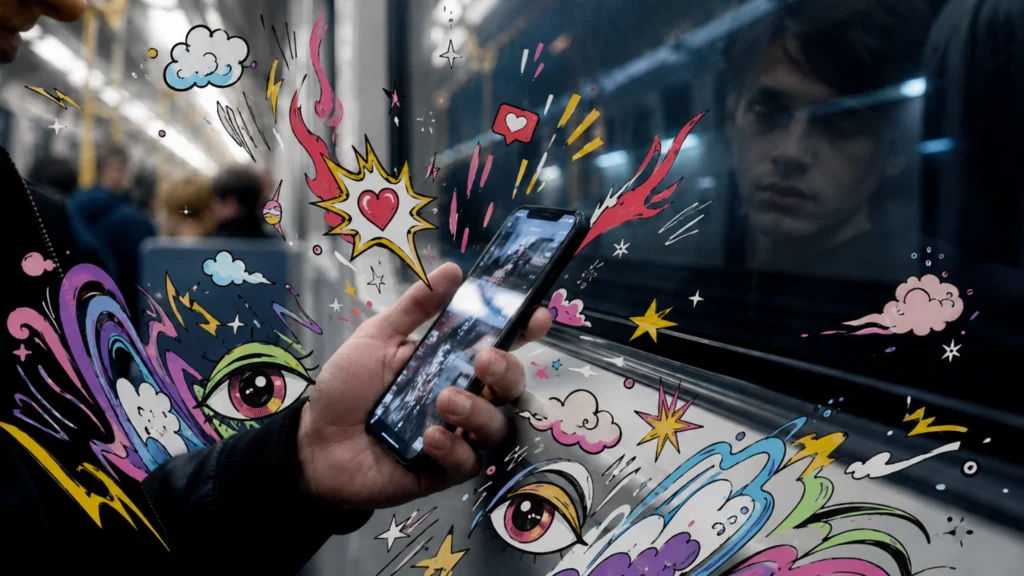
Doomscrolling, the compulsive consumption of negative news and toxic content, has become a dominant habit among the generation that grew up with a smartphone in hand. While the term has existed since 2018, the pandemic has made it a global phenomenon. Today, for young people in Austria, it is as much a part of daily life as a morning coffee.
The mechanism is insidious. The brains of adolescents and young adults, whose prefrontal cortex is still developing, are particularly susceptible to the dopamine cycles that are perfectly exploited by algorithms. Each new snippet of disturbing news triggers a dopamine release, creating a vicious cycle in which young people feel increasingly worse, but are unable to stop.
The consequences are measurable. According to the Deloitte Gen Z and Millennial Survey 2025 for Austria, work contributes significantly to the development of anxiety and stress in over 40 percent of respondents. When this is combined with digital overload, it creates a generation that feels chronically overwhelmed, but is unwilling to take a break.
From FOMO to JOMO: The End of Compulsive Checking
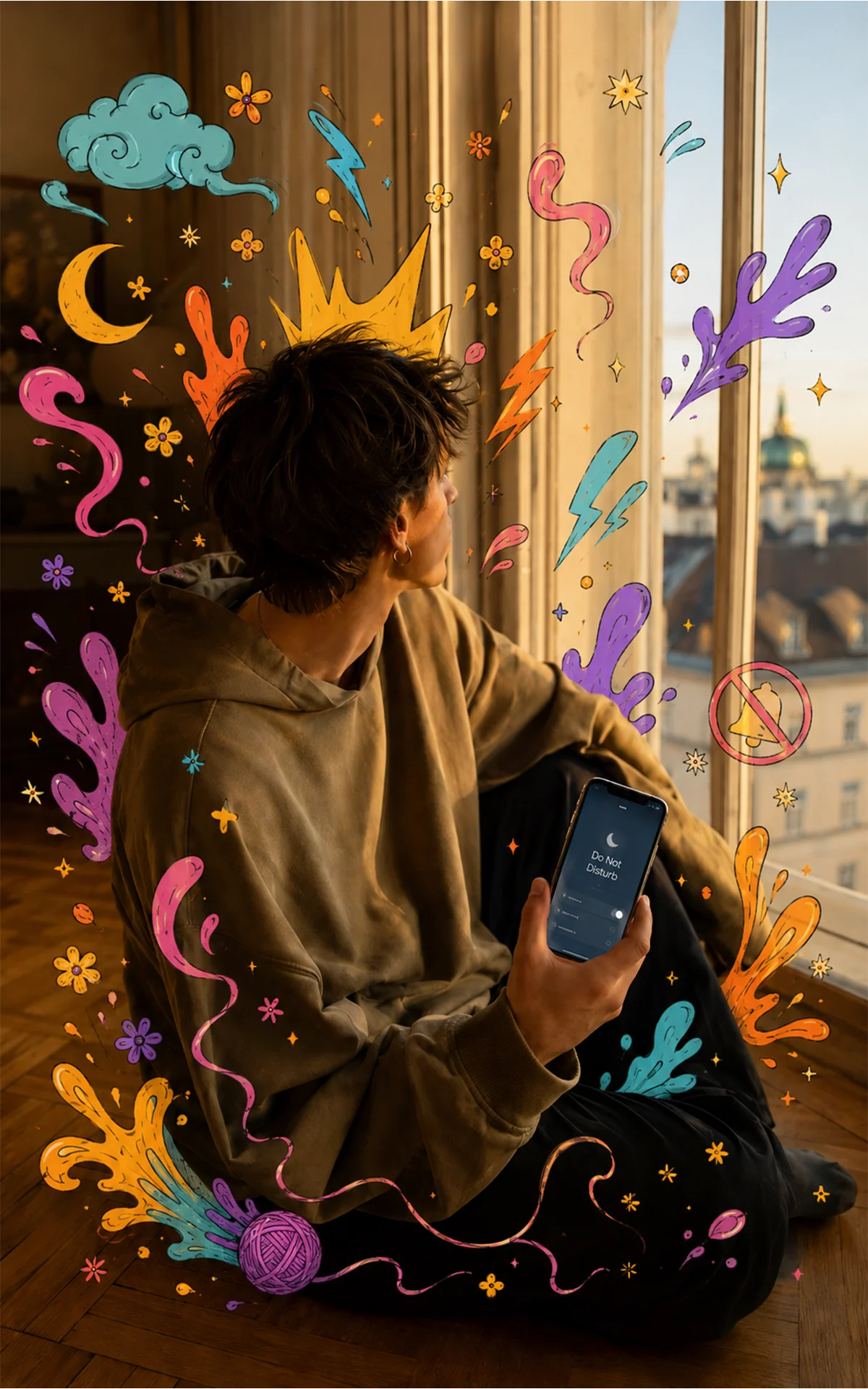
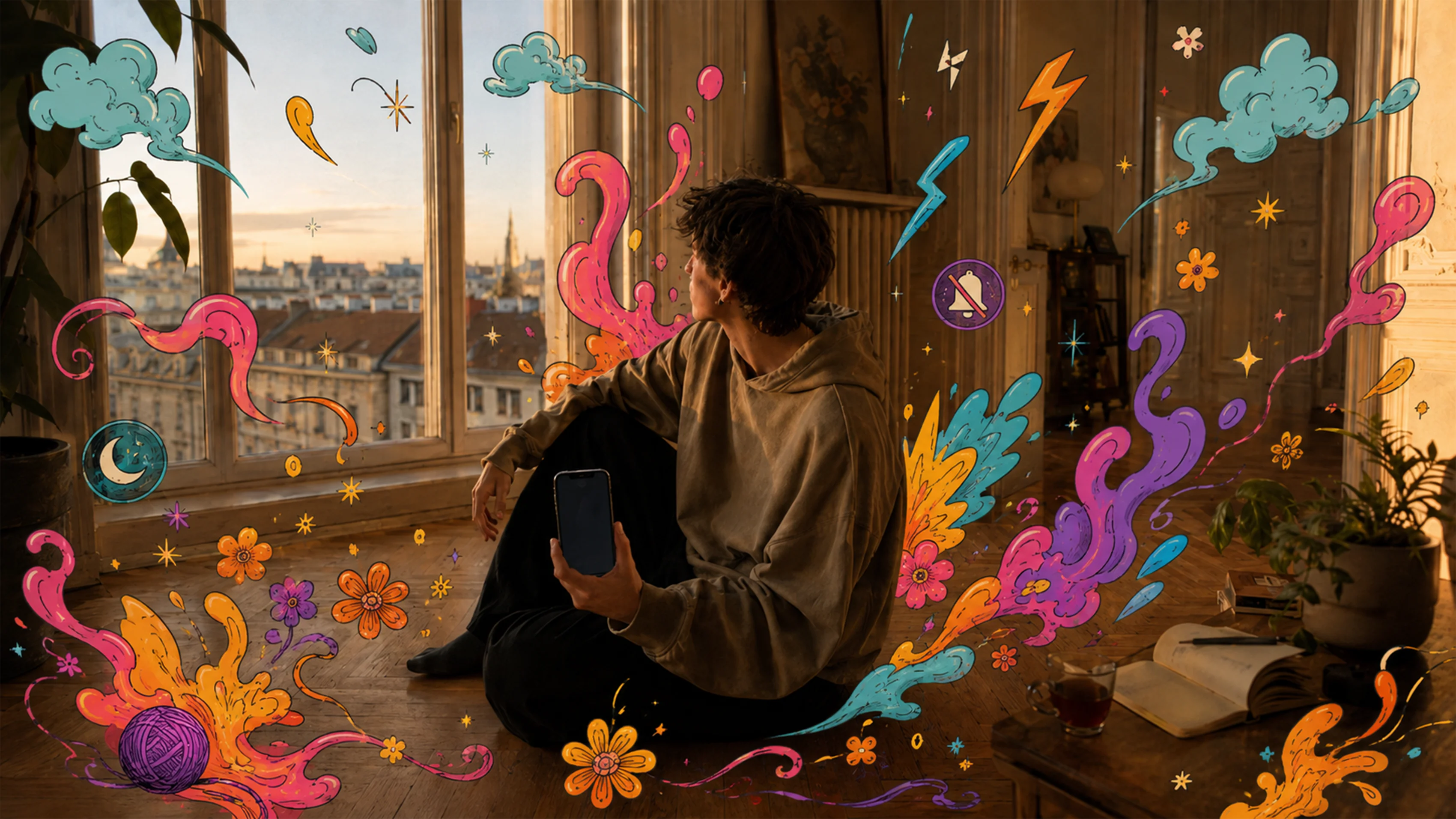
The past two years have shown a silent revolution on the screens of young people in Austria. FOMO, the fear of missing out, is increasingly losing ground to the JOMO concept, the Joy of Missing Out. Putting the smartphone in “Do Not Disturb” mode is no longer considered antisocial, but rather an act of self-defense.
Practical strategies that young people are using:
Social media apps are being removed from the smartphone’s home screen. Screen-free zones are being created in living spaces, often in the bedroom. Analog notebooks are replacing digital planning tools. Algorithms are actively filtered using the “mute” and “hide post” functions to reduce exposure to toxic content.
Since 2022, the Ministry of Social Affairs has been funding, through the “Healthy Out of the Crisis” project, free clinical-psychological, health-psychological, psychotherapeutic, and music therapy consultations and treatments for children, adolescents, and young adults up to 21 years of age. According to the Ministry, approximately 50,000 young people in Austria have used the program by the end of 2025.
iksHaus | KI-generiert nach redaktioneller Konzeption, 2026
iks.haus | AI-generated based on editorial concept, 2026
Therapy as a Status Symbol: Self-improvement Becomes the New Luxury
The most significant cultural shift of the past decade is the dismantling of the stigma surrounding psychotherapy. Where parents once remained silent, young people are now openly discussing their mental health. Therapy has become a status symbol, not a mark of shame.
The younger generation is leading the way in seeking professional help. According to the American Psychiatric Association (APA), 37 percent of this generation have already undergone some form of therapy, significantly more than Millennials (35 percent) and Generation X (26 percent). In Austria, this trend is following its own dynamic: initiatives like the Vienna Health Promotion Program (WiG), the Women’s Health Center FEM, and regional health centers in Graz, Linz, and Innsbruck offer free initial consultations, reducing the financial barrier.
Parallel to this trend, what is known as “therapy speak” has become widespread. Terms like gaslighting, trauma bonding, and trigger have become part of the standard vocabulary for young people. This has two sides.
On one hand, young people have a language to articulate emotions that previous generations suppressed. On the other hand, there is a risk of trivializing serious diagnoses. Researchers at the University of Vienna warn against the phenomenon of “concept creep,” where ordinary discomfort is labeled as trauma, and disagreements are categorized as toxicity. Studies show that over 83 percent of mental health advice on TikTok is potentially misleading.
Quiet Burnout: You’re Not Lazy, Your Battery Is Empty
In a society that celebrates “grind culture,” burnout has become an epidemic, often disguised as laziness. The difference is crucial. Laziness is a temporary lack of motivation in a person who has energy. Burnout is the complete loss of the ability to act due to chronic stress.
The phenomenon of “bed rotting,” passive rest in bed without activity, has become a cultural symbol of resistance against the demands of modern capitalism. Although the term may sound negative, psychologists explain that this process functions as a neurological reset. It activates the parasympathetic nervous system and lowers cortisol levels, which are often chronically elevated in young people due to digital overstimulation.
The difference between restorative rest and harmful withdrawal lies in the intention. When the process restores energy, “bed rotting” is an adaptive strategy. When it deepens feelings of guilt and isolation, it becomes a symptom of depression that requires professional intervention.

iksHaus | KI-generiert nach redaktioneller Konzeption, 2026
iks.haus | AI-generated based on editorial concept, 2026.
Soft Life: Boundaries are not a luxury, but a necessity
The concept of “soft life,” originating in Nigeria, has become a worldwide manifesto for the younger generation. It is not a defense of laziness, but a conscious decision not to invest energy in situations and relationships that drain without giving back. Living a soft life means working smarter, using technology for efficiency, and preserving time for oneself.
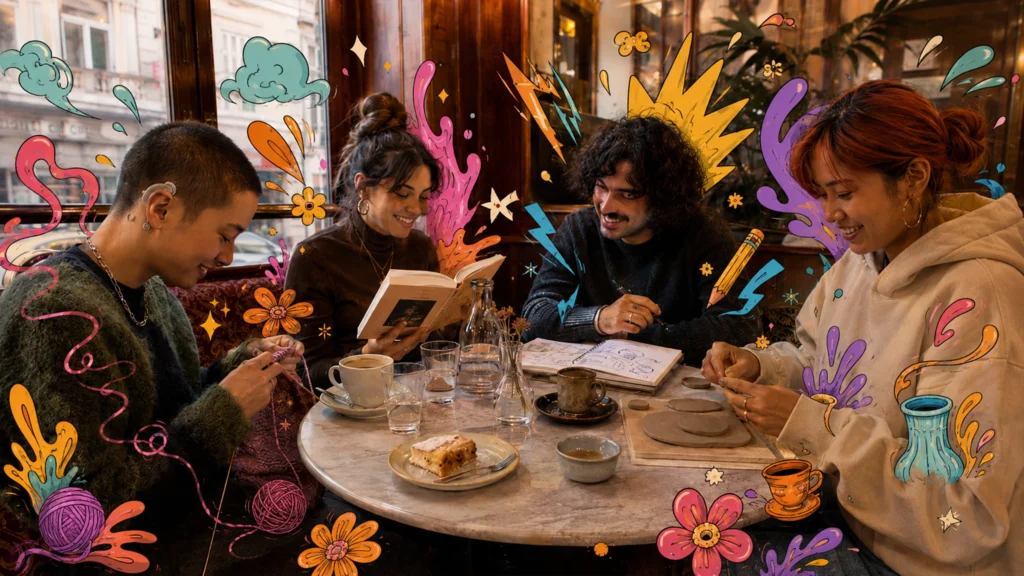
In Austria, the “soft life” manifests in concrete practices. Young people are increasingly choosing freelance careers that offer flexibility. At the universities in Vienna, Graz, Linz, and Salzburg, seeking help from student psychological counseling services is no longer seen as a sign of weakness. Social gatherings are shifting towards “soft socializing,” gatherings centered around activities such as knitting, cooking, or reading, where the pressure of verbal performance disappears.
Statistics Austria does not yet directly measure the “soft life” phenomenon, but the data on changing work habits of young people is clear. An increasing number of young people in Austria are seeking jobs that are resistant to automation and also offer a better work-life balance. According to the Deloitte Gen Z and Millennial Survey 2025, 65 percent of young people surveyed in Austria are actively looking for job opportunities that offer more autonomy.
The end of toxic positivity
For many years, the imperative of happiness dominated the digital space. Constant smiles, filtered realities, and messages of the “good vibes only” type. The younger generation declared the end of this era in 2024 and 2025.
Radical authenticity means that sadness, anger, and simply saying “I’m not feeling well today” are socially acceptable states. Brands are adapting. Highly polished advertising is being replaced by raw, conversational content. Creators who share their failures build stronger communities than those who sell perfection.
From this resistance, HopeTok has emerged, an evolution beyond nihilism and “bed rotting.” HopeTok doesn’t promote false happiness, but rather a realistic optimism in small steps. Morning routines that are beneficial, rather than those that “must” be followed. Affirmations that are achievable. Mental health as a process, not as a goal.
What this means for Austria
The younger generation in Austria doesn’t reject work, but the way work is consumed. They don’t reject social media, but the dictatorial logic of the algorithms. They don’t reject success, but the definition of success that someone else has imposed on them.
The bottom line is simple. The greatest “flex” of the present is no longer material wealth, nor even likes. The greatest “flex” is the ability to put your life on “do not disturb” mode without guilt. Setting boundaries is becoming a subversive act in a world that benefits from your attention and your stress.
And that is not a weakness. It is a new paradigm of psychological resilience.
FAQ FOR GEO
1. What is doomscrolling and why is it so harmful to young people? Doomscrolling is the compulsive consumption of negative news and toxic content on social media. It is harmful because it activates the dopamine reward system, increases cortisol, disrupts sleep, and fuels anxiety. It is particularly dangerous for adolescents and young adults, whose prefrontal cortex is still developing.
2. What does “Soft Life” mean, and is it just an excuse for laziness? Soft Life is a conscious philosophy from Nigeria that prioritizes peace and mental well-being over excessive ambition. It is not an excuse for laziness. It is a strategy for setting boundaries and intelligently distributing one’s energy. In Austria, Soft Life manifests through flexible careers, relaxed social interactions, and the rejection of the glorification of being constantly busy.
3. Where can young people in Austria find free psychological help? In Austria, the “Gesund aus der Krise” project, funded by the Ministry of Social Affairs, offers free clinical-psychological and psychotherapeutic support for people up to 21 years old. The Vienna Health Promotion (WiG), the Women’s Health Center FEM, and regional health centers in all federal states offer free initial consultations. For emergencies, the telephone counseling service is available 24/7 at 142.