The moment a person receives a life-altering diagnosis or acquires a disability, their world often divides into two distinct periods: life before and life after. In the first weeks or months, a significant amount of psychological energy is focused on surviving the immediate consequences.
Medical appointments, rehabilitation, uncertainty, fear, and grief understandably take center stage. There is initially little room for the idea that something new could emerge from such an experience.
It is precisely for this reason that conversations about post-traumatic growth can be easily misunderstood. Some people hear the term and assume that trauma is being portrayed as beneficial, or that suffering inevitably makes people stronger. None of these interpretations reflect what psychological research over the past three decades has shown.
Post-traumatic growth does not mean that trauma is desirable. It also does not deny the profound consequences that an illness or disability can have on a person’s life. Rather, the term describes a process in which some people gradually rebuild their understanding of themselves, their relationships, and their place in the world, after previous certainties have been shaken.
Growth is therefore not the opposite of suffering. In many cases, it develops alongside it.
Trauma challenges fundamental assumptions about life
The psychologists Richard Tedeschi and Lawrence Calhoun, who developed the concept of post-traumatic growth in the 1990s, believed that traumatic experiences have such a profound psychological impact because they challenge fundamental assumptions that people rarely consciously examine in their daily lives.
Many adults live with the unspoken expectation that the world is reasonably predictable, that their own bodies will continue to function, and that effort generally leads to the desired results. These assumptions create a sense of coherence. They allow people to make plans, invest in relationships, and envision their future with confidence.
Disability often disrupts this sense of coherence. The future becomes uncertain. Personal identity is shaken. Previous life goals may suddenly seem unattainable. This brings existential questions to the forefront, questions that were previously on the periphery of consciousness:
Who am I if I can no longer do what used to define me?
What gives my life meaning when my plans have fundamentally changed?
How am I supposed to understand myself now?
These questions are painful, precisely because they cannot be answered immediately. At the same time, they can create conditions under which psychological reconstruction begins.
Growth is not a return to the former self
One of the biggest misconceptions about post-traumatic growth is the assumption that it means returning to the person one was before the trauma.
For many people with disabilities, such a return is neither realistic nor necessarily desirable. Life has changed. Pretending that this has not happened can prolong psychological suffering.
Therefore, growth should not be understood as a restoration of the former self. It is the gradual construction of a new identity that incorporates the experience of disability, without allowing it to define the entire person.
Psychological adaptation does not erase the loss. It places it within a broader life story that also includes learning, relationships, meaning, creativity, and hope. In this understanding, growth means integration, not restoration.
iksHaus | KI-generiert nach redaktioneller Konzeption, 2026
Five Dimensions of Post-Traumatic Growth
Research in different cultural contexts has identified five broad areas in which people sometimes report positive psychological changes after experiencing profound stress.
A Deeper Appreciation of Life
The first area concerns a stronger appreciation of life. Ordinary experiences that were previously barely noticed can gain new meaning. A quiet conversation, time spent outdoors, or even the temporary absence of pain may be perceived more consciously.
This appreciation does not justify the original loss. It describes a changed awareness of experiences whose value was previously less apparent.
Changed Relationships
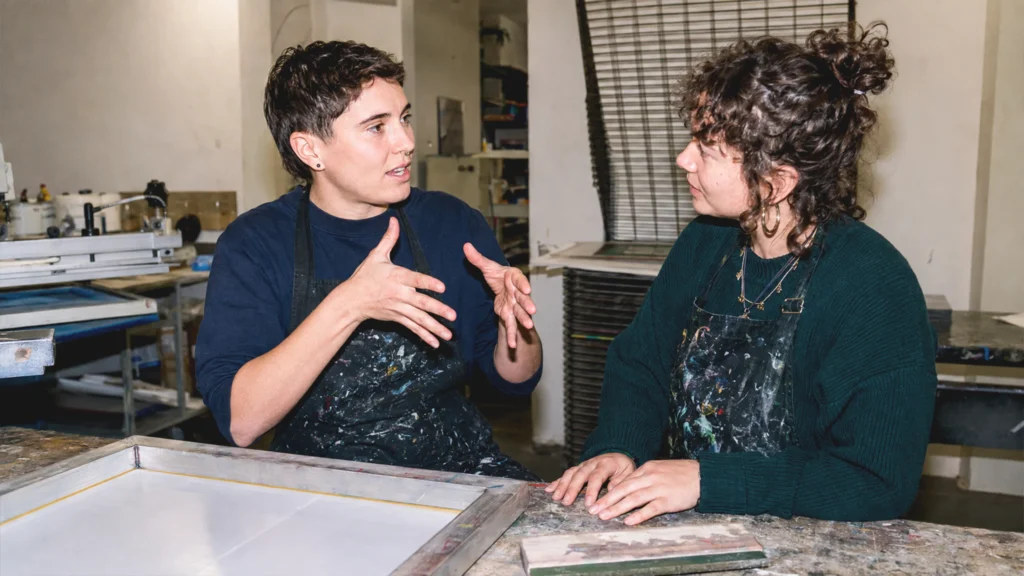
The second area concerns relationships with other people. Those affected sometimes report becoming more emotionally open, showing vulnerability more readily, and appreciating those people who remain reliably present during difficult times.
At the same time, relationships that are based primarily on a sense of duty or superficiality may gradually lose importance. Intimacy does not automatically become easier. However, it can become more conscious and more honest.
A New Experience of Personal Strength
The third area concerns personal strength. This does not refer to invulnerability. People sometimes discover psychological abilities that they had not previously needed to develop.
Trust grows not because suffering disappears, but because a person recognizes that they have overcome experiences that previously seemed unimaginable. This realization does not mean that future difficulties will no longer cause fear. However, it expands the knowledge of what has already been successfully managed.
New Opportunities
The fourth dimension involves recognizing new opportunities. A disability can open up certain life paths and, at the same time, make options visible that were not previously considered.
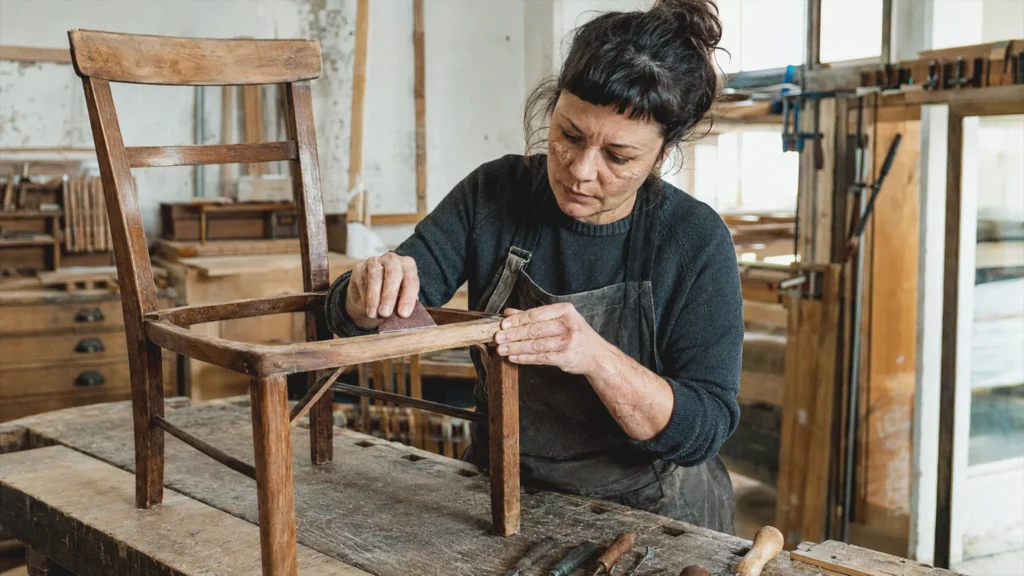
Some people become involved in advocacy, education, art, research, mentoring, or volunteer work. Others rediscover long-neglected interests. None of these developments compensate for the original loss. However, they demonstrate that a human life remains open to further development even after profound change.
Existential or Spiritual Changes
Ultimately, some people describe fundamental existential or spiritual changes. This does not necessarily imply the adoption of religious beliefs. It can involve a more intense engagement with mortality, meaning, gratitude, connection, and the question of what constitutes a good life.
iksHaus | KI-generiert nach redaktioneller Konzeption, 2026
Growth Cannot Be Demanded
An unintended consequence of popular discussions about resilience is the idea that people should, through what has happened to them, eventually become better, stronger, or wiser.
Such expectations can themselves become a source of suffering. When family members say that everything happens for a reason, or urge people to only see the positive side, they often intend to offer comfort. Nevertheless, such statements can convey the message that persistent grief is a personal failure rather than a natural human reaction.
Psychological research does not support this expectation. Post-traumatic growth is neither universal nor inevitable. Some people experience significant changes, while others experience only minor changes. Some do not identify with the concept at all.
Each of these outcomes is psychologically valid. Growth is a possibility, not an obligation.
Even adaptation without discernible growth is not a failure. A life can become more stable, more sustainable, or simply more manageable, without the affected person wanting to describe their experience as a source of positive change.

iksHaus | KI-generiert nach redaktioneller Konzeption, 2026
A Constructivist Understanding of Growth
From a constructivist perspective, trauma not only damages existing psychological structures. It also initiates a process in which previous ways of understanding the world are no longer sufficient.
Therefore, the task of psychotherapy is not to convince people that disability is a positive experience. Rather, it supports them in gradually developing new meanings that can encompass their changed reality.
This process cannot be accelerated or forced. Meaning arises through dialogue, relationships, reflection, and lived experience, not through positive thinking.
When someone can eventually say that their life is meaningful again, they are rarely denying what has been lost. Instead, they have succeeded in weaving the loss into a broader narrative that still contains love, meaning, belonging, and hope.
Heinz von Foerster understood ethical action as an expansion of possibilities. Post-traumatic growth reflects this principle because it expands the number of ways in which people can understand themselves and envision their future, even though the initial situation seemed to eliminate all possibilities.
The ability to create new meaning
Disability and chronic illness irrevocably change many areas of life. They can affect career paths, relationships, physical abilities, financial security, and personal goals. None of these experiences of loss should be minimized or romanticized.
At the same time, psychological research shows that people have a remarkable ability to construct new meaning after profound distress. Growth does not erase grief. It does not eliminate the disability, nor does it justify the suffering. It simply reminds us that human identity remains capable of development, even when life unfolds in ways that are very different from what was originally expected.
Perhaps the most important insight of post-traumatic growth is not that trauma makes people stronger. Rather, it is that the human capacity to create meaning can sometimes be greater than the trauma itself.