
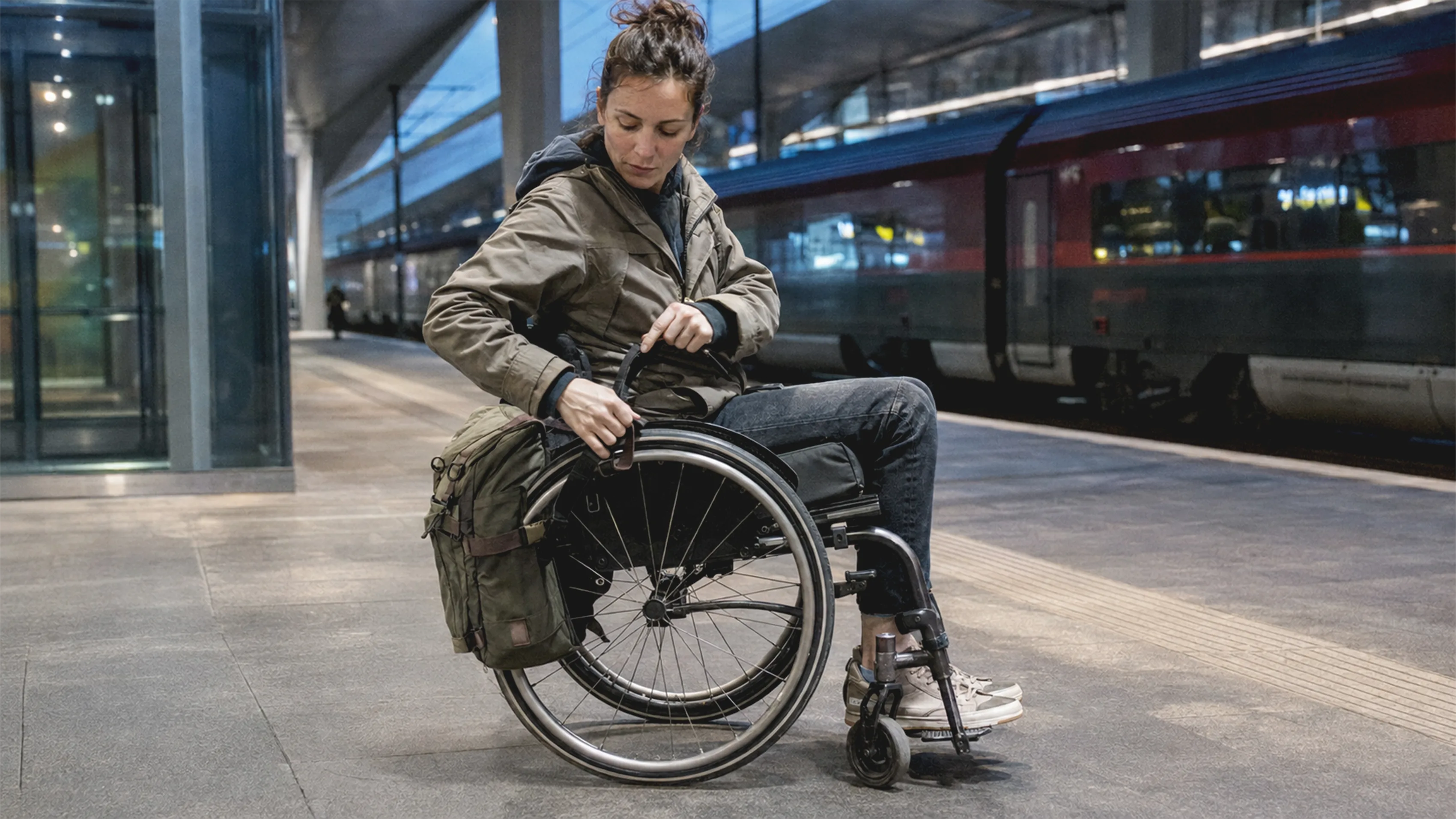
“One of the least visible consequences of chronic illness is that it transforms the future from something we take for granted into something we must consciously negotiate.”
When people imagine a life with a chronic illness or disability, they often first think of pain, exhaustion, mobility limitations, or medical treatments. These burdens are undoubtedly significant. However, many affected individuals eventually discover that one of the greatest psychological challenges lies elsewhere: in the awareness that the future has become fundamentally less predictable.
Most people organize their lives on the unspoken assumption that tomorrow will be roughly the same as today. We begin a training program with the expectation of completing it. We plan our careers and assume that our bodies will continue to cooperate. We make long-term commitments without always asking whether our health will allow us to fulfill them.
For healthy people, this trust usually remains unconscious because predictability seems almost natural. A chronic illness challenges this assumption. The question “What do I want to do next year?” may become: “Will I physically still be able to do it?” Travel, relationships, and career decisions are no longer judged solely by desires, but also by risks, potential setbacks, and whether the emotional investment in planning is even worthwhile.
The illness, therefore, changes more than just the body. It changes a person’s relationship to time itself.
The psychology of uncertainty
Neuroscience increasingly understands the brain as an organ that continuously generates predictions about the world. The nervous system doesn’t simply wait for something to happen. It constantly assesses what is likely to happen next and prepares the body accordingly. This ability makes everyday life more efficient because predictable environments require less mental effort.
A chronic illness places significant strain on this prediction system. Symptoms fluctuate. Test results sometimes remain ambiguous. A treatment that initially works can lose its effectiveness over time. Periods of stability can be unexpectedly interrupted by relapses. Those affected gradually realize that certainty can no longer be taken for granted.
Psychologically, uncertainty is not simply a lack of information. It is the experience of recognizing, despite having information, that important aspects of the future remain unpredictable. Research links persistent, illness-related uncertainty to increased emotional distress, difficulty in psychological adaptation, and a lower quality of life. This is especially true when uncertainty is perceived solely as a threat and not also as an unavoidable part of chronic illnesses.
Why certainty becomes so appealing
In the face of uncertainty, the human mind understandably tries to restore order. Many people therefore spend hours researching medical information. They compare their own symptoms with the experiences of others, repeatedly seek reassurance from medical professionals, or observe every physical change in the hope of finally understanding what is to come.
These behaviors are neither irrational nor automatically pathological. They are a understandable attempt to regain control.
The problem is that chronic illnesses often do not provide the type of certainty that is sought. One reassuring test result is followed by the next check-up appointment. Even a favorable finding leaves open the possibility of later changes. Every answer generates new questions.
Psychological distress often doesn’t increase because people seek information, but rather because they expect information to completely eliminate uncertainty. Medicine can often reduce uncertainty, but it cannot always eliminate it.
Recognizing this limitation is not pessimism; it is realism.

iksHaus | KI-generiert nach redaktioneller Konzeption, 2026
Control and influence are not the same thing
One of the most valuable distinctions during psychological adaptation concerns the difference between control and influence. Control means being able to determine an outcome. Influence means changing probabilities without being able to guarantee the outcome.
Very few people can influence the course of multiple sclerosis, Parkinson’s disease, chronic inflammatory bowel disease, or other chronic illnesses. Similarly, no one can guarantee that a treatment will consistently produce the same results.
Despite this, people retain a significant degree of influence over many areas of their lives. They can participate in rehabilitation, maintain social relationships, take care of their physical health, seek psychological support, develop new skills, and continue to invest time in activities that align with their personal values.
This distinction is important because emotional energy is limited. If most of this energy is invested in trying to control the uncontrollable, frustration is almost inevitable. If it is directed towards areas where meaningful influence is still possible, their psychological flexibility can gradually grow.
Acceptance should not be confused with passive resignation. It means acknowledging reality as it currently is and continuing to act purposefully within that reality.
When illness begins to define identity
Another subtle consequence of chronic uncertainty is that the illness can gradually become a central organizing principle of one’s identity. Daily routines are dictated by medication schedules, doctor’s appointments, and the observation of symptoms. Conversations increasingly revolve around lab results, rehabilitation programs, and treatment options. Almost imperceptibly, the diagnosis begins to overshadow other aspects of life.
Constructivist psychology reminds us that identity is never identical to a single life event. People continuously organize their experiences into narratives, and these narratives can be revised repeatedly throughout life.
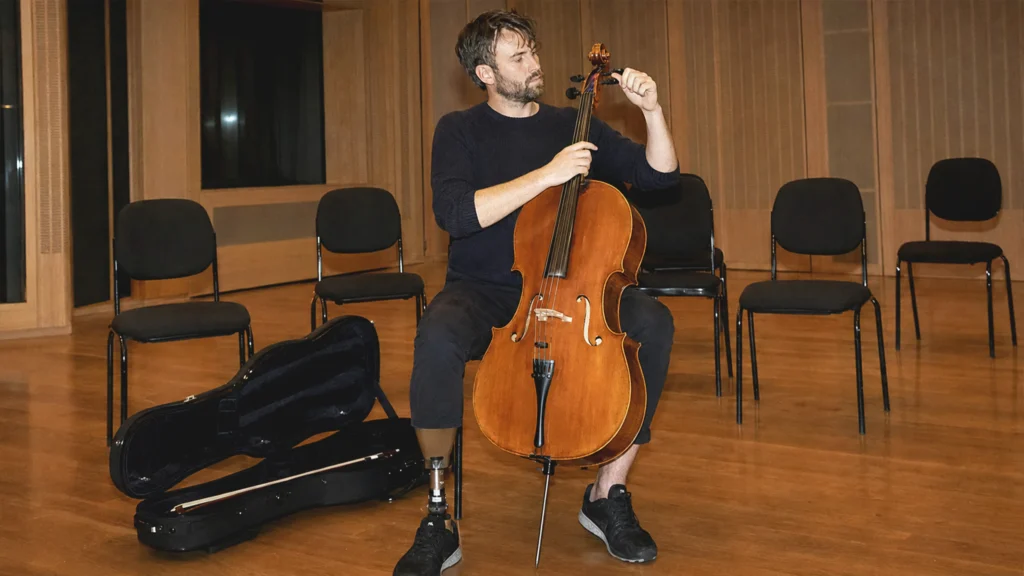
A diagnosis will undoubtedly become an important chapter in one’s personal story. However, difficulties arise when it becomes the *only* chapter. A person with a chronic illness can simultaneously be a parent, a musician, an architect, a teacher, an athlete, a volunteer, or an artist. These identities do not disappear simply because illness enters the life story. However, they require conscious attention to prevent them from being suppressed by the illness.
Psychotherapy can help people rediscover neglected aspects of themselves. This creates renewed psychological complexity, whereas the illness threatens to reduce the self-image to a single diagnosis.
iksHaus | KI-generiert nach redaktioneller Konzeption, 2026
Living before certainty arrives
One of the greatest existential traps of chronic illness is to postpone life until certainty returns. Many people silently tell themselves:
“I will travel once my condition stabilizes.”
“I will start a new relationship after my next medical check-up.”
“I will pursue my goals once I finally know what is happening.”
The difficulty lies in the fact that complete certainty rarely arrives. If life is put on hold while a person waits for guarantees, the uncertainty gains enormous power. It then affects not only health, but increasingly determines whether life itself can continue.
Existentialist perspectives have long pointed out that uncertainty is not solely associated with illness. It is a fundamental component of human existence. A chronic illness simply makes this fact more apparent and visible earlier than most people expect.
Paradoxically, psychological relief often begins for many affected individuals when they no longer demand complete certainty before actively shaping their lives. Priorities become clearer. Relationships can deepen. Ordinary experiences gain significance, precisely because they are considered finite and not guaranteed.
Meaning is not created only after the uncertainty disappears. Meaning is created while the uncertainty persists.

iksHaus | KI-generiert nach redaktioneller Konzeption, 2026
A constructivist perspective
From a constructivist perspective, adaptation does not primarily involve changing objective reality. It involves reconstructing the meaning through which that reality is understood.
Therefore, two people with comparable diagnoses can live in fundamentally different psychological worlds. One person experiences the future as permanently closed off. The other experiences it as changed, but still open.
The diagnosis is comparable. The narrative is not.
Psychotherapy cannot promise certainty for tomorrow, nor should it offer false reassurance. However, it can create a space for relationships where uncertainty becomes more bearable. People can develop new ways of understanding themselves, their future, and their ability to creatively cope with change.
Heinz von Foerster linked ethical action with expanding possibilities. Living with chronic uncertainty, therefore, does not mean trying to predict the future with greater accuracy. It means remaining psychologically open to the possibility that even in uncertainty, meaningful decisions are possible.
A meaningful life does not require complete predictability
A chronic illness confronts people with a reality that healthy individuals often overlook: certainty has always been limited. Disability or a long-term illness simply makes this limit impossible to ignore.
Psychological adaptation does not arise from the elimination of uncertainty, because that is rarely fully possible. It grows when people develop sufficient emotional flexibility to maintain relationships, act according to their values, and create meaning, even though the future is not entirely predictable.
Coping well with uncertainty does not mean not experiencing fear. It is the gradual realization that a meaningful life does not depend on knowing exactly what will happen next.