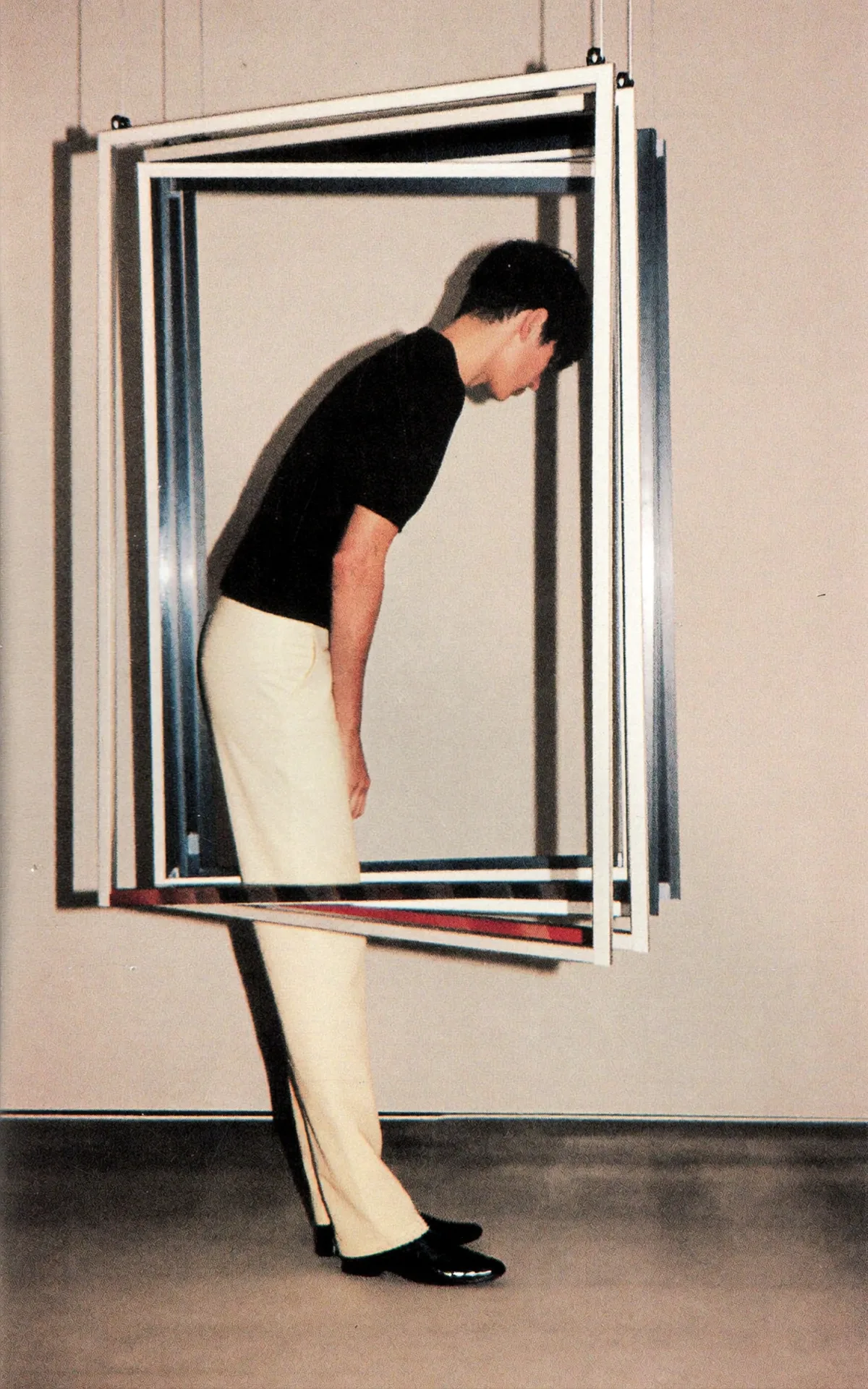

“Just one more thought.”
“If I just think about it a little longer, I will finally understand it.”
“I’m almost there.”
Most people believe that overthinking simply means thinking too much.
That is not correct.
Overthinking rarely feels like ordinary thinking. Instead, it often feels like one cannot stop.
This distinction is more than just a linguistic detail; it changes the way we understand the entire phenomenon. On the surface, overthinking seems like a problem of excessive mental activity. However, psychologically, it is often better understood as a process where the nervous system has learned to treat uncertainty as a state that must be eliminated as quickly as possible.
This is precisely the paradox: the more intensely we seek certainty, the stronger the feeling of uncertainty can become.
This paradox is at the heart of overthinking.
Stage 1: The Trigger

iksHaus | KI-generiert nach redaktioneller Konzeption, 2026
Every episode of overthinking begins at the same point: with uncertainty.
A message remains unanswered.
A colleague says, “Can we talk tomorrow?”
The partner seems unusually quiet.
A doctor wants to perform further tests.
Objectively, nothing catastrophic has happened yet. Nevertheless, a feeling of unease arises immediately.
The nervous system is not necessarily reacting to a concrete danger. Often, it reacts to the lack of certainty. For people who find it difficult to tolerate uncertainty, this unpleasant state automatically triggers a search for explanations. These explanations are intended to restore a sense of security.
In this initial phase, the process is perfectly understandable and fundamentally makes sense. The human brain is specialized in recognizing patterns, predicting possible developments, and supplementing incomplete information.
The search itself is not the problem, initially.
Stage 2: The Search for Meaning
The search begins with perfectly reasonable questions.
“Did I misunderstand something?”
“What was really meant by that?”
“Did I overlook something important?”
The thinking continues to fulfill its original function. It attempts to organize information and arrive at a meaningful assessment.
However, some situations do not provide enough information to reach a definitive conclusion. When certainty is unattainable, the mind begins to generate possibilities rather than answers.
Each new possibility creates the impression that the person is getting closer to a solution. In reality, however, no real clarification has emerged.
Perhaps the message was formulated too directly.
Perhaps it was not direct enough.
Perhaps the other person is busy.
Perhaps they are upset.
Perhaps their silence means nothing at all.
Perhaps it means everything.
Unnoticed, the goal of thinking changes.
The person is no longer primarily seeking understanding.
They begin to seek relief.
Stage 3: The Hook
iksHaus | KI-generiert nach redaktioneller Konzeption, 2026
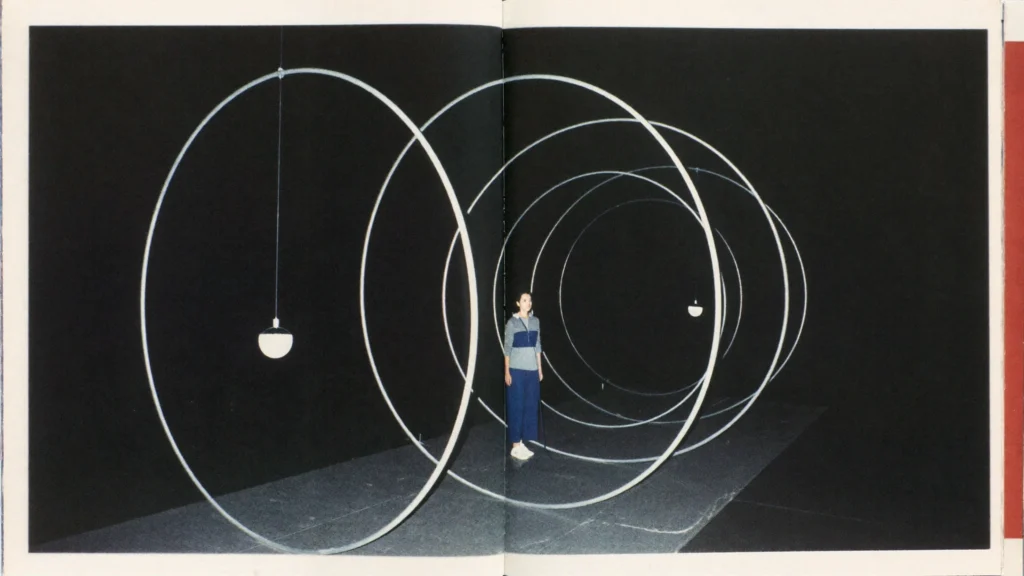
At this point, most people get caught in the actual loop.
Not because they lack intelligence.
Not because they are inherently irrational.
But because their nervous system has learned something extraordinarily effective.
Thinking no longer feels like a consciously chosen activity. Instead, there is a feeling that something inside is preventing the question from being resolved. Stopping now would feel irresponsible, premature, or even dangerous.
Many people describe this experience with almost identical words:
“Almost.”
“Just one more thought.”
“I’m on the verge of a solution.”
These feelings are not random.
They indicate that the nervous system has learned to expect the hoped-for relief immediately after the next explanation.
Imagine you finally find an interpretation that fits for a moment.
Your breathing slows down.
Your muscles relax.
The inner tension decreases.
In the external world, nothing has changed. No new message has arrived. No one has explained a situation. No additional information has become available.
Nevertheless, the internal state has changed.
This brief reduction in anxiety is the most important event in the entire process.
The relief is not the solution.
It’s the hook.
Each new explanation reduces the tension for a brief moment. As a result, the nervous system learns a simple sequence:
Anxiety, search, relief.
If this experience is repeated often enough, the search becomes increasingly automatic. In the process, the brain does not necessarily develop an attachment to the answers. It develops an attachment to the short-term relief that follows the search.
This learning process is similar to the mechanism that makes slot machines so effective. Most attempts lead to no particular result. Occasionally, however, a new explanation creates a feeling of certainty for a brief moment.
This fleeting experience is enough to trigger another search.
The promise always remains the same:
“The next thought will finally be the right one.”
This promise is the essence of the “almost” psychology.
This is where the real trap lies.
Overthinking doesn’t begin because the mind necessarily wants more answers. It begins because the nervous system cannot tolerate the absence of an answer.
From that moment on, the search for certainty, which initially seemed like a solution, gradually becomes a problem in itself.
Paul Watzlawick and Giorgio Nardone described a very similar mechanism within strategic psychotherapy. Many psychological difficulties are not only maintained by the original problem, but also by repeated attempts at solutions that initially seemed sensible.
Overthinking follows the same logic.
The initial search for an explanation is a understandable attempt to reduce uncertainty.
The hundredth search has become one of the strongest allies of that uncertainty.
The “Almost” Psychology: The PAM Model
The perspective described in this article is based on several established psychological theories and not on a single model.
If this specific perspective on overthinking were to be given a name, it could be called the “Psychology of Almost” (PAM).
The term describes the moment when the search for certainty becomes more important than certainty itself.
PAM is not intended to be a new clinical or scientific model. The name is simply a descriptive term for the recurring psychological pattern described in this article.
Within this conceptual framework, uncertainty triggers a search for explanations. The search temporarily reduces emotional discomfort. This short-term relief, in turn, reinforces the further search, until the search itself gradually becomes part of the problem.
The phrase “Psychology of Almost” reflects the subjective experience of many people who are prone to overthinking.
Certainty always seems to be just one more thought away.
Stage 4: Emotional Exhaustion
No nervous system can remain in this cycle indefinitely without paying a price.
The longer the search continues, the greater the mental exhaustion. Concentration becomes increasingly difficult. Sleep can be disrupted. Decisions require more time, and even small uncertainties begin to feel overwhelming.
The paradox becomes increasingly clear.
The more energy is invested in the search for certainty, the more uncertain everything seems to become.
Thoughts are no longer productive, but instead repeat themselves. Attention narrows. The body remains tense.
The nervous system is no longer primarily focused on solving a problem. It is trying to regulate emotional discomfort.
The person is no longer thinking about a result.
They are thinking in order to feel temporarily more secure.
This explains why a prolonged period of overthinking does not necessarily lead to a better decision. After hours of analysis, clarity is often absent, and instead, there is a greater reliance on one’s own perception.
Every possible answer has been accompanied by a counter-answer. Every decision carries further risks. Every attempt to eliminate doubt has created new doubts.
Stage 5: When Overthinking Replaces Life

iksHaus | KI-generiert nach redaktioneller Konzeption, 2026
Eventually, overthinking begins to shape everyday life.
Decisions are postponed.
Messages are not sent.
Relationships are strained by repeated attempts to seek reassurance.
Opportunities remain unused because complete certainty has not yet been achieved.
Gradually, life begins to organize itself around questions that never seem to be fully answered.
Perhaps an application is not sent because the resume needs to be reviewed again.
Perhaps a conversation is postponed because it is not yet clear what any possible reaction from the other person might be.
Perhaps a relationship is repeatedly analyzed instead of actually being experienced.
Perhaps no decision is made because every decision carries a residue of uncertainty.
This may be the greatest cost of overthinking.
The danger is not that people think too much.
The danger is that thinking gradually replaces life.
Why the third stage is a turning point
People who are prone to overthinking often receive the well-intentioned advice to simply stop thinking so much.
However, this advice misunderstands the underlying structure of the problem.
Overthinking is rarely maintained solely by a conscious decision. It is maintained by a learning process.
Every short-term reduction in anxiety reinforces the belief that the search is necessary. This happens even when the search does not yield any new insights.
The person continues to think because, for a moment, continuing to think feels better than not knowing.
Therefore, something is needed to break this cycle, which initially seems contradictory.
It must be learned that uncertainty can be tolerated without it having to be immediately eliminated.
Psychological flexibility begins precisely at the point where certainty is no longer a prerequisite for life.
This does not mean never seeking answers again. It also does not mean ignoring important problems or making decisions lightly.
It means distinguishing between a meaningful search for information and a search whose main function is only to temporarily reduce anxiety.
Healthy thinking moves towards a decision or action.
Overthinking moves in circles and promises, with each new round, that ultimate certainty is imminent.
Clinical Perspective
Overthinking is not a mental disorder.
Rather, it is a transdiagnostic psychological process. This means that the same process can occur under different psychological stressors.
Overthinking can be found in conditions such as generalized anxiety disorder, obsessive-compulsive disorder, depression, perfectionism, trauma-related difficulties, and social anxiety.
However, it can also occur in psychologically healthy individuals. It is particularly common during periods of high stress, great uncertainty, or significant life changes.
A new relationship, a career change, a medical examination, a breakup, or a major decision can intensify the need for complete certainty.
The crucial question is not whether a person occasionally thinks too much.
What is important is whether the process causes suffering, restricts daily life, or gradually begins to organize the person’s life.
Overthinking becomes problematic, especially when it permanently impairs sleep, work, relationships, or decision-making ability.
The impact on other people also plays a role. Repeated requests for reassurance can strain relationships. Constant indecisiveness can make joint decisions difficult. The need for complete certainty can lead to other people being repeatedly asked the same questions, without their answers providing lasting reassurance.
Professional support can help to understand the function of thought loops and to change the way one deals with uncertainty.
The goal is not to turn off thinking.
The goal is to be able to decide again when thinking is helpful and when it merely promises a brief moment of relief.
Concluding Remarks
Perhaps the greatest illusion of overthinking is not that an answer exists somewhere.
The real illusion is the feeling that the next thought will finally bring that answer.
The moment we begin to believe that certainty is just one explanation away, we unknowingly enter the psychology of “almost.”