If you have read the first two parts of this series, you now know something that many people never experience:
Trauma can change the brain.
However, this statement only tells half the story.
The other half is much more hopeful.
Recovery can also change the brain.
Not overnight.
Not magically.
And not simply by thinking positively.
Recovery is possible because the human brain continuously adapts to experiences.
This remarkable ability is called neuroplasticity.
Every meaningful conversation.
Every night of restful sleep.
Every therapy session.
Every supportive relationship.
Every newly learned skill.
Every moment in which the brain makes and registers a new experience: “I have survived and am now safe” can create another opportunity for change.
The crucial question is no longer whether the brain can change after a trauma.
The question is:
Which experiences best support this change?
1. Psychotherapy: Updating the brain’s operating system

iksHaus | KI-generiert nach redaktioneller Konzeption, 2026
Many people believe that psychotherapy mainly involves talking about feelings.
Modern neuroscience paints a much more comprehensive picture.
Effective psychotherapy creates repeated experiences that can change neural networks involved in emotions, memories, attention, and self-regulation.
This process can be less about deleting old files and more like a comprehensive update of the operating system.
The old software is still present.
However, the system is learning to process information differently.
This does not mean that the past is erased. Difficult memories do not automatically disappear.
However, the way the brain categorizes, processes, and reacts to these memories can change.
EMDR
One of the most well-researched treatments for traumatic stress is Eye Movement Desensitization and Reprocessing (EMDR).
EMDR does not erase traumatic memories.
Instead, the treatment seems to help the brain reprocess distressing memories. This allows them to be more integrated into autobiographical memory, rather than remaining as emotionally overwhelming experiences.
People often describe the change in the following way:
“I still remember what happened.”
“But it doesn’t feel like it’s happening again right now.”
This difference is crucial.
Recovery does not require a person to forget.
It changes the relationship to the memory.
The event remains part of one’s biography. However, it no longer has to permanently control the present.
Trauma-Focused Cognitive Behavioral Therapy
Trauma-focused cognitive behavioral therapy helps people identify and change thought and behavior patterns that developed during or after a trauma.
For example, a thought like:
“I am never safe”
can gradually evolve into a more nuanced understanding:
“I’ve learned to expect danger because it was real back then.”
This new phrasing doesn’t deny the past.
It acknowledges that the reaction at the time was understandable, without making it an immutable truth about the entire future.
The brain begins to update its predictions about the world.
It learns that old expectations don’t automatically need to be applied to every new person, every new place, and every new situation.
What psychological recovery can feel like
Many people don’t notice a dramatic change overnight.
Recovery often feels much less dramatic:
“I slept through the entire night.”
“I didn’t have a panic attack in the supermarket.”
“Today, I noticed that I smiled.”
“I finally answered that phone call.”
These are small changes.
Neurologically, however, they can still be significant.
A nervous system that previously automatically expected danger in a certain situation is having a new experience.
It’s discovering that a public place doesn’t necessarily have to be threatening.
It’s experiencing a night where constant vigilance isn’t required.
It’s having a conversation without the feared catastrophe occurring.
These individual experiences may seem insignificant. However, don’t repeat them; instead, provide the brain with increasingly new information.
Imagine if your smartphone didn’t become faster just because you looked at it for a long time.
It becomes faster when an update is installed that improves the overall functionality of the system.
Psychotherapy can function in a similar way.
It does not erase memories.
It helps the brain reorganize and process information differently.
2. Movement: Medicine for the Brain
If the effects of physical exercise could be completely packaged into a pill, it would likely be one of the most frequently prescribed medications in the world.
Regular physical activity supports the production of Brain-Derived Neurotrophic Factors (BDNF).
This protein is sometimes simplistically referred to as “fertilizer for the brain.”
BDNF supports processes associated with learning, memory, and synaptic plasticity. It plays a role in the hippocampus in aspects of neuroplasticity that are relevant for adaptation and recovery.
Movement can also support the regulation of stress systems and improve mood.
This does not require anyone to become a marathon runner.
Regularity is usually more important than exceptional intensity.
Walking.
Swimming.
Cycling.
Dancing.
Strength training.
A form of exercise that can be performed regularly is often more helpful than a demanding program that is abandoned after a short time.
Imagine connecting your smartphone to a high-quality charger every day.
Exercise does not automatically install new applications.
However, it provides energy and biological support to allow the existing system to function more efficiently.
Movement also provides the brain and nervous system with an important experience:
The body is capable of action.
It can move.
It can experience stress and then return to a calmer state.
It is adaptable and alive.
3. Sleep: The brain’s nightly maintenance crew
Sleep is not just rest.
Sleep is maintenance.
While we sleep, the brain supports numerous processes.
Important memories are consolidated.
Metabolic waste products are removed.
Emotional responses are recalibrated.
Learning processes are supported.
Stress systems can regulate themselves.
Trauma and poor sleep often reinforce each other.
Traumatic experiences can make it difficult to fall asleep, stay asleep, and feel safe during the night.
Conversely, sleep deprivation can intensify emotional responses, reduce concentration, and impair the nervous system’s ability to process stress.
Therefore, improving sleep can support other areas of recovery.
At the same time, reducing traumatic symptoms can contribute to better sleep.
After several nights of insufficient or interrupted sleep, almost everything can feel more difficult.
Small problems can suddenly seem enormous.
Emotions become more intense.
Concentration disappears.
Making decisions becomes more challenging.
Recovery slows down.
Imagine a laptop that is never restarted.
Over time, it will become slower.
Not because it is fundamentally defective.
But because the system urgently needs maintenance.
Sleep serves a comparable function for the brain.
Good sleep is not a luxury.
It is one of the most important biological foundations that support learning, regulation, and psychological recovery.
4. Secure Relationships: Borrowing the Calm of Another Person
iksHaus | KI-generiert nach redaktioneller Konzeption, 2026
Humans are social beings.
Our nervous systems are not designed to regulate every stressor completely on their own.
People regulate each other.
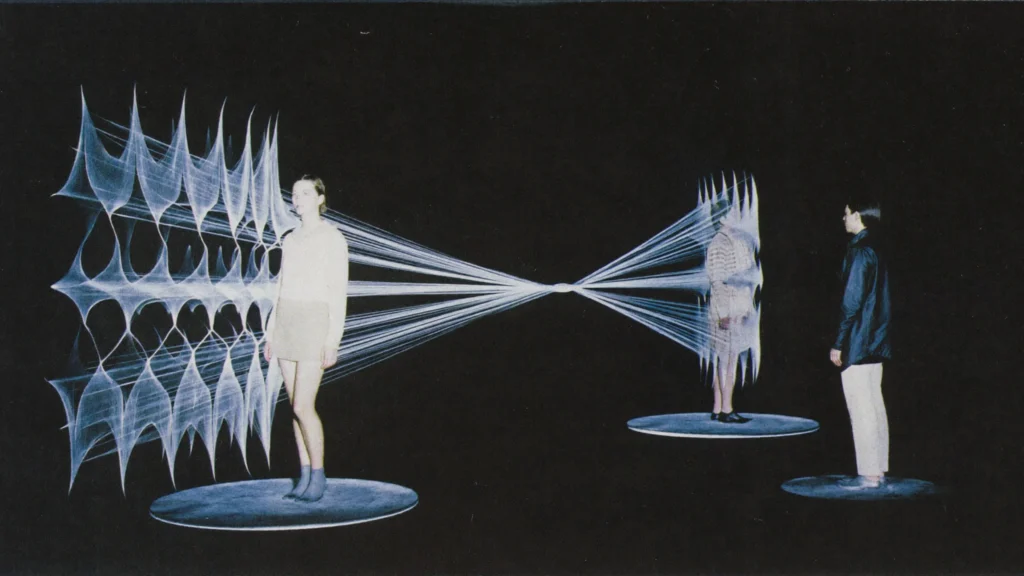
This process is called co-regulation.
A calm, reliable, and trustworthy relationship can gradually teach a traumatized nervous system something it may have forgotten:
Not everyone is dangerous.
Safety can be experienced together.
This is one of the reasons why therapeutic relationships, close friendships, supportive families, and healthy romantic partnerships can be so important for recovery.
Psychological recovery rarely occurs in complete isolation.
One nervous system can perceive the calmness of another person.
The even tone of voice.
The predictable reaction.
A boundary that is respected.
A promise that is kept.
A conflict that does not end in violence, humiliation, or abandonment.
Such experiences can show the brain that interpersonal closeness is not automatically associated with danger.
How co-regulation can feel
One day, you may notice something surprising.
You no longer constantly watch the door.
You are actually listening to another person, instead of simultaneously looking for potential dangers.
You laugh without immediately wondering what could go wrong next.
You can sit in a room without having to control every facial expression and movement.
That is not a weakness.
It is your nervous system that is discovering safety.
The change may begin long before it is visible on a brain scan.
It begins with specific interpersonal experiences.
Another person reacts differently than previous experiences might have led one to expect.
He remains calm.
He listens.
He respects a “no.”
He doesn’t disappear after a disagreement.
Each of these experiences can help gradually correct old assumptions.
Recovery often begins in relationships, long before it is biologically clearly measurable.
5. Mindfulness: Training Attention
Trauma draws attention to potential dangers.
Mindfulness gently brings it back to the present.
This is not about completely emptying the mind.
It’s not about having no thoughts or feelings anymore.
Mindfulness means noticing thoughts, emotions, and physical sensations without automatically reacting to each and every experience.
A thought can be noticed without immediately being treated as a fact.
A physical tension can be perceived without it automatically proving a present catastrophe.
A sound can be registered without the attention remaining fully focused on it for an extended period.
Over time, this practice can support networks involved in attention control and emotional regulation.
Imagine mindfulness as turning off unnecessary push notifications on a smartphone.
The device still receives information.
However, it no longer vibrates every few seconds.
Mindfulness does not eliminate every internal experience.
It changes which experiences immediately demand our full attention.
Attention is trainable.
The brain often follows where attention is repeatedly directed.
Recovery is more than just biology

iksHaus | KI-generiert nach redaktioneller Konzeption, 2026
This is where neuroscience and psychotherapy meet.
Brain scans can provide us with a great deal of information.
However, they cannot explain what one’s own life means to a person.
Psychological recovery is not only about restoring neural connections or strengthening new networks.
It also includes the reconstruction of one’s own identity.
Trauma often changes the stories that people tell about themselves.
“I am broken.”
“I will never be able to trust anyone again.”
“I am permanently damaged.”
Recovery means questioning these conclusions.
Not because they were completely irrational.
They were often understandable adaptations to painful experiences.
When a person has been repeatedly hurt, the assumption that one cannot trust anyone can initially provide protection.
When the body reacts uncontrollably to seemingly harmless situations, the thought may arise that one is permanently damaged.
Such beliefs do not arise in a vacuum.
They develop from experience.
However, as new experiences accumulate, the narrative itself can also change.
Not by denying the past.
But by placing it within a broader narrative.
The traumatic experience remains a part of the biography.
However, it does not necessarily have to be the sole explanation for who a person is and what remains possible in the future.
At this point, neuroscience and constructivist psychotherapy meet.
The brain changes through experience.
Experiences change through meaning.
Meaning changes through relationships.
Recovery is therefore biological, psychological, and deeply human.
A critical perspective
Popular portrayals of neuroscience often greatly simplify trauma.
You may have seen headlines like these:
“Trauma shrinks your brain.”
The scientific reality is much more nuanced.
Research has identified average differences in the volume, activity, or connectivity of specific brain regions in certain groups of traumatized individuals.
However, this does not mean that all individuals experience the same changes.
Brains differ significantly from one another.
Many research findings describe average values of groups and not the immutable fates of individual people.
Structural differences do not automatically mean a permanent impairment.
One of the biggest misconceptions is that a brain scan could determine a person’s future.
It cannot do that.
Neuroplasticity continues throughout life.
Recovery remains possible.
However, it proceeds individually.
There is no universal timeline.
Some changes may become noticeable within a few weeks.
Others require months or years.
Some people experience significant improvements in certain symptoms, while other areas may still require support.
Furthermore, recovery rarely proceeds in a completely linear fashion.
Periods of greater stability may be interspersed with more difficult days.
A renewed stress reaction does not automatically mean that all previous progress has been lost.
The nervous system learns not through perfection.
It learns through repeated experiences.
Recovery does not mean returning to the person you were before
The brain learns from experiences throughout life.
Trauma is a form of experience.
Recovery is something else entirely.
The same nervous system that once learned to constantly expect danger can gradually learn to recognize safety.
Not because the past disappears.
But because the future no longer has to be completely determined by it.
The central message of this series is:
Trauma is not proof that your brain is broken.
It is an indication that your brain has learned to survive.
Recovery is the ongoing process that shows that survival no longer has to be the only goal.
Therefore, healing does not mean returning to the person you were before the trauma.
It means becoming a person whose brain can learn again that safety, curiosity, connection, and hope are possible.
Your brain continues to learn.
The question is no longer:
“What is wrong with me?”
The question is:
“What should my brain learn next?”