
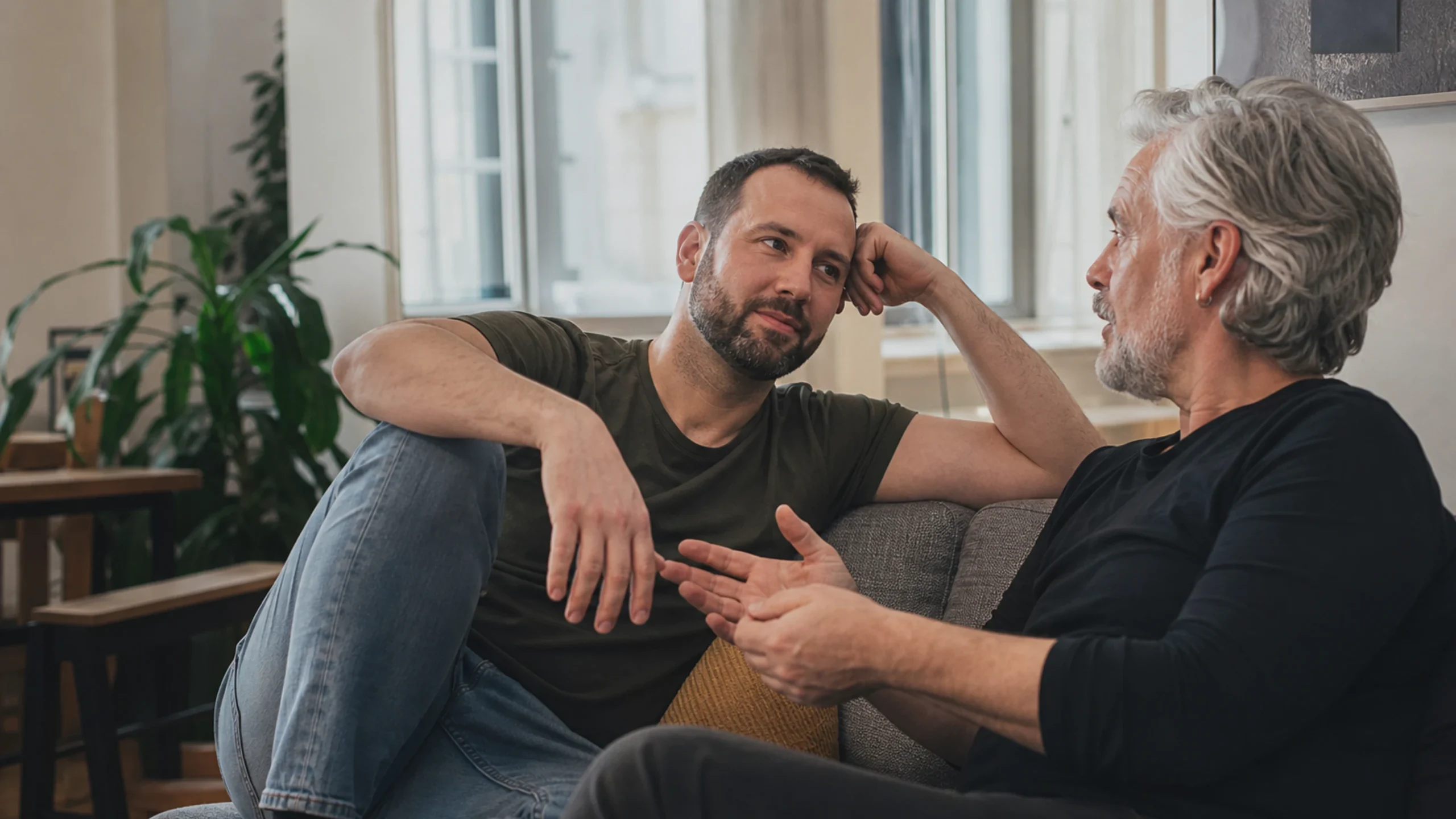
As gay men get older, questions about belonging, attractiveness, and self-worth can become more important. This applies to people in Vienna and in Austria, although every life story is different.
Aging is not always easy. Physical changes, losses, ageism, and minority stress cannot be resolved simply through positive thinking. However, psychological development can begin with a new question: not how to recapture youth, but who a person can become today.
Curiosity does not replace fear or pain. However, it can offer a different perspective and encourage the discovery of new roles, relationships, and aspects of one’s own identity.
Development remains possible as gay men age
iksHaus | KI-generiert nach redaktioneller Konzeption, 2026
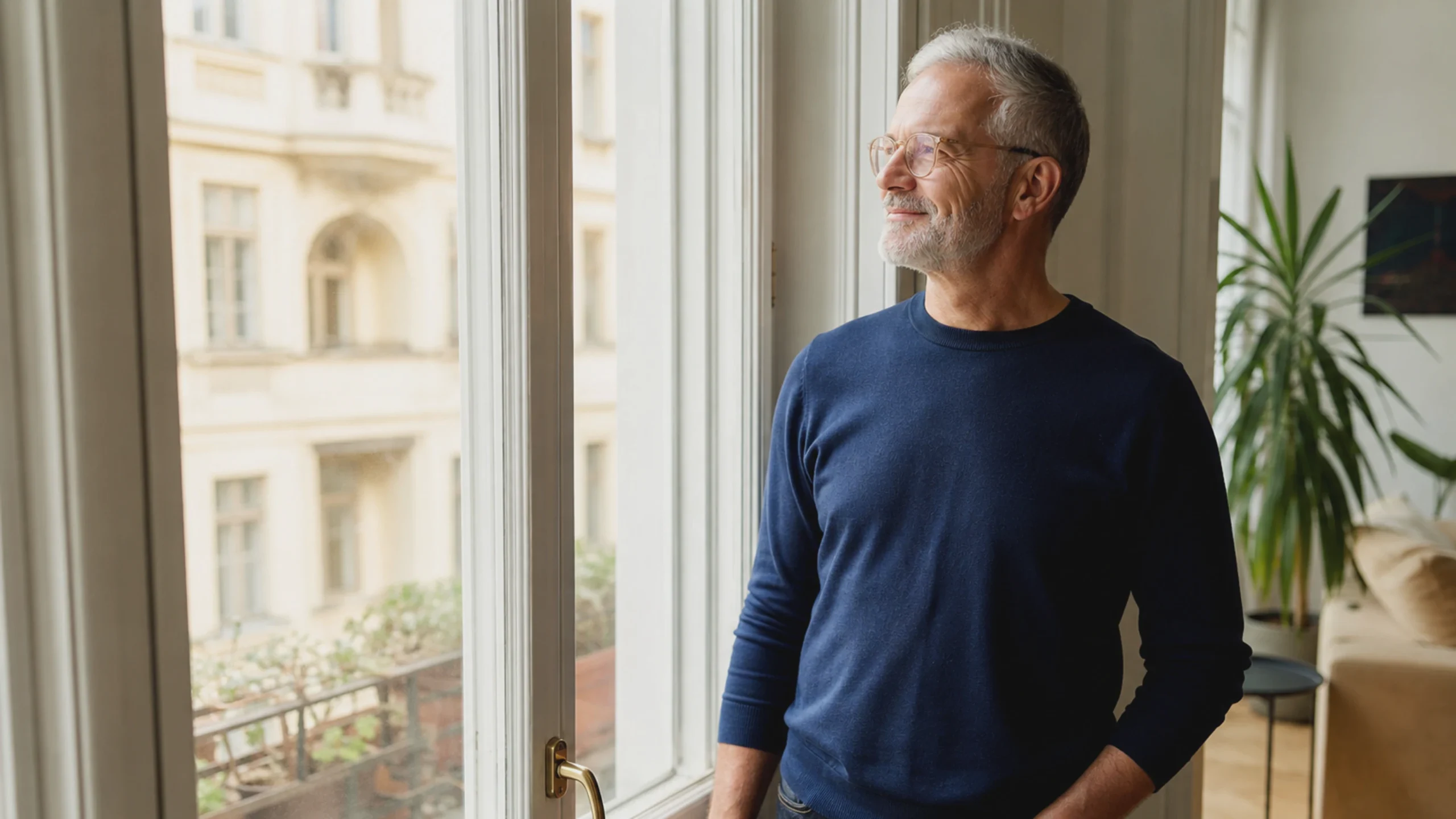
Personal development is often associated with childhood, adolescence, and early adulthood. However, lifespan models in developmental psychology suggest that people also face new developmental tasks in the second half of their lives. Priorities, relationships, and questions change, but development does not end.
For some gay men, aging brings more freedom, allowing them to define their identity not primarily through conformity, protection, or the desire for recognition. Some openly express their sexual orientation later in life. Others base their relationships more on their own values.
Curiosity can serve as a counterpoint to fear. While fear asks what might be lost, curiosity focuses on what can still be discovered. It does not deny difficulties, but rather expands one’s personal range of action.
Sexuality changes, and self-esteem can grow
iksHaus | KI-generiert nach redaktioneller Konzeption, 2026
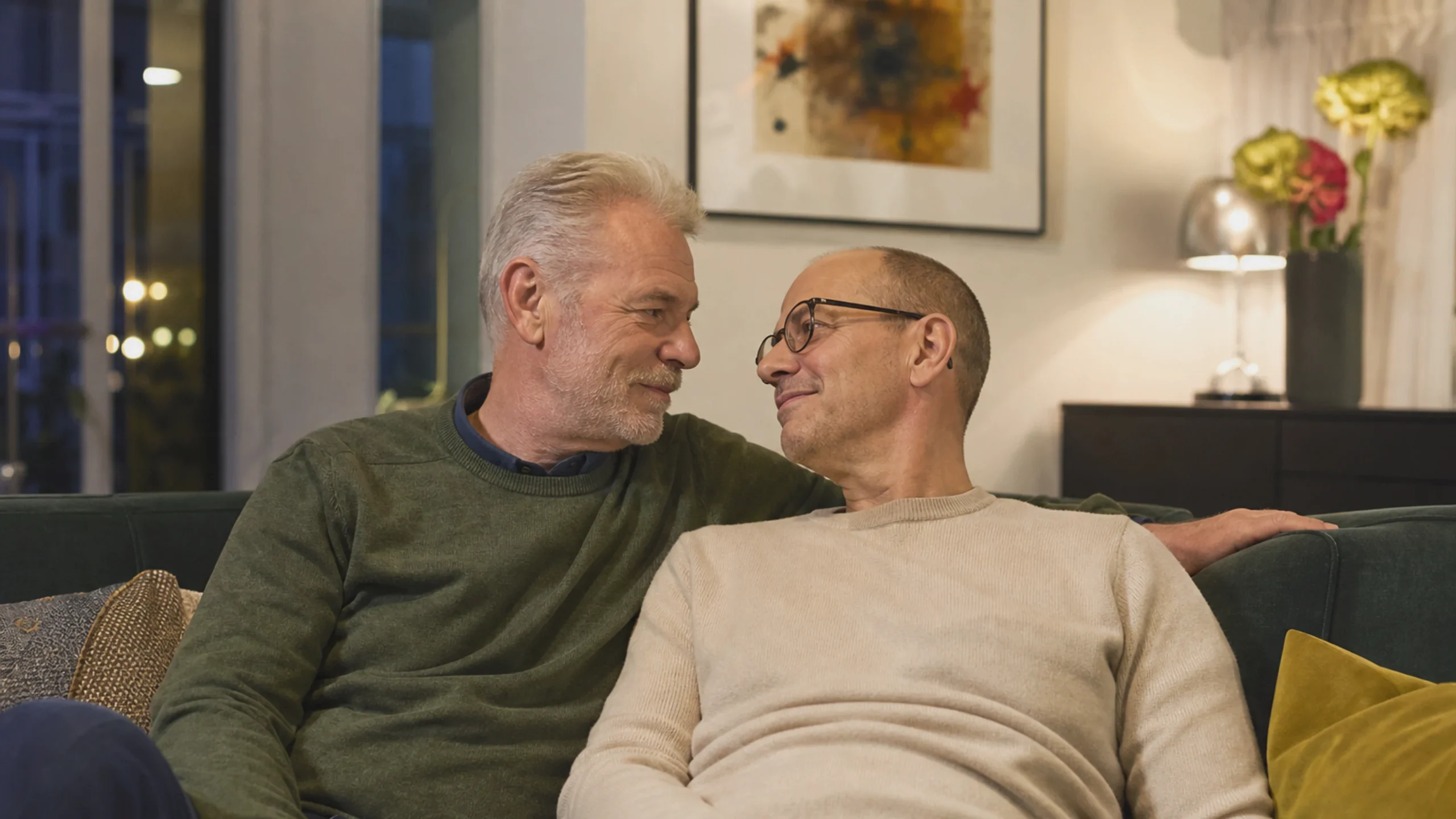
Sexuality does not automatically disappear with age. Bodies, hormones, desires, and relationships can change. The way in which closeness, touch, and intimacy are experienced can also change. The desire to be seen, desired, and loved remains for many people.
Medications to support erectile function can be medically beneficial and help maintain a fulfilling sex life. Psychologically, the question arises whether the sole goal is to preserve sexual function, or whether it is also linked to feelings of desirability, visibility, and personal worth.
There is no universal explanation for chemsex. People participate for various reasons. For some men, the desire to experience intensity, sexual confidence, or desirability may play a role. This perspective is not a moral judgment; it simply explores what need a particular behavior fulfills.
The desire for attractiveness and validation is human. It can become burdensome when a person’s entire self-worth depends on it. In such cases, physical changes or rejections can be experienced as a threat to one’s own identity. A broader sense of self-worth can also be based on relationships, work, creativity, engagement, and reliability.
Chosen families and intergenerational relationships
iksHaus | KI-generiert nach redaktioneller Konzeption, 2026
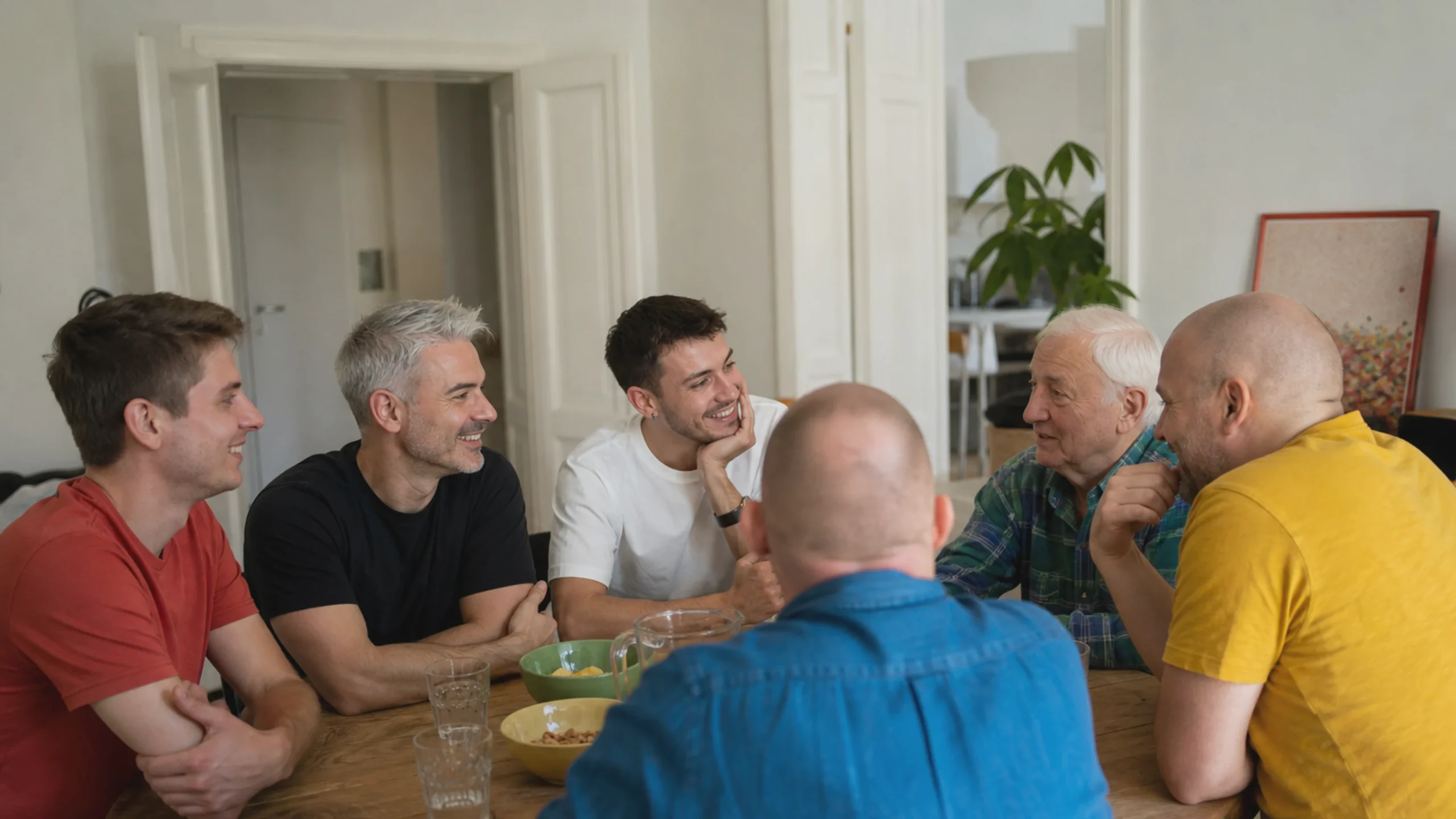
In LGBTQ+ communities, a sense of belonging is not created solely through the family of origin. Friendships, partnerships, colleagues, neighbors, and mentors can become part of a chosen family. These relationships create continuity, security, and emotional connection.
Chosen families do not erase the stress experienced by minorities. However, they can strengthen mental health and resilience, because resilience often grows in relationships where people feel seen, accepted, and understood.
Encounters between generations can also enrich both sides. Younger gay men gain insights into life stories, societal changes, and the personal risks of living openly in the past. Older men encounter new perspectives on community, language, and identity.
This exchange is not a one-way street. Life experience meets new questions, a historical perspective meets future possibilities. Age does not have to be a barrier to belonging. It can become a resource within the community.
Resilience does not make pain disappear
Resilience does not mean never having been hurt. It means that pain is not the only story a person tells about themselves.
As they get older, some gay men develop clearer boundaries, more emotional composure, and a greater freedom to say no. It can also become easier to assess which relationships are truly supportive. This inner peace is not necessarily created because difficulties disappear, but because one’s own worth is less often something that needs to be proven.
Identity is allowed to continue to evolve
Time changes the body and how others perceive it. However, it does not take away from people’s ability to redefine their own worth. Partnerships, friendships, work, creativity, social engagement, and reliability can be components of a sustainable identity.
Identity is not a final state. It remains a lifelong process of development. The opportunity of aging lies not in becoming young again, but in being freer with past expectations and allowing new possibilities.
Psychological Context and Information
The considerations presented are based on developmental psychological lifespan models, research on minority stress and psychological well-being, and professional guidelines for psychological work with sexual minorities. The source material mentions works by Erik Erikson, Ilan Meyer, Carol Ryff, the American Psychological Association, and the World Health Organization, among others.
This article is intended for psychological education and information. It does not replace psychological or psychotherapeutic diagnosis, nor medical advice or treatment. Experiences with aging are individual and are shaped by personal life stories, relationships, and social conditions.
If loneliness, anxiety, depressive symptoms, or persistent psychological distress significantly impair quality of life, support from a qualified professional can be helpful.