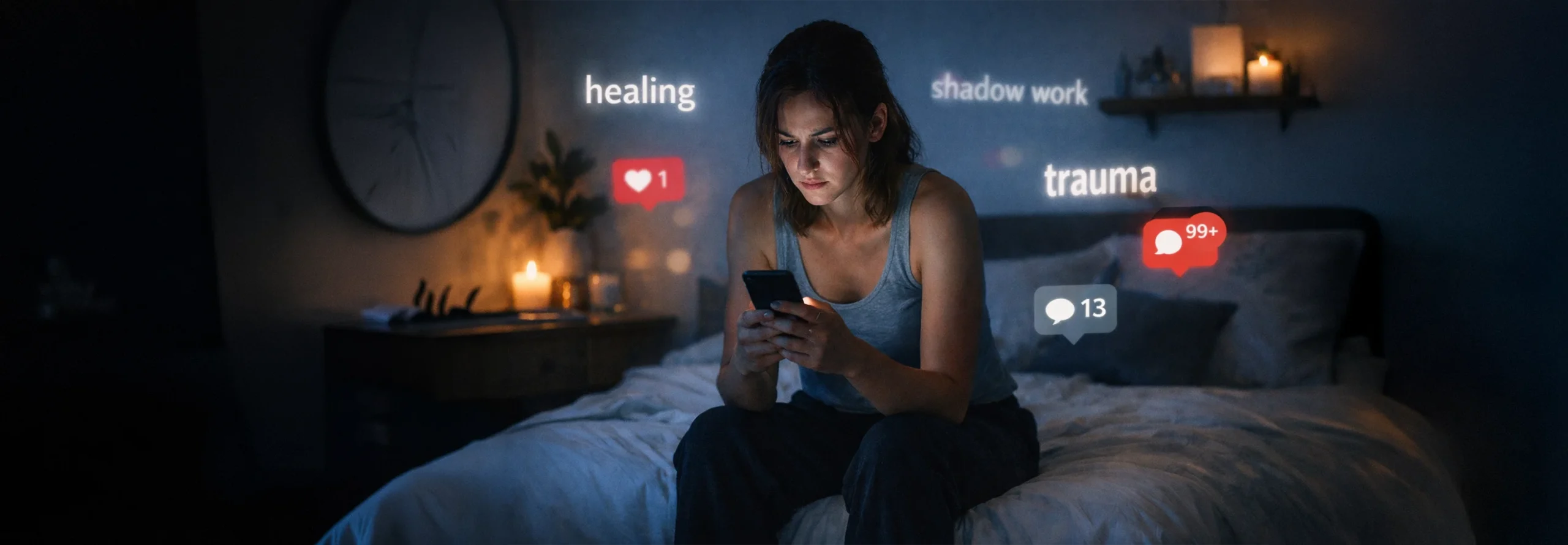
Real Talk: We are all on a “healing journey,” but are we truly stuck in an algorithm? While your feed is full of “shadow work” and nervous system regulation, the pioneers of modern trauma research, Dr. Bessel van der Kolk and Dr. Frank Anderson, have published a blueprint that changes everything you thought you knew about healing.
If you’ve ever seen a quote on TikTok about how your body stores things that your mind wants to forget, then congratulations – you’ve experienced the influence of the book “The Body Keeps the Score” (The Body Keeps the Score) has had a significant impact. Even today, in 2026, this book is the ultimate “GOAT” of mental health, with an incredible 376 weeks on the New York Times bestseller list.
But here’s where the drama begins. Trauma is no longer just a clinical term; it’s become part of our everyday slang, our casual conversations, and our aesthetically pleasing posts. However, while we bought colorful journals for “shadow work,” the complex neurobiology has been reduced to simple slogans. Instead of freeing us, these often keep us trapped in “trauma dumping” and the role of victim.
Why Your “Healing Era” Is Actually Just “Aesthetic” (and Why That’s a Red Flag)
On platforms like TikTok and Instagram, healing has become a visual product. Dr. Frank Anderson warns that algorithms are literally designed to bypass your thinking brain and target your survival system directly.
- Notifications? They trigger your alarm system.
- Likes? They reward the emotional brain like a slot machine.
- Comments? They cause cortisol responses that can last for hours after you log out.
The problem is that Gen Z tends to identify excessively with their traumas. When we label every unpleasant moment as a trauma, we lose the ability to distinguish between ordinary life pain and deep neurobiological wounds that require serious work.
Why “talk therapy” sometimes “misses the mark.”
In a new episode of Mighty Pursuit Podcast, Dr. Van der Kolk dropped a bombshell: Simply talking about a trauma can actually make it worse. Your brain has three levels:
- Survival brain (brainstem): Constantly scans for danger.
- Emotional brain (limbic system): Controls memories and bonding.
- Thinking brain (prefrontal cortex): Helps you think logically.
When you experience a flashback, your “thinking brain” goes offline. The amygdala, your internal smoke detector, goes haywire and releases stress hormones – even when you are safe. Simply recounting the story often doesn’t reach these deep, pre-verbal areas of the brain. Your body continues to believe it is in danger, and you are retraumatized again.
2026 Breakthroughs: How to Actually Heal (No Cap)
Forget the “just think positive” mentality. In 2026, the focus is on a “bottom-up” approach – working on the body to calm the mind.
MDMA-assisted therapy: A study published in 2026 confirms that MDMA temporarily shuts down the amygdala. This allows you to examine your pain without it breaking you again. This is the key to neuroplasticity, which enables you to literally rewrite the reactions of your nervous system.
Neurofeedback and Yoga: These methods teach your brain to regain control over its own functions. Yoga and Tai Chi help to restore the balance of your autonomic nervous system, so that you can feel safe in your own skin again.
The IFS Revolution (Internal Family Systems): Frank Anderson presents the “next chapter” of the IFS model. The message is clear: you are not broken. Your symptoms – whether anxiety, anger, or addiction – are actually “protective parts” of you that want to prevent old wounds from reopening. The goal is not to get rid of these parts, but to access your “Core Self,” which is naturally calm and compassionate.
Blueprint for the Future: “The Science of Being Seen”
One of the most important insights from 2026 is that trauma is not only what happened to you, but also what you carry within you because you didn’t have an “empathic witness.” Healing does not happen in isolation. Although your “Healing Girl Era” may just be beginning, true transformation only occurs when someone truly sees you – not your mask, but your pain, without running away.
Conclusion for 2026: Reclaim your agency Agency. You lead your healing process; the therapist is merely your co-pilot. Instead of searching for quick tips in the feed, start with your breath, your movement, and genuine human connection. Your body stores everything, but you can write a new story for it.