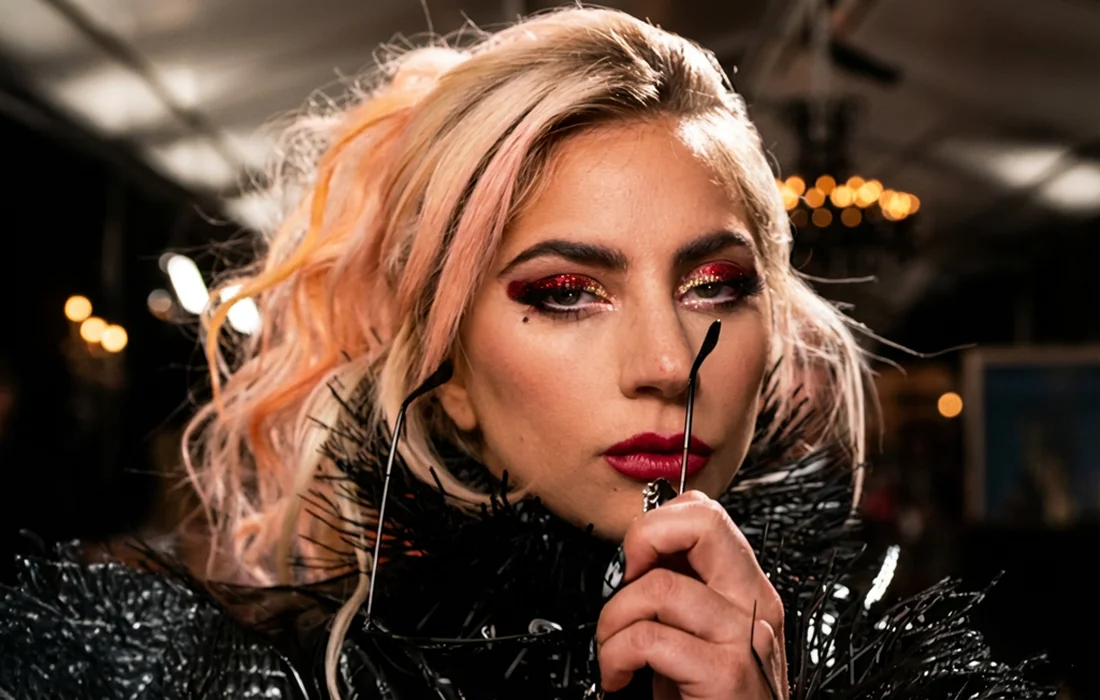
The phenomenon of the gay icon has an important psychological function in modern culture in the development of identity, resilience, and a sense of shared belonging. For the LGBTQ+ community, these individuals go far beyond ordinary fame. They become mirrors, protectors, and almost mythical figures in the process of personal development. This relationship is based on an internal framework of identity that provides support for people in times of social exclusion. At the same time, parasocial bonds are created, which can noticeably reduce the stress experienced by a minority.
“Lady Gaga Grammys 2017” by Rogue Artists, via Wikimedia Commons, under CC BY 3.0 license (Image has been edited).

The Archetype of the Survivor: Lady Gaga and the Embodiment of Trauma
Lady Gaga represents the archetype of the survivor and provides a community with emotional support that is often marked by injuries and trauma. She openly talks about her post-traumatic stress disorder and chronic pain. In doing so, she has changed the way vulnerability is discussed. Gaga shows that trauma can remain in the body. In this way, she creates space for people who experience feelings of dissociation, anxiety, and inner insecurity.

iksHaus | KI-generiert nach redaktioneller Konzeption, 2026
“Cher in 2019 cropped” by Raph_PH, via Wikimedia Commons, under CC BY-SA 4.0 license (Image has been edited)

The Protective Mother: Cher and Symbolic Re-Parenting
Cher embodies the archetype of the protective mother. For young queer people who have experienced rejection from their own families, she can become a symbolic good mother. This inner substitute figure strengthens the self and provides a sense of security. This helps to better cope with negative feelings. In a similar way, Judy Garland also became a strong symbol. Her role as Dorothy Gale and the song Somewhere Over the Rainbow remain to this day a psychological allegory for exile, longing, and the search for a safe home. Her personal resilience inspired many people to escape the grayness of everyday life and find a path towards authenticity.

iksHaus | KI-generiert nach redaktioneller Konzeption, 2026
“Madonna Rebel Heart Tour 2015 – Stockholm” by chrisweger, via Wikimedia Commons, under CC BY-SA 2.0 license (Image has been edited)

Madonna: A model of conscious reinvention and individuation
Madonna is an example of individuation in the sense of Carl Gustav Jung, because she constantly redefines her identity. She breaks down societal contradictions and rigid images of femininity. In doing so, she encourages her fans to embrace sexuality and spirituality without shame. Through her independence, she offers many people a psychological model for self-determination and for consciously shaping one’s own identity.

iksHaus | KI-generiert nach redaktioneller Konzeption, 2026
“Bjork RAH210916-10” by Raph_PH, via Wikimedia Commons, under CC BY 2.0 license.

Björk: The archetype of otherness and fluid authenticity
For many in the queer community, Björk is a symbol of otherness. This is a strong metaphor for the experience of queer people in a heteronormative society. As a bisexual artist, she conveys the idea that it is natural to explore different forms of attraction. Her androgynous appearance and her unusual imagery send a clear message to young people: identity can be sought, explored, and lived, without having to hide.

iksHaus | KI-generiert nach redaktioneller Konzeption, 2026
“Fever Ray Sentrum Scene 2023” by Stiansmoller, via Wikimedia Commons, under CC BY-SA 4.0 license (Image has been edited)

Fever Ray, also Karin Dreijer: A queer manifesto and radical vulnerability
In her art, Karin Dreijer explores non-binary identity, transformation, and masking. Her work feels like a manifesto of queer longing, challenging shame and seeking strength in community. Through unusual costumes and powerful visual staging, she creates spaces where gender roles can be freely questioned. In this way, self-disclosure of sexuality and gender becomes a political act of freedom.

iksHaus | KI-generiert nach redaktioneller Konzeption, 2026
“David Bowie – Zagreb” by Les Zg, via Wikimedia Commons, under CC BY-SA 4.0 license (Image has been edited).

David Bowie: The alien and the triumph over the narrative of the tragic queer
David Bowie holds a central place in the collective mythology of the queer community. He redefined androgyny and showed that being queer is not a tragedy, but something desirable, strong, and fascinating. With the character Ziggy Stardust, Bowie offered a model that differed significantly from the earlier image of the tragic homosexual character, who was often punished or destroyed in literature and film.
A key contribution by Bowie was the metaphor of the alien. Through this alter ego, the feeling of not belonging could be transformed into a feeling of uniqueness and strength. Equally important was his subversion of rigid gender images. Bowie showed that gender and sexuality are not fixed natural laws, but social constructs that can be creatively manipulated. His androgynous appearance was both theatrical and powerfully sexual. In doing so, he made masculinity thinkable outside of narrow boundaries.
Bowie’s work also reflects a constant process of individuation. His art seems like an attempt to bring together different aspects of the self and to form a more complete identity. His time in Berlin also played an important role. His relationship with the transgender woman and cabaret artist Romy Haag was significant for his personal and artistic development. She became a reflection of his longing for authenticity.

iksHaus | KI-generiert nach redaktioneller Konzeption, 2026
“Rainbow Parade 2007 Alfons Haider-2” by Christian Kadluba, via Wikimedia Commons, under CC BY-SA 2.0 license (image has been modified).

The Austrian perspective: The triumph of authenticity and social change
In Austria, Conchita Wurst became a global symbol of gender diversity. With her victory at the Eurovision Song Contest in 2014, she transformed rejection into admiration. Vienna is now considered an important center of queer culture. In this environment, personalities like Conchita Wurst and visibility pioneers like Alfons Haider play an important role because they reduce isolation and provide queer people with public role models. For young people in particular, the importance of role models who embody openness, change, and diversity is increasing.

iksHaus | KI-generiert nach redaktioneller Konzeption, 2026
“Josipa Lisac” by Robert, via Wikimedia Commons, under CC BY-SA 4.0 license (image has been modified).

The Croatian context: From Josipa Lisac to minority stress
In Croatia, icons like Josipa Lisac are an important counterweight to strong traditional values. Josipa Lisac repeatedly emphasizes the sensitivity and vulnerability of the queer community, thereby giving it social recognition. In an environment where shame, pressure, and minority stress are still high, such voices are particularly important. They create recognition where silence, uncertainty, or rejection often prevail.
Conclusion
Gay icons such as David Bowie, Björk and Fever Ray expand the classic field of queer role models to include themes such as non-binary identities, transformation, and fluid identities. They provide an internal framework for identity where familial and societal structures are insufficient. This creates a symbolic space where shame gradually gives way to pride.