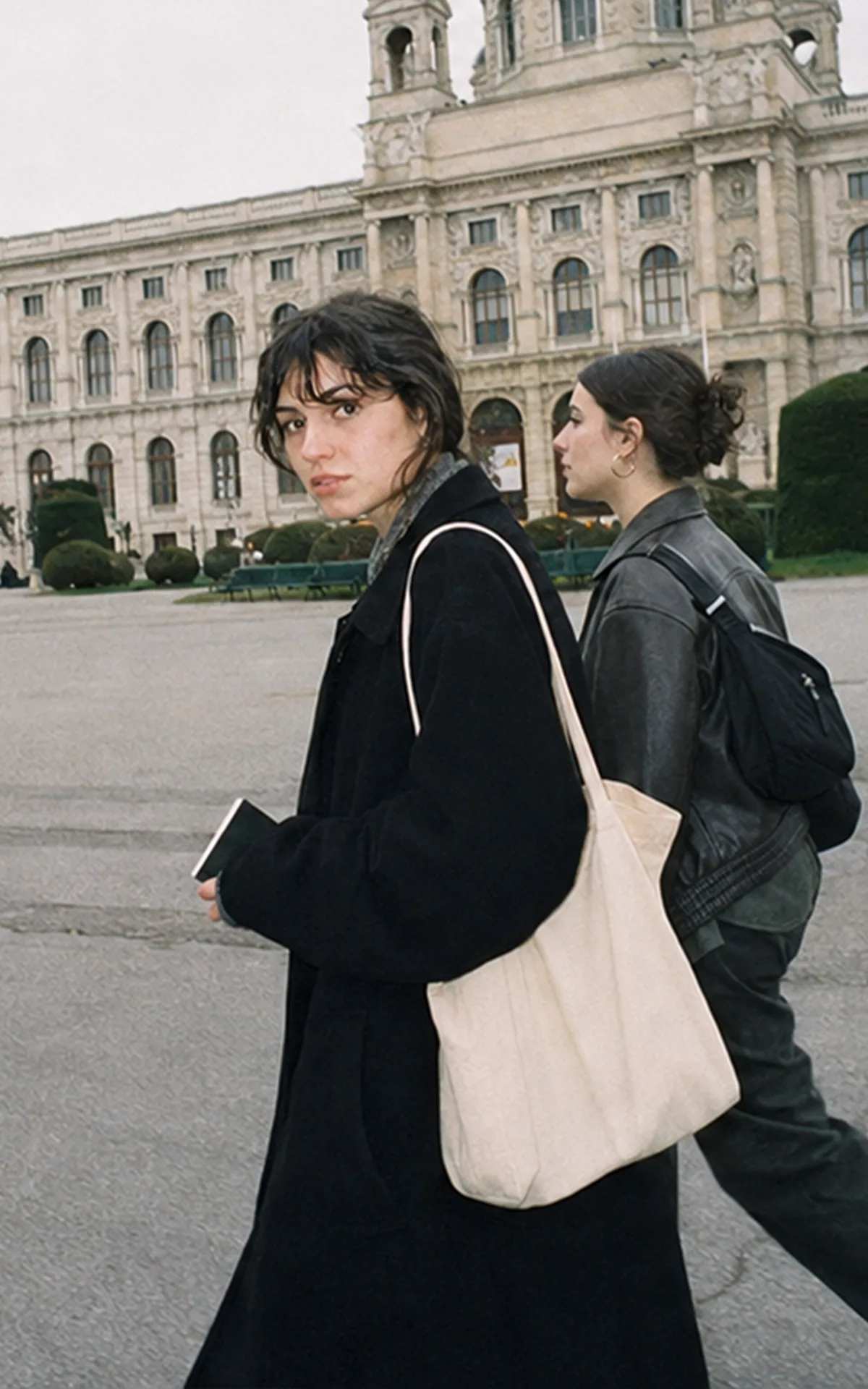
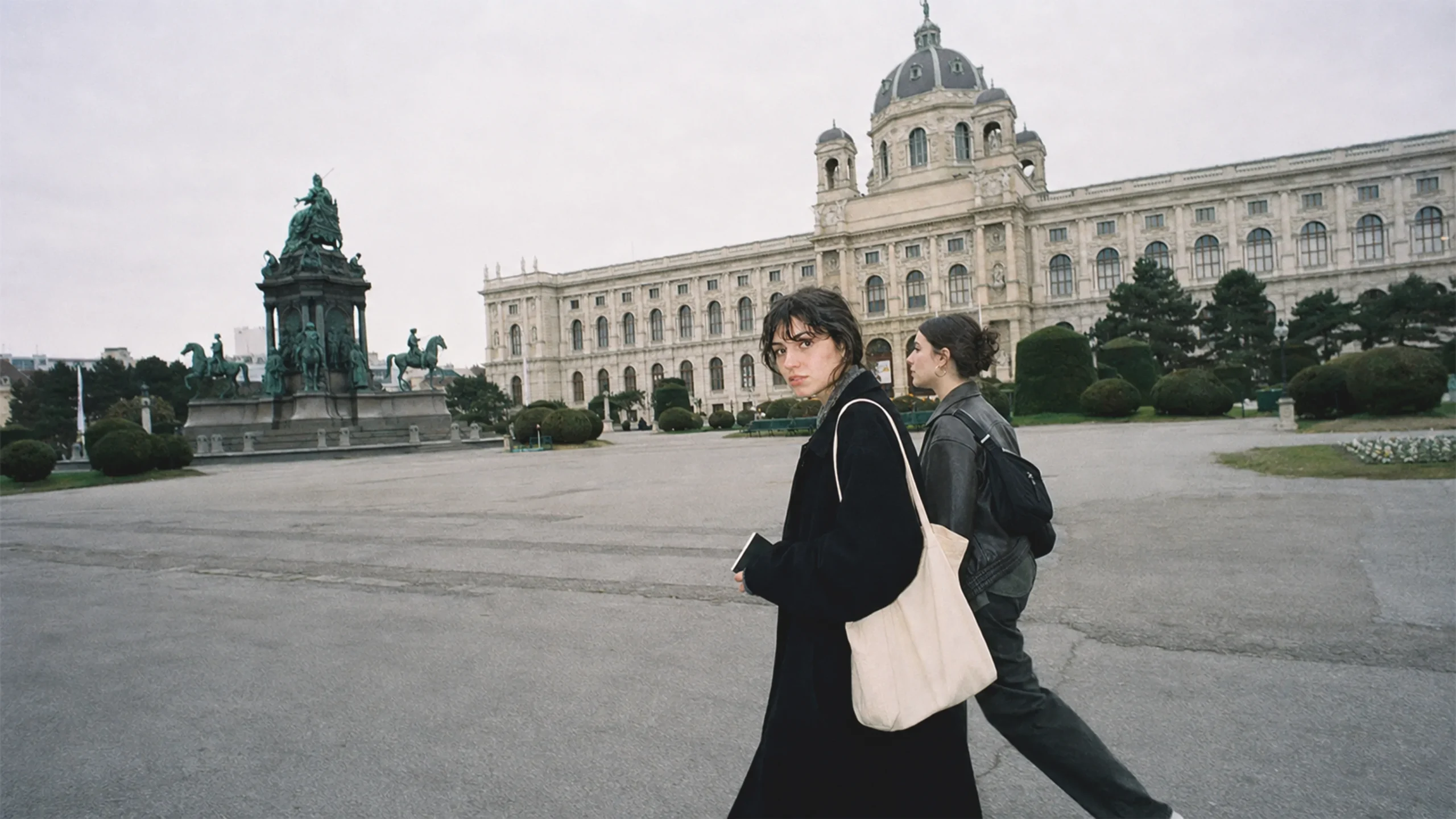
In 1876, Vienna was in the midst of a profound transformation. The Ringstraße was transforming the city center, new institutions were making science and culture publicly visible, and a prosperous bourgeois society was developing its own forms of representation. From this very year come two Viennese names that are now known worldwide: the Natural History Museum in Vienna and the Hotel Sacher.
At first glance, the two institutions could hardly be more different. One collects, researches, and presents objects from nature and human history. The other represents hospitality, culinary tradition, and a consciously cultivated form of Viennese luxury. However, their joint anniversary shows how much institutions shape the urban landscape. It also shows that a birthday does not automatically require the same type of celebration.
The Natural History Museum is using its 150th anniversary to critically reflect on its own collection history. The Hotel Sacher emphasizes continuity, family, and international recognition. Together, these perspectives create a multifaceted portrait of Vienna, between knowledge, representation, and a global brand.
Why the Natural History Museum is celebrating its anniversary in 2026
The current building of the Natural History Museum was officially opened in 1889. Nevertheless, the anniversary refers to the year 1876. On April 29 of this year, Emperor Franz Joseph I founded the museum in a legal sense. The following day, he appointed the geologist Ferdinand von Hochstetter as the first director. The monumental building on the Ringstraße was still in the planning and construction phases at that time.
This distinction is more than just a historical footnote. It highlights the fact that a museum does not simply come into existence when its doors open. It requires an organizational structure, scientific goals, collections, staff, and a vision of the public to which the knowledge is intended. The Natural History Museum (NHM) was part of a comprehensive project aimed at bringing together the imperial natural history collections into a modern institution.
Today, the museum is one of the most important natural history museums in Europe. Its collections range from minerals and meteorites to fossils, zoological specimens, and prehistoric objects. However, size alone is not a sufficient basis for a jubilee celebration. What is crucial is how a museum deals with the conditions under which its collections were created.
iksHaus | KI-generiert nach redaktioneller Konzeption, 2026
“Good Collecting – Bad Collecting”
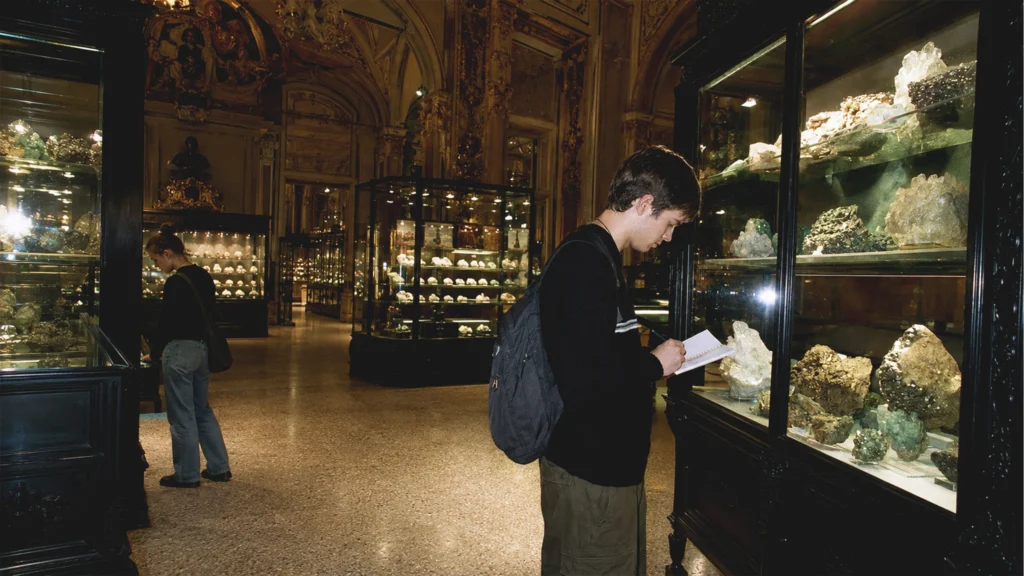
The anniversary exhibition “Good Collecting – Bad Collecting. 150 Years of the Natural History Museum Vienna” opened on April 28, 2026. Even the title resists a simple heroic narrative. Collecting is presented as the foundation of scientific knowledge, but also as a practice with problematic aspects.
Many natural history collections originated during periods of colonial expansion, unequal power dynamics, and different scientific standards. Objects could have been purchased, exchanged, excavated, looted, or removed from their original contexts without adequate consent. Human remains and sensitive cultural objects also pose ethical questions for museums today, which cannot be answered simply with historical labels.
The NHM therefore juxtaposes the joy of discovery and research with the darker sides of collecting. This tension is productive. It reminds us that scientific value and problematic origins can coexist. A critical exhibition must make both visible, without allowing responsibility to disappear into abstract formulations.
This changes the perspective for visitors. A specimen or mineral is not just a spectacular object in a display case. It has a history of acquisition, research, and interpretation. Who collected it? Under what conditions did it come to Vienna? What names were given to it? What perspectives were missing in the previous presentation? These questions do not weaken a museum; they make its work more understandable.
An anniversary as a form of self-reflection
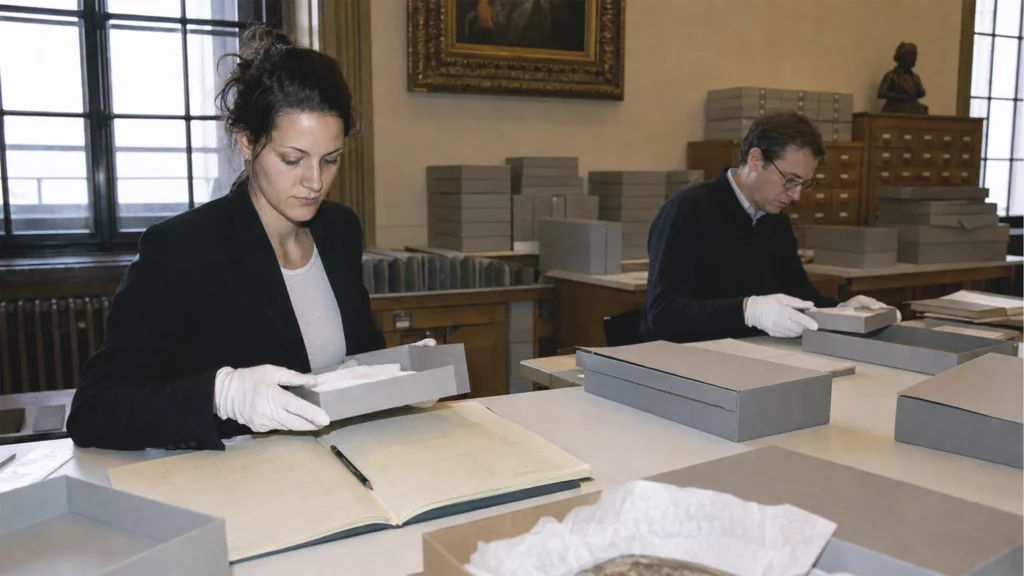
Museums have long been presented as neutral repositories of knowledge. In reality, they select, organize, describe, and create connections. Every label and every spatial arrangement influences what an audience perceives. The anniversary of the Natural History Museum is particularly compelling when the institution does not position itself outside of history, but rather shows itself as part of its political and social conditions.
iksHaus | KI-generiert nach redaktioneller Konzeption, 2026
This critical reflection does not devalue research and preservation. Rather, it strengthens the conditions for a modern scientific institution. Transparent provenance research, cooperation with communities of origin, sensitive communication, and, where appropriate, restitution are now part of a credible museum practice. The 150th anniversary thus becomes an interim assessment, not an endpoint.
The Hotel Sacher and the creation of a Viennese icon
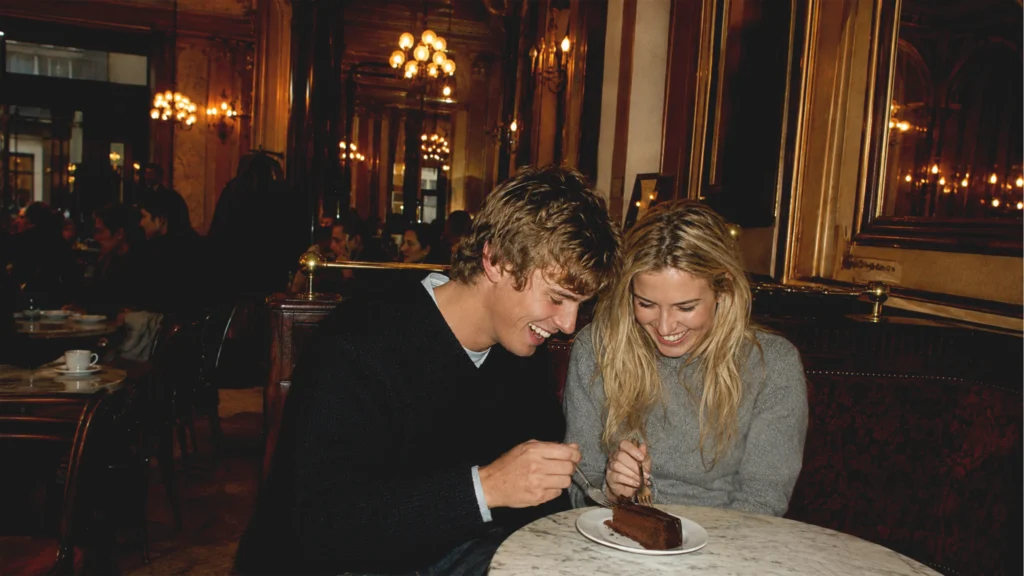
Just a few minutes’ walk from the NHM, the Hotel Sacher tells a different story from 1876. Eduard Sacher, son of Franz Sacher, opened the hotel opposite the State Opera. The name was already associated with the chocolate cake that Franz Sacher is said to have developed in 1832 for the court of Prince Metternich. With the hotel, a place was created where gastronomy, society, and the international perception of Vienna permanently came together.
After Eduard Sacher’s death, his wife, Anna Sacher, shaped the hotel. She became one of the most well-known hostesses of her time and ran the hotel with a distinctive personal style in an industry dominated by men. Under her leadership, the Sacher developed into a social meeting place for aristocracy, politics, art, and an international audience.
The history was far from straightforward. The establishment experienced the downfall of the monarchy, economic crises, changes in ownership, war, and the period of occupation. Its current image appears timeless, but it is the result of continuous adaptations. Tradition remains economically and culturally effective only when it is constantly reinterpreted.
Family ownership, luxury, and global recognition
Hotel Sacher Wien is now one of the few family-run, five-star superior hotels in private ownership. In its anniversary year, the company emphasizes this continuity. It is a central part of the brand: the aim is to create an experience defined not by an anonymous corporation, but by a concept of hospitality developed over generations.
iksHaus | KI-generiert nach redaktioneller Konzeption, 2026
For its 150th anniversary, the hotel has received international recognition. It was included in the list “The World’s 50 Best Hotels 2025,” and according to Sacher, it was the only hotel from the DACH region in the ranking. The award was given in 2025, but it clearly resonates with the anniversary year. It confirms that the establishment is not only sustained by its historical reputation, but also thrives in the global luxury hotel market.
However, this success story should not be equated with the entire city. The Sacher represents an exclusive side of Vienna, which for many people is more of a symbol than an everyday experience. Precisely because of this, a closer look is worthwhile. The institution sells not only rooms and cakes, but also a cultural promise: Vienna should appear elegant, discreet, traditional, and enjoyable.
Two ways to pass on history
The NHM and Hotel Sacher represent two very different forms of institutional memory. The museum must explain how knowledge and collections were created under changing power structures. The hotel preserves rituals, spaces, recipes, and service styles, while meeting the expectations of an international audience.
Both institutions strive for authenticity, but authenticity means something different for each. At the museum, it is achieved through verifiable research, accurate context, and transparency. At the hotel, it is created through atmosphere, craftsmanship, and the credible preservation of a narrative. Both require effort. None of this is maintained automatically.
This joint anniversary year invites a small Viennese experiment. In the morning, one can reflect at the Natural History Museum on how objects came to be part of a collection and how institutions take responsibility. Later, one can observe, just a few streets away, how a luxury hotel translates history into a present-day experience. There is no simple contradiction between these two places; rather, there lies the complexity of a city that is simultaneously a research center, a tourism brand, a living space, and a historical backdrop.
150 years after 1876, the Natural History Museum and the Hotel Sacher do not tell the same story. However, both demonstrate how Vienna organizes its past in the present. One does this through critical self-reflection, the other through consciously staged continuity. It is precisely in this difference that the anniversary year becomes interesting.