

Finding mental health support in Vienna can be challenging due to jurisdictional complexities and separate systems. Depending on the situation, options may include medical treatment, psychosocial counseling, support in the workplace, or services for family members.
The Mental Health Guide Vienna, published in July, brings together organizations from healthcare, social services, employment, education, and informal care. This public atlas was created at MedUni Vienna as part of the STREAMLINE research project.
This resource is aimed at adults, as well as children, adolescents, families, and caregivers. Unlike traditional directories, it views mental health not solely as the responsibility of psychiatry and psychotherapy.
Why mental health support in Vienna needs guidance

iksHaus | KI-generiert nach redaktioneller Konzeption, 2026
The STREAMLINE research project began in 2023. Its goal was to systematically document services for mental health in Vienna, analyze their utilization, and develop comparable information on costs.
The assessment identified 368 organizations and approximately 6,900 individual service providers. These include psychotherapists, psychologists, and specialists in psychiatry. The analysis also revealed regional differences. Specialized services for specific age groups or target groups are relatively rare. Furthermore, the actual costs of individual services are not always transparent.
A large range of services does not automatically mean they are easily accessible. In stressful situations, extensive research, phone calls, and unclear responsibilities can create additional obstacles. This guide does not eliminate these bottlenecks, but it can facilitate the search for a suitable starting point.
Support extends beyond the doctor’s office

iksHaus | KI-generiert nach redaktioneller Konzeption, 2026
The atlas includes services in the areas of health and social services, as well as employment, education, and informal care. This demonstrates that mental health issues can affect multiple areas of life simultaneously. These include, among other things, sleep, relationships, work, school, financial stability, and everyday tasks.
The type of support that is appropriate depends on the specific situation. Options may include medical treatment, a counseling center, support for returning to the workforce, or assistance for the family. This cross-sectoral approach makes these different avenues visible.
Family members are explicitly considered. Family members and caregivers often coordinate appointments, accompany those affected, or experience their own stressors. The guide aims to show them possible points of contact as well.
The atlas highlights available services and existing gaps
iksHaus | KI-generiert nach redaktioneller Konzeption, 2026
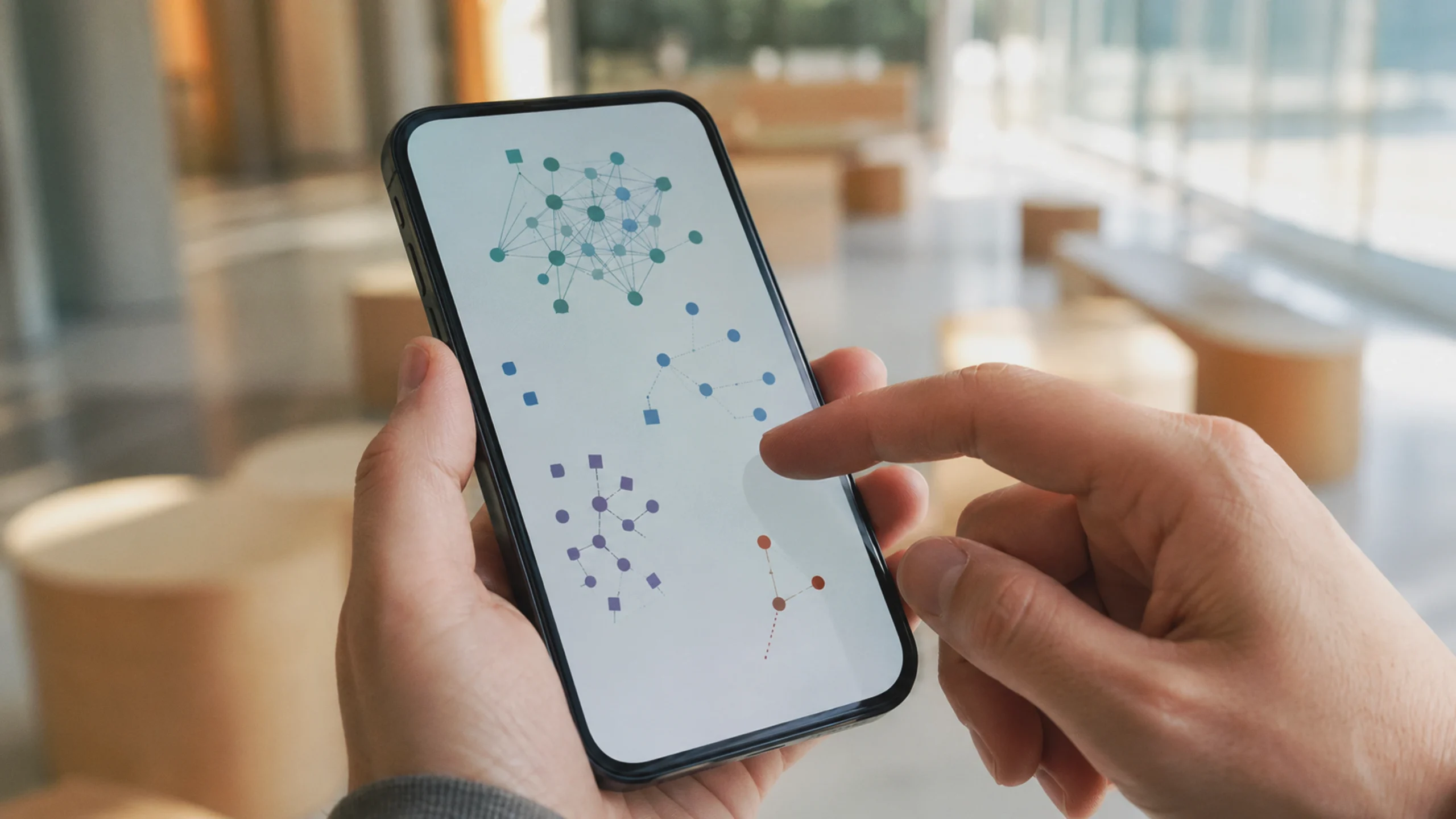
The guide is a practical tool and also the result of a scientific assessment. It shows existing structures and, in doing so, also identifies areas where services are sparsely distributed, difficult to access, or inadequately connected.
The researchers behind STREAMLINE point out that almost one in five people in Austria experience mental health problems. The need for easily accessible and better-coordinated services is increasing. This assessment does not mean pathologizing every stressful life event. It emphasizes the importance of a comprehensible healthcare system.
For Vienna, the atlas provides a broader overview of potential points of contact. However, the fundamental task remains: a service that is found must also be accessible, affordable, and available in a timely manner.