
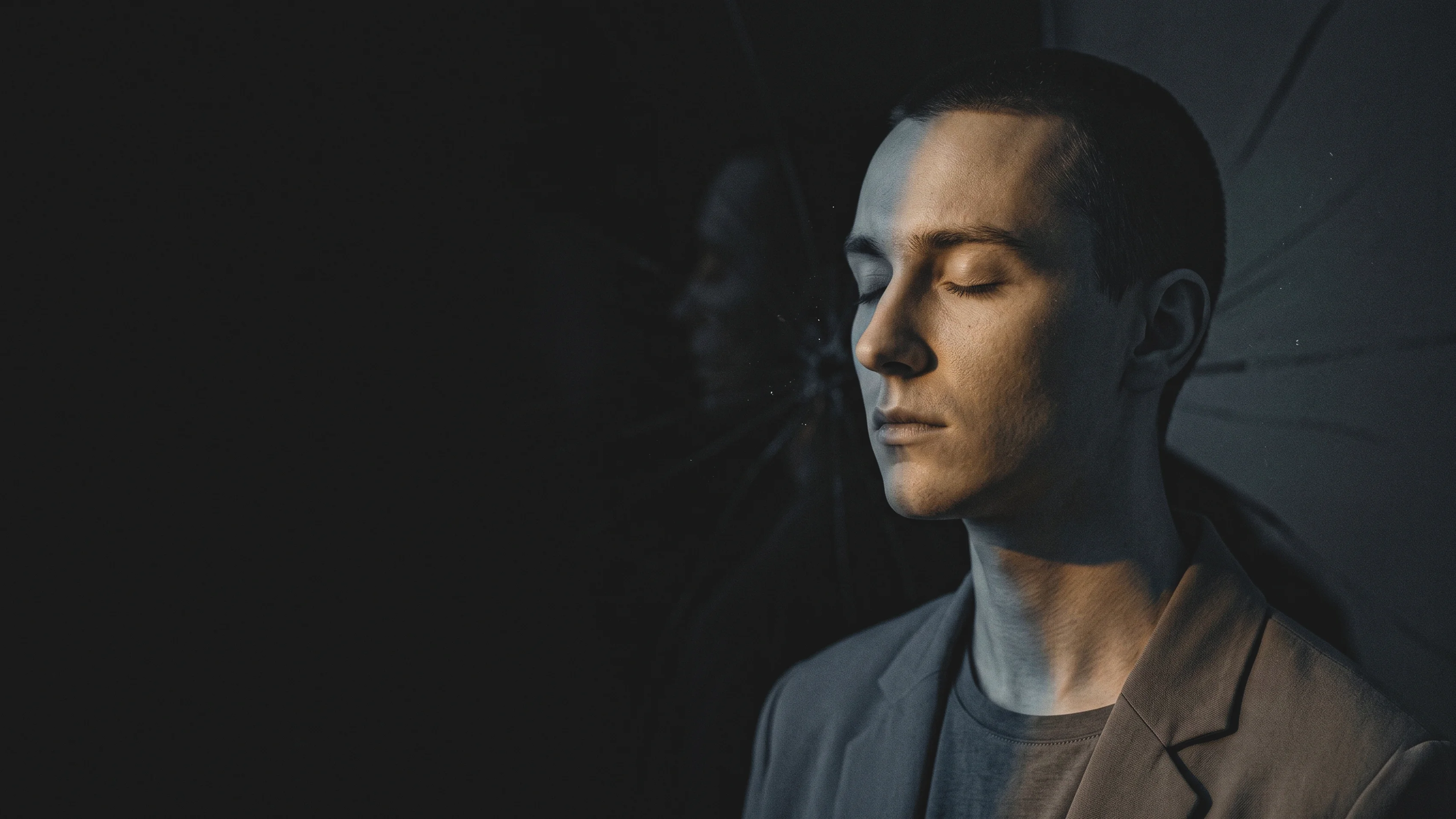
When Leon Festinger formulated the theory of cognitive dissonance in 1957, he could not have foreseen the digital world in which we encounter numerous contradictions every day. Nevertheless, he precisely described how people react. The discomfort when reality and belief do not align has remained and has even intensified.
Historical examples in the LGBTIQ+ context—such as medical pathologizing and social stigma before the Stonewall riots—have clear modern parallels. The main difference now is that these contradictions are more visible than ever.
Interpersonal Level: Closeness That Breaks Stereotypes
One of the clearest forms of cognitive dissonance is evident in the closest circles: Imagine a parent who, filled with fear and insecurity, believes that LGBTIQ+ people are “confused” or “immoral,” when suddenly their own child reveals their identity in tears. Here, not only knowledge, but also love, care, hope, and concern collide: “I love my child and want to protect them.”
“People like my child are problematic.”
This is the purest form of dissonance—a tear through the heart and through beliefs.
Research shows that parents react differently: Some gradually change their attitude, others rationalize, for example, with “It’s just a phase,” or accept selectively, e.g., “I accept you, but please not publicly.” The tension between closeness and previous beliefs makes this dissonance particularly strong and transformative.
Society exhibits a similar pattern. Studies suggest that direct contact with members of stigmatized groups often reduces prejudice, but not always. If someone holds strong pre-existing beliefs, encountering someone from that group can lead them to resist change and reinforce stereotypes.

iksHaus | KI-generiert nach redaktioneller Konzeption, 2026
iks.haus | AI-generated based on editorial concept, 2026.
Internal tensions: Dissonance within the community
Within the LGBTQ+ community, dissonances arise in debates about visibility, identity, and strategies. For example, the media and studies discuss tensions surrounding transgender rights within feminist or LGBTQ circles.
Those who see themselves as advocates for equality but harbor internal doubts about the identity of others often experience this dissonance as a painful conflict. It can encourage honest self-reflection, but it can also lead to contradictory reactions – a struggle for belonging and a desire to regain inner peace.
The media often reduces this dynamic to simple conflicts. However, the psychological mechanism that Festinger described remains crucial.
Societal and political level: Dissonance in times of polarization
At the societal and political level, cognitive dissonance becomes a collective phenomenon. Over the past 10 years, numerous studies and reports from organizations such as Freedom House or Human Rights Watch have documented developments that some analysts describe as “democratic backsliding.” This refers to a gradual weakening of liberal democratic norms in certain Western societies.
Many citizens still see themselves as defenders of freedom, pluralism, and human rights. At the same time, political measures are implemented that, for example, restrict the rights of LGBTQ+ individuals – such as in education or in the public expression of identity. In such cases, a potential dissonance arises between declared values and the policies supported.
This dissonance is resolved in different ways: restrictions are presented as “child protection” or “preservation of tradition,” individual incidents are used to justify broader measures, or problems are denied.
These patterns are regularly analyzed in today’s media and academic works, particularly in the context of debates about legislation in areas such as gender identity and education.
Digital media reinforces these patterns. Algorithms filter content, so people mostly see information that aligns with their views. This means they are less likely to encounter differing opinions, and when they do, it can feel jarring.
Between Discomfort and Change

iksHaus | KI-generiert nach redaktioneller Konzeption, 2026
iks.haus | AI-generated based on editorial concept, 2026
From Stonewall to the present day: societal change causes psychological discomfort. Cognitive dissonance is both a driving force and a brake on societal transformation.
Interpersonally, it can break down prejudices through proximity. Within groups, it can open or deepen divisions. Politically, it shapes how societies justify their contradictions.
Ultimately, the question remains: how do we react to dissonance? Does it lead to self-reflection, or is it a reason to cling to the familiar?
Festinger’s insight remains uncomfortably relevant: people do not always seek the truth. Often, they seek a way to coexist with it.