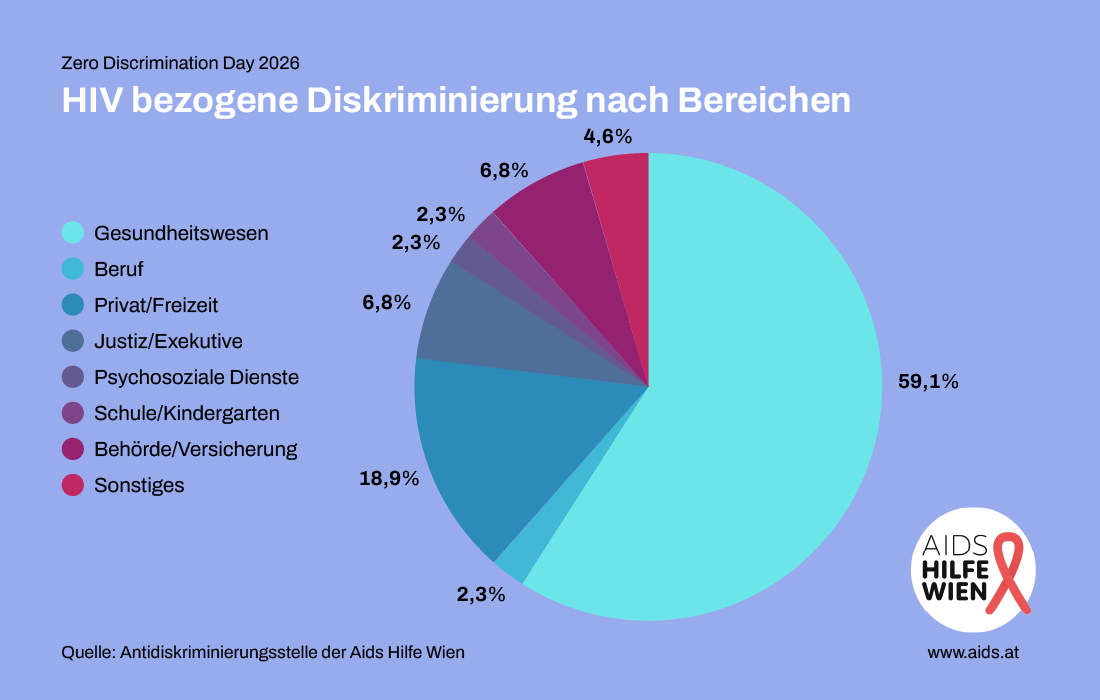
HIV is now medically well-treatable and is considered a chronic infection. Nevertheless, people with HIV continue to experience discrimination, especially in the healthcare system. On the occasion of Zero Discrimination Day on March 1st, Aids Hilfe Wien is drawing attention to current evaluations of reported cases of discrimination. They clearly show: a problematic gap still exists between the current state of medical knowledge and actual practice.
Healthcare remains the main area of concern
Approximately 60 percent of all reported cases of discrimination involve the healthcare system. While the percentage has decreased slightly compared to the previous year, no fundamental improvement is apparent. The incidents range from excessive hygiene measures—such as wearing gloves that are not medically necessary in the situation after an HIV diagnosis is revealed—to the denial of medical treatment. The medical facts are clear: according to international medical standards, the treatment of people with HIV does not require any additional hygiene measures beyond the general hygiene rules that apply to all patients.
“It is shocking that people with HIV still experience discrimination in the healthcare system in 2026 – often due to false assumptions, lack of knowledge, or outdated ideas,” says Dr. Mirijam Hall, chair of Aids Hilfe Wien. “The medical progress is clear, but it is not yet reflected everywhere in practice.”
Many reservations are demonstrably based on a lack of knowledge. Legal obligations that do not exist are often assumed—such as the obligation to disclose an HIV diagnosis during doctor’s visits. Also, unsubstantiated allegations that those affected do not reliably take their medication and thereby endanger others are not valid.
Discrimination extends into private life
The reports indicate that discrimination continues to be most frequently experienced in the healthcare sector (59.09%) and in private and leisure settings (15.91%), while it is reported significantly less often in other areas.
In the private sphere, individuals report being rejected by family members, friends, or former partners. Police reports (related to threats, assault, etc.) during conflict-ridden separations are particularly distressing – even though, with consistent antiretroviral therapy, there is no risk of HIV transmission. The scientifically recognized principle “U=U” (“undetectable = untransmittable”) states that people with HIV whose viral load is below the detection limit thanks to antiretroviral therapy cannot sexually transmit the virus. Even though such proceedings are often dismissed, they cause significant psychological distress for those affected and reinforce stigmatization. A new development in 2026 is that, for the first time, reports of discrimination have also been received from areas that were previously considered less problematic – including the education sector (kindergarten/school) and the psychosocial sector.
A common thread running through all the reports is the deep uncertainty experienced by those affected. Many react with shock, are emotionally distressed, and are unsure about what information they need to disclose. Nevertheless, many consciously choose to report discrimination in order to protect others from similar experiences.
Successes show: Education has an impact
However, there is also progress. The Human Rights Advisory Board of the Parliamentary Commissioner for the Rights of Persons with Disabilities has determined that people with HIV can no longer be automatically excluded from police service. In the area of child and youth work, a regulation that was no longer objectively justified has been removed.
At the same time, the demand for workshops offered by Aids Hilfe Wien is increasing significantly. Doctors and healthcare professionals are increasingly actively contacting the organization to deepen their knowledge in their daily medical practice. The training sessions are regularly evaluated and show a measurable impact in reducing fears and prejudices.
The central demand of Aids Hilfe Wien for Zero Discrimination Day is:
“The medical progress against HIV is a reality. However, it is crucial that this knowledge is conveyed and consistently applied in curricula and in everyday professional practice. Only in this way can a culture of respect and equal treatment be sustainably established in the healthcare system, and structural discrimination can be effectively reduced.”
Contact information
Juliana Metyko-Papousek, BA
+43(0)1/59937-82 /
metyko@aids-hilfe-wien.at