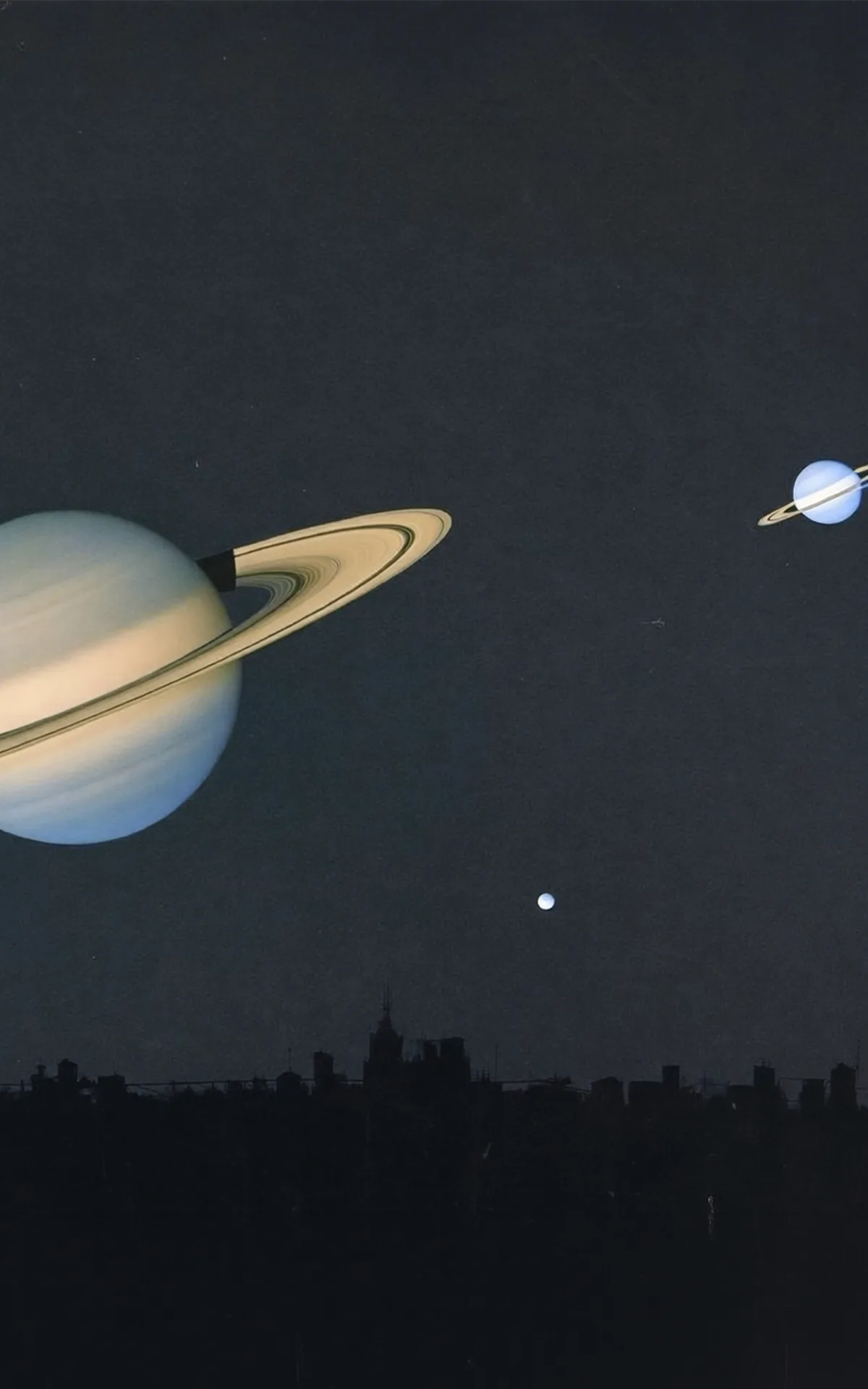
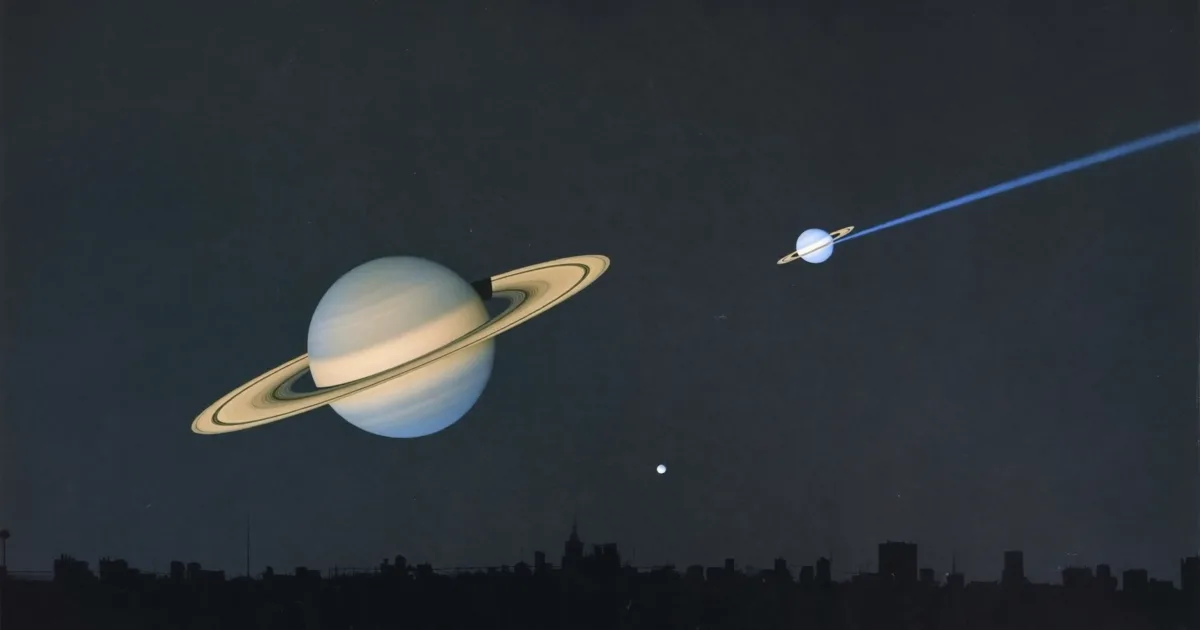
Within a single week in July 2026, three planets will change direction: Mercury ends its retrograde motion on July 23rd, Saturn becomes retrograde on July 26th, and Neptune has already been retrograde since July 7th. Astronomically, this is a matter of perspective: an apparent movement that arises from the relationship between the Earth’s and the planet’s orbit. Astrologically, it is considered a signal for an internal shift. The height of summer will thus become one of the most intense astrological phases of the year, in which fast and slow forces overlap.
What does retrograde actually mean?
No planet actually moves backward. What we call retrograde is an optical illusion that occurs because the Earth and the planet move around the Sun at different speeds. When the faster Earth overtakes an outer planet, it appears to briefly stop and move backward against the background of stars, similar to how a slower train appears to be moving backward when viewed from a window. The planet itself continues on its orbit undisturbed.
Before a planet changes direction, it appears to almost stand still for a few days. Astrology calls this moment the station: the retrograde station at the beginning and the direct station at the end of the phase. Around these stations, the influence of a planet is particularly noticeable because its energy seems to be concentrated at a single point. For example, Mercury will be at approximately 16 degrees in Cancer at its direct station on July 23, 2026, and the movement will resume there.
In addition, there is what is known as the “shadow phase.” A retrograde planet traverses the same degree of arc three times: once forward, once backward, and a third time forward again. This forward and backward movement explains why a Mercury retrograde period often feels longer than the core phase. It is only when the planet reaches the starting point of its loop again that the period is considered complete; for Mercury, this will be on August 7, 2026.
How often and how long this occurs depends on the specific planet. Mercury, the fastest planet, goes retrograde three to four times a year, for approximately three weeks each time. The slower outer planets, such as Saturn and Neptune, only reverse direction once a year, but over a period of many months: Saturn in 2026 for about 137 days, and Neptune for more than five months. The fact that three of these reversals occur in the same week in July is purely a matter of orbital mechanics, but for astrological interpretation, it creates a clear theme.
In astrological tradition, a retrograde planet represents an inward-directed energy. What the planet normally expresses outwardly shifts during this phase to focus on reflection, review, and repetition. It is important to note that astronomy and astrology describe the same sky, but interpret it differently. The backward movement is a measurable fact; the meaning attributed to it belongs to the astrological symbolic language and is not a scientific mechanism. Retrograde periods are not considered phases of major new beginnings in this language, but rather phases of re-examination: refining, concluding, and revising.
Retrograde does not mean standstill, but rather a shift in perspective towards the inner world.
iksHaus | KI-generiert nach redaktioneller Konzeption, 2026
Mercury direct, Saturn and Neptune retrograde: who is doing what?
Mercury represents intellect, communication, technology, short distances, and contracts. Since June 29th, it has been retrograde in the sign of Cancer, a water sign associated with home, family, memories, and emotions. In this combination, the focus is less on facts and more on the emotional undertones of conversations: old messages, unspoken sentences, and family-related topics. On July 23rd, Mercury will again become visible in its direct motion. Mental clarity returns, and conversations and decisions resume. However, it will not be fully over until August 7th, when Mercury leaves its shadow phase and reaches the point where its retrograde motion began.
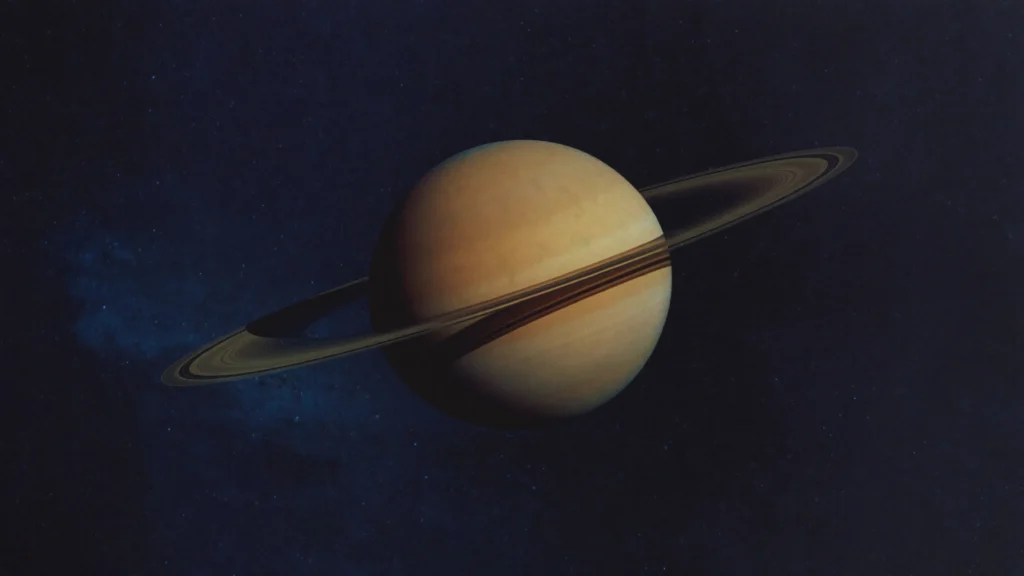
Saturn represents structure, boundaries, discipline, responsibility, and time. On July 26th, it will turn retrograde in the sign of Aries, the fire sign of the self, identity, and initiative. Saturn has only recently entered this sign, so it is about building something new. When it turns retrograde, the focus shifts back to this foundation. In the coming months, it will slowly move back almost to the cusp of Pisces. Astrologically, this is an invitation to examine one’s own structures: Where have we taken on too much, where have we built too little support, and which obligations do we truly carry?
iksHaus | KI-generiert nach redaktioneller Konzeption, 2026
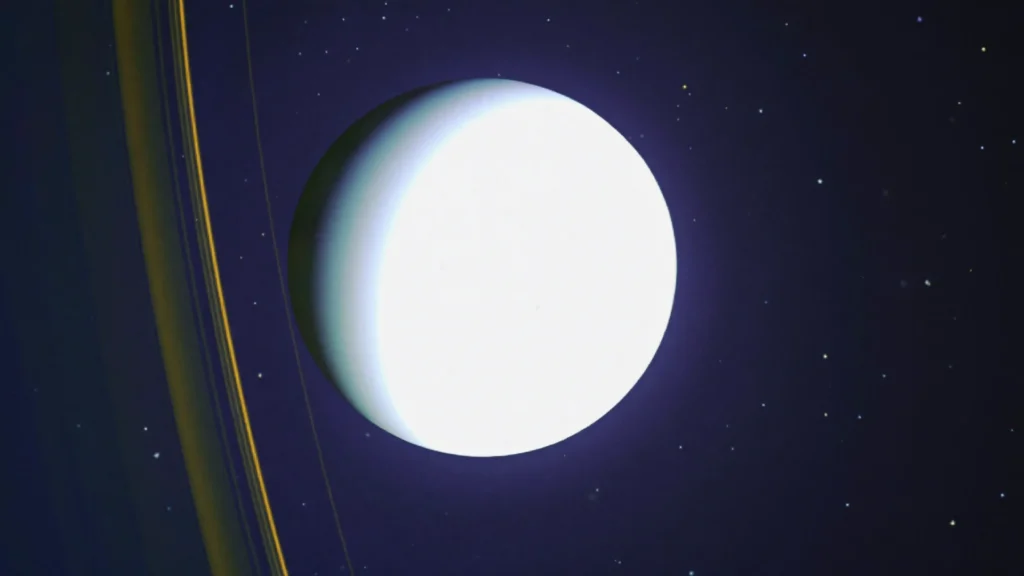
Neptune, finally, represents dreams, ideals, spirituality, fantasy, and compassion, but also illusion and self-deception. It has been retrograde since July 7th, also in Aries. The fact that the planet of mists is located in the active sign of Aries is an unusual combination of dream and action. Neptune is considered the great veil: In its retrograde phase, this veil lifts slightly, and the view of what we have idealized becomes sharper. What is truly real, and what was merely wishful thinking? Because Neptune moves so slowly, this question is less relevant in everyday life and more relevant on the level of larger ideals and longings.
What does this constellation bring?
What’s special about this week in July is the opposing nature of the planetary movements. While Mercury is gaining speed and promoting mental clarity, Saturn and Neptune demand the opposite: a step back. The constellation reads like a division of labor. Externally, the mind becomes clearer, while internally, a period of revision begins. It’s a time to review what has been started, rather than forcing new initiatives.
It’s helpful to distinguish between fast and slow planets. Mercury is a personal planet; its retrograde motion is often felt very concretely in everyday life, in appointments, technology, and conversations, and it lasts for weeks. Saturn and Neptune are slow, societal, and even generational forces. Their retrograde phases are less noticeable, but they last for months and operate more on the level of fundamental questions: How do we want to live, what do we believe in, what structures do we want to support?
The fact that Saturn and Neptune are both retrograde in Aries reinforces this theme. Both touch on the same topic, one’s own identity, from two directions: Saturn asks about the structure, while Neptune asks about the dream behind it. In addition, there’s a rare aspect. Neptune takes about 165 years to complete a full cycle through the zodiac and was last in Aries in the mid-19th century. This Neptune passage is therefore a generational moment, not an everyday transit.
Practically speaking, this means less activism and more taking stock. The clarity of Mercury’s direct motion can be used to have conversations that were previously stuck. Saturn’s retrograde phase is an opportunity to honestly review commitments and routines. And Neptune’s lifted veil helps to see more clearly where we have previously hoped rather than examined. This could concretely mean responding to unanswered messages, re-evaluating an old plan, or reviewing a promise made to oneself. None of this requires grand gestures, but rather honest, small steps. It’s important to read astrology as an offer for reflection, not as a fixed prediction: it provides images and questions, and each individual must decide for themselves. Those who see this phase as a workshop, rather than a launchpad, work with the movement rather than against it.
iksHaus | KI-generiert nach redaktioneller Konzeption, 2026
Externally, clarity returns; internally, honest revision begins.
July 2026 is therefore not a month of major launches, but rather one of quiet adjustments. Mercury brings its focus back into the open, while Saturn and Neptune invite us to re-examine structures and dreams. Those who wish can note down the questions that arise during these weeks, because when Saturn resumes its direct motion in December 2026, it will reveal which answers have taken hold. Until then, the most important thing is to observe, record, and sort. We are continuously compiling all current transits in the iks.haus Astro Calendar. Those who want to follow the movement themselves can find dates and star charts at the Planetarium Wien.